• HOME
  • NEWS
  • EXPLORE
    • CAREER
      • Companies
      • Jobs
    • EVENTS
    • iGEM
      • News
      • Team
    • PHOTOS
    • VIDEO
    • WIKI
  • BLOG
  • COMMUNITY
    • FACEBOOK
    • INSTAGRAM
    • TWITTER
Thursday, November 26, 2026
BIOENGINEER.ORG
No Result
View All Result
  • Login
  • HOME
  • NEWS
  • EXPLORE
    • CAREER
      • Companies
      • Jobs
        • Lecturer
        • PhD Studentship
        • Postdoc
        • Research Assistant
    • EVENTS
    • iGEM
      • News
      • Team
    • PHOTOS
    • VIDEO
    • WIKI
  • BLOG
  • COMMUNITY
    • FACEBOOK
    • INSTAGRAM
    • TWITTER
No Result
View All Result
Bioengineer.org
No Result
View All Result
Home NEWS Science News Health

Liver Hormone AGP2 Mediates Exercise-Induced Bone Formation in Mice

by
November 25, 2026
in Health
Reading Time: 2 mins read
0
Liver Hormone AGP2 Mediates Exercise-Induced Bone Formation in Mice

Liver Hormone AGP2 Mediates Exercise-Induced Bone Formation in Mice

Share on FacebookShare on TwitterShare on LinkedinShare on RedditShare on Telegram

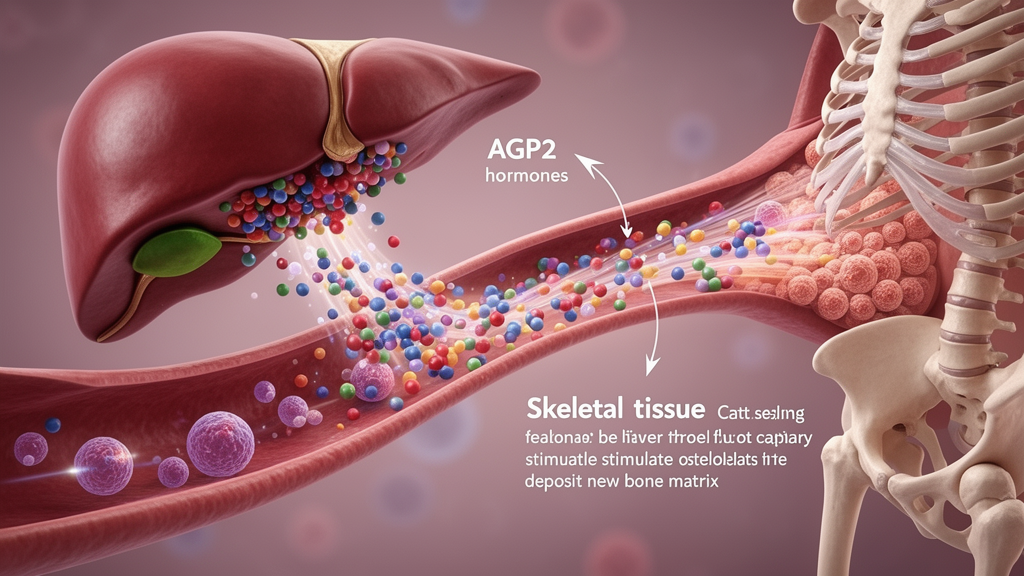
Physical exercise is widely recognized to promote bone health and enhance skeletal strength, yet the underlying biological mechanisms governing these benefits have remained incompletely elucidated. In a newly published study, researchers identified the hepatokine AGP2 as a key osteoanabolic mediator of physical exercise. By examining biological samples following physical exertion, the study authors demonstrated that exercise directly increases circulating levels of AGP2 in both mice and human subjects, revealing an active signaling communication axis between the liver and bone.

To verify the functional necessity of this liver-derived factor in bone remodeling, the investigative team performed targeted genetic experiments in animal models. The researchers discovered that hepatocyte-specific knockout of the Agp2 gene substantially attenuated exercise-induced bone formation in mice. Conversely, elevating hepatic AGP2 through targeted genetic overexpression prevented pathological bone loss in ovariectomized mice, demonstrating that the presence of this hepatic protein is critical for sustaining skeletal mass.

The research team subsequently delineated the molecular cascade responsible for stimulating hepatic AGP2 synthesis during physical exertion. Mechanistically, the authors observed that exercise-induced lactate acts directly on liver tissue to promote hepatic Agp2 gene expression through epigenetic histone H3K14 lactylation. This exercise-evoked metabolite signaling thereby prompts hepatocytes to produce and release elevated quantities of AGP2 into the bloodstream.

Following its secretion from liver cells, circulating AGP2 targets the skeletal system by directly binding to the Wnt co-receptor LRP5. This direct biochemical binding event activates downstream Wnt/β-catenin signaling, which concurrently promotes osteoblast differentiation and suppresses osteoclast activity. By enhancing the maturation of bone-forming osteoblasts while dampening the function of bone-resorbing osteoclasts, the hepatokine drives exercise-stimulated bone augmentation.

Beyond natural physiological responses to exercise, the investigators assessed whether administering exogenous AGP2 could yield therapeutic benefits. Systematic treatment with recombinant AGP2 successfully alleviated bone loss in mouse models of osteoporosis. Together, these experimental findings delineate a critical role for liver-bone crosstalk in mediating exercise benefits on bone metabolism, highlighting AGP2 as an osteoanabolic mediator and a potential therapeutic target for metabolic bone disorders.

Subject of Research: Liver-bone signaling mechanism in exercise-induced bone augmentation

Article Title: Hepatokine AGP2 mediates physical exercise-induced bone augmentation through liver-bone signaling communication

Article References: Zhu, Z., Liao, P., Luo, Y., Huang, K., Xie, Y., Nie, D., Xiao, B., Li, X., Yang, J., Yu, J., Lu, K., Tang, J., Chen, F., Wu, D., Huang, W., Chen, D., & Chen, H. (2026). Hepatokine AGP2 mediates physical exercise-induced bone augmentation through liver-bone signaling communication. Nature Communications. https://doi.org/10.1038/s41467-026-79582-7

Image Credits: AI Generated

DOI: 10.1038/s41467-026-79582-7

Keywords: AGP2, hepatokine, physical exercise, bone health, liver-bone communication, osteoanabolic mediator, osteoporosis, osteoblasts, osteoclasts, LRP5, Wnt/beta-catenin signaling, lactate, histone H3K14 lactylation, bone metabolism, ovariectomized mice, recombinant AGP2

News Source: Ophelia Keating. (November 25, 2026). Liver Hormone AGP2 Mediates Exercise-Induced Bone Formation in Mice. Scienmag.


Tags: AGP2Bone Healthbone metabolismhepatokinehistone H3K14 lactylationlactateliver-bone communicationLRP5osteoanabolic mediatorosteoblastsosteoclastsosteoporosisovariectomized micephysical exerciserecombinant AGP2Wnt/beta-catenin signaling
Share12Tweet7Share2ShareShareShare1

Related Posts

Researchers Outline Ten-Year Roadmap for Precision Medicine in Primary Care Systems

Researchers Outline Ten-Year Roadmap for Precision Medicine in Primary Care Systems

November 26, 2026
Italian Hospital Study Finds Higher Hepatitis B Antibodies Following Adolescent Vaccination

Italian Hospital Study Finds Higher Hepatitis B Antibodies Following Adolescent Vaccination

November 26, 2026

SRC Kinase Enhances SLC31A1 Copper Transport and Promotes Gastric Cancer Cell Death

November 26, 2026

Computational Study Identifies Nucleobase Amino Acid Hybrid as Potential Indapamide Alternative

November 26, 2026

POPULAR NEWS

  • Precision Public Health Conference Emphasizes Workforce Capacity and Diverse Genomic Reference Data

    Precision Public Health Conference Emphasizes Workforce Capacity and Diverse Genomic Reference Data

    29 shares
    Share 12 Tweet 7
  • Trigger-Point Acupuncture Alleviates Synovial Inflammation in Osteoarthritic Rabbits

    29 shares
    Share 12 Tweet 7
  • Electrospun Ferula Gum and Postbiotic Nanofibers Extend Refrigerated Chicken Fillet Shelf Life

    29 shares
    Share 12 Tweet 7
  • NHS Study Finds Inpatient Restraint Rates Vary Widely Across Psychiatric Wards

    29 shares
    Share 12 Tweet 7

About

We bring you the latest biotechnology news from best research centers and universities around the world. Check our website.

Follow us

Recent News

Chitosan Films With Zinc Oxide and Orange Oil Cut Carrot Moisture Loss

Researchers Outline Ten-Year Roadmap for Precision Medicine in Primary Care Systems

Italian Hospital Study Finds Higher Hepatitis B Antibodies Following Adolescent Vaccination

Subscribe to Blog via Email

Enter your email address to subscribe to this blog and receive notifications of new posts by email.

Join 89 other subscribers
  • Contact Us

Bioengineer.org © Copyright 2023 All Rights Reserved.

Welcome Back!

Login to your account below

Forgotten Password?

Retrieve your password

Please enter your username or email address to reset your password.

Log In
No Result
View All Result
  • Homepages
    • Home Page 1
    • Home Page 2
  • News
  • National
  • Business
  • Health
  • Lifestyle
  • Science

Bioengineer.org © Copyright 2023 All Rights Reserved.