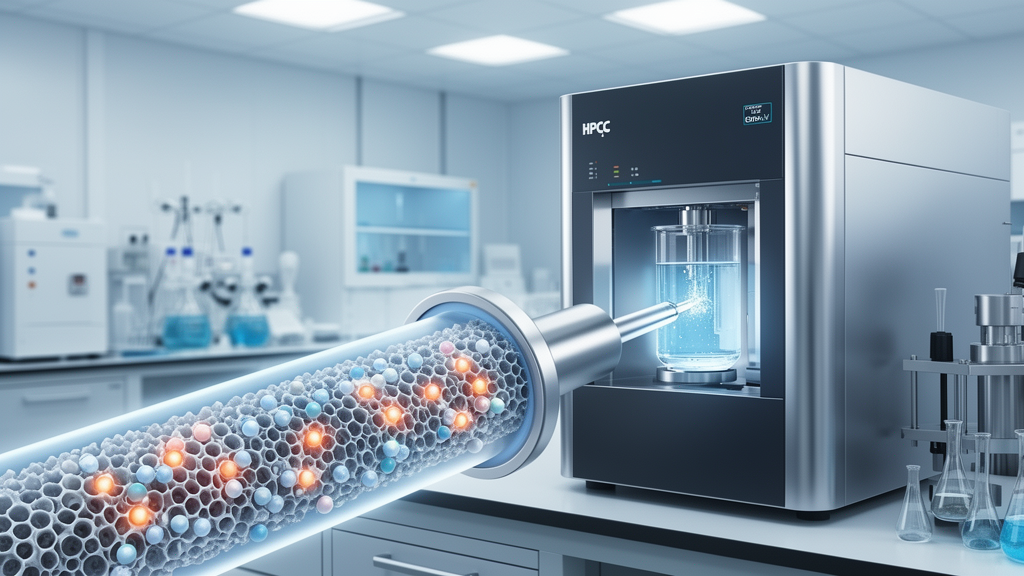
Analytical chemists have engineered an efficient mixed-mode monolithic pipette-tip micro-solid-phase extraction platform coupled directly with high-performance liquid chromatography and ultraviolet detection to achieve rapid, sensitive determination of serotonin in human urine. By resolving long-standing retention limitations common to conventional reversed-phase extraction materials, the new platform accomplishes clean analyte isolation and substantial trace enrichment in a single flow-through loading step. Importantly, the extraction eluate can be injected immediately into a standard high-performance liquid chromatography system with ultraviolet detection, bypassing the labor-intensive chemical derivatization, solvent evaporation, and reconstitution stages typically mandated by conventional chromatographic or electrochemical workflows. The demonstrated analytical procedure achieves satisfactory limits of quantification alongside high extraction efficiency, presenting accessible testing laboratories with an effective and economical alternative to cost-prohibitive mass spectrometry instrumentation for routine biological monitoring.
Serotonin, chemically recognized as 5-hydroxytryptamine, functions as an essential neurotransmitter governing a broad spectrum of central neurological functions and peripheral physiological processes, including the modulation of mood, sleep cycles, appetite, and cardiovascular tone. Clinical research has definitively established that the dysregulation of serotonin signaling pathways correlates directly with diverse medical pathologies, most notably major depressive disorders, generalized anxiety, and neuroendocrine carcinoid syndrome tumors. Because accurate clinical diagnosis, targeted therapeutic drug monitoring, and basic biomedical research depend on precise quantification of this biomarker across complex biological matrices such as blood, plasma, and urine, developing robust bioanalytical assays remains paramount. Among potential biofluids, human urine represents a distinctly attractive diagnostic medium due to its straightforward, inexpensive, and entirely non-invasive collection protocol.
Current analytical techniques utilized for the determination of serotonin span several established methodologies, including immunoassays, capillary electrophoresis, electrochemical detection, high-performance liquid chromatography coupled with ultraviolet detection, and liquid chromatography-tandem mass spectrometry. While tandem mass spectrometry provides exceptional chromatographic selectivity and trace-level sensitivity, its widespread adoption remains heavily constrained by substantial capital equipment expenses, high ongoing maintenance costs, and the strict requirement for highly specialized analytical personnel. Conversely, electrochemical detection configurations provide low-cost operational simplicity and rapid turnaround times, yet working electrode surfaces remain chronically prone to fouling and matrix-induced signal instability when exposed to unpurified human biofluids. Consequently, liquid chromatography with ultraviolet detection continues to serve as the practical workhorse of diagnostic and clinical testing facilities due to its reliability, operational simplicity, and low running costs. Nevertheless, the moderate optical sensitivity of ultraviolet detection inherently demands highly effective extraction and pre-concentration steps to reliably quantify trace urinary analytes.
To overcome matrix interference, clinical laboratories have traditionally relied on sample pretreatment strategies such as protein precipitation and liquid-liquid extraction. While these traditional techniques are comparatively rapid, they lack adequate chemical selectivity to separate serotonin cleanly from endogenous isobaric and structurally analogous compounds, frequently resulting in unacceptable analyte loss. Classical solid-phase extraction utilizing particulate C18 sorbents provides an alternative based on differential adsorption, yet serotonin’s intrinsically polar basic nature results in weak hydrophobic retention on conventional alkyl-bonded silica phases, precipitating poor overall recovery. Prior efforts to circumvent these hydrophobic limitations explored phenylboronic acid-functionalized matrices or pre-extraction chemical derivatization using reagents such as dansyl chloride to artificially enhance analyte hydrophobicity. Although these chemical modification strategies successfully boost extraction recoveries, they introduce tedious incubation protocols, elevated reagent consumption, and prolonged sample preparation sequences that impede high-throughput analytical screening, reinforcing the demand for a simplified extraction medium operating without chemical derivatization.
Addressing this operational bottleneck, the investigators fabricated a robust mixed-mode poly(methacrylic acid-co-ethylene dimethacrylate) monolith directly inside surface-modified polypropylene pipette tips via rapid ultraviolet-initiated polymerization lasting only ten minutes. Scanning electron microscopy confirmed that the resulting polymer skeleton completely occupied the inner cross-section of the tip, achieving intimate structural anchoring against the plastic walls without observable interfacial gaps, wall voids, or phase shrinkage during polymerization. High-magnification structural imaging further unveiled an interconnected globular skeleton containing continuous, open macropores that allow unhindered convective fluid transport under manual micropipette dispensing pressure. Consequently, biological samples pass smoothly through the porous sorbent bed in a single dispensing stroke, completely eliminating the repetitive, fatigue-inducing aspiration-dispensing cycles typically required by particle-packed micro-extraction tips.
The superior extraction performance of the polymer monolith stems directly from its complementary, mixed-mode retention mechanism that exploits the distinct functional domains of the serotonin molecule. Containing both a protonatable primary aliphatic amine and an aromatic indole core, serotonin serves as an exemplary substrate for simultaneous electrostatic attraction and hydrophobic partitioning. Systematic optimization demonstrated that sample loading at an alkaline pH of 9.0 maximizes extraction recovery by ensuring the deprotonation of methacrylic acid carboxylic acid residues into negatively charged carboxylate centers, which engage in strong electrostatic binding with the protonated primary amine of serotonin. Concurrently, the uncharged indole moiety interacts hydrophobically with the crosslinked organic polymer backbone, providing critical secondary retention. In contrast, loading at acidic pH values sharply diminished analyte binding because protonation neutralized the carboxylic acid moieties on the monolith, systematically corroborating that cation-exchange mechanisms operate cooperatively with hydrophobic interactions to achieve superior capture under alkaline loading conditions.
To guarantee analytical selectivity without premature analyte desorption, the authors optimized intermediate washing and final elution steps. Rinsing the loaded monolith with 800 microliters of a washing solvent containing 10 percent acetonitrile in 20 millimolar alkaline phosphate buffer at pH 9.0 successfully stripped away non-specifically adsorbed urinary interferents while maintaining quantitative serotonin retention. For subsequent analyte elution, applying 150 microliters of 10 percent acetonitrile in 20 millimolar phosphate buffer adjusted to pH 2.0 yielded approximately 95 percent desorption recovery. Under these acidic conditions, the monolithic carboxylate functional groups undergo complete protonation, completely dismantling the electrostatic cation-exchange network, while the organic acetonitrile modifier simultaneously disrupts secondary hydrophobic interactions between the indole ring and the polymeric support. The resulting eluate can be fed directly into an analytical reversed-phase C18 column without requiring drying under nitrogen streams or solvent reconstitution, thereby dramatically shortening the total analytical preparation cycle.
Dynamic breakthrough capacity assessments underscored the pronounced mechanical and chemical advantages of the mixed-mode monolithic material over conventional commercial sorbents. When challenged with continuous frontal loading of a standardized serotonin solution, the poly(methacrylic acid-co-ethylene dimethacrylate) monolith attained a dynamic breakthrough capacity of 8.00 milligrams per gram of sorbent, representing an approximately 200-fold performance improvement over a purely hydrophobic poly(stearyl methacrylate-co-ethylene dimethacrylate) monolithic counterpart, which exhibited a capacity of only 0.04 milligrams per gram. Furthermore, three commercial particulate silica C18 cartridges containing between 50 and 500 milligrams of sorbent exhibited negligible to minimal capacities ranging from 0.00 to 0.40 milligrams per gram. These dramatic quantitative disparities demonstrate that sorbent surface chemistry and targeted functionalization play a vastly more decisive role in retaining polar basic analytes than gross sorbent mass, allowing a 5-milligram monolithic tip to significantly outperform commercial cartridges containing one hundred times more packing material.
The operational resilience and scalability of the micro-extraction device were thoroughly corroborated across loading volume, reusability, and long-term shelf-life evaluations. Increasing the sample loading volume up to 4.00 milliliters maintained a high extraction efficiency of approximately 91 percent while progressively elevating the pre-concentration factor to 24-fold within a manageable extraction timeframe of approximately ten minutes. In reusability trials utilizing spiked pooled urine samples, the monolithic extraction tips retained exceptionally stable extraction performance across nine consecutive extraction-washing-elution cycles, exhibiting a peak area relative standard deviation of just 2.24 percent before experiencing response deviations at the tenth cycle.
Rigorous analytical validation of the integrated extraction and liquid chromatographic methodology demonstrated high analytical precision, sensitivity, and clinical feasibility. The calibration curve displayed excellent linearity across the range of 10 to 400 nanograms per milliliter with a determination coefficient of 0.9990, yielding a limit of detection of 1.70 nanograms per milliliter and a limit of quantification of 5.67 nanograms per milliliter. Repeatability assessments demonstrated tip-to-tip and batch-to-batch relative standard deviations of 0.7 percent and 3.4 percent, respectively, alongside an inter-day operational precision of 2.27 percent. Direct split-sample comparison against tandem mass spectrometry on pooled human urine revealed measured serotonin concentrations of 166.80 nanograms per milliliter versus 168.00 nanograms per milliliter, demonstrating a relative difference of only 0.7 percent. When applied to individual urine specimens collected from five healthy volunteers, endogenous serotonin levels ranged from 78.34 to 167.08 nanograms per milliliter, with spiked recovery values between 95.39 and 104.15 percent. Although broader clinical adoption will require validation across larger demographic cohorts, this streamlined, single-pass micro-extraction platform presents an exceptionally practical, cost-effective framework for routine urinary serotonin analysis.
Subject of Research: Mixed-mode monolithic pipette-tip micro-solid-phase extraction for urinary serotonin quantification
Article Title: Mixed-mode monolithic pipette-tip micro-solid-phase extraction coupled with HPLC–UV for rapid determination of urinary serotonin
Article References: Ar-sanork, K., Muekhunthod, A., Chetsurakul, A., Woensanthia, R., Phattaramarut, K., Thangphatthanarungruang, J., Karuwan, C., & Chaisuwan, P. (2026). Mixed-mode monolithic pipette-tip micro-solid-phase extraction coupled with HPLC–UV for rapid determination of urinary serotonin. Talanta Open, 14, Article 100699. https://doi.org/10.1016/j.talo.2026.100699
Image Credits: AI Generated
DOI: 10.1016/j.talo.2026.100699
Keywords: serotonin, urinary serotonin, solid-phase extraction, pipette-tip micro-SPE, mixed-mode sorbent, polymer monolith, poly(MAA-co-EDMA), HPLC-UV, high-performance liquid chromatography, neurotransmitter analysis, cation-exchange interaction, sample preparation, dynamic breakthrough capacity, liquid chromatography, biomedical analysis, clinical diagnostics
News Source: Bethany Barker. (November 25, 2026). Mixed-Mode Monolithic Extraction Platform Enables Rapid Urinary Serotonin Analysis via HPLC-UV. Scienmag.