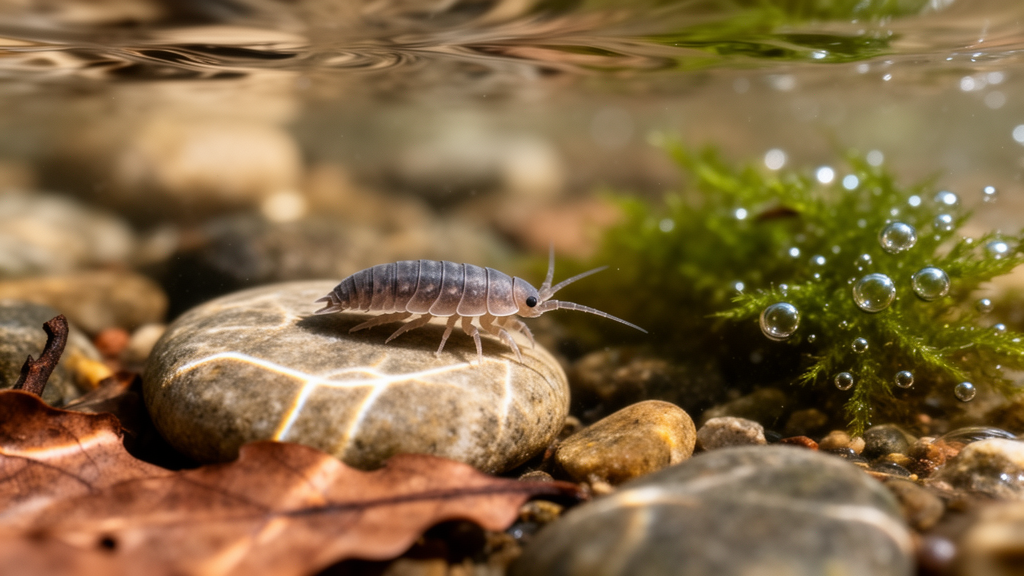
A controlled investigation into the freshwater isopod Asellus aquaticus has demonstrated that persistent individual differences in exploration, activity, and antipredator escape responses form a tightly integrated behavioural syndrome that does not correlate with individual routine metabolic rate. Conducted by researchers Harmony Lautrette-Quinveros, Viktor Nilsson, P. Anders Nilsson, and Olof Berglund, the empirical study evaluated whether physiological energetic expenditure directly underpins behavioral variation within an emerging invertebrate model organism. Animal personality research has widely documented that individuals within diverse wildlife populations display consistent behavioural traits over time and across contexts, frequently aligning into correlated suites known as behavioural syndromes. Theoretical models have repeatedly posited that these behavioural differences reflect variation in individual energy consumption, predicting that highly active or risk-prone organisms necessarily operate at higher metabolic rates. However, the findings published in Behavioral Ecology and Sociobiology show that while both behavioural tendencies and routine oxygen consumption were highly repeatable across weeks of testing, individual metabolic rates exhibited no measurable statistical relationship with any observed behavioural trait, challenging the universal applicability of metabolic pace-of-life assumptions.
The theoretical cornerstone connecting behavioural consistency to metabolic physiology is the pace-of-life syndrome hypothesis, which suggests that contrasting ecological regimes shape coordinated suites of behavioural, physiological, and life-history adaptations along an integrated continuum. Under this conceptual framework, organisms positioned along a fast lifestyle trajectory are expected to exhibit elevated metabolic rates, high foraging and exploratory activity, bold risk-taking dispositions, rapid growth, and reduced lifespans. Conversely, individuals situated at the slow end of the continuum are expected to conserve energy, express restrained movement, and prioritize somatic maintenance and extended survival. Despite its broad conceptual popularity, empirical evaluations of pace-of-life predictions have yielded highly conflicting results across animal taxa, displaying relationships ranging from positive associations to entirely absent or context-dependent patterns. Evolutionary biologists have noted that much of the existing empirical literature suffers from a pronounced taxonomic bias toward vertebrate species, leaving invertebrates comparatively underrepresented despite their immense ecological diversity and suitability for controlled experimental tracking under standardized laboratory environments.
To rigorously test whether pace-of-life assumptions apply to ecologically vital freshwater detritivores, the research team turned to Asellus aquaticus, an abundant benthic shredder native to freshwater ecosystems. Characterized by an overall moderately slow pace of life relative to other similarly sized arthropods, this isopod exhibits a comparatively long adult lifespan, low reproductive frequency, and substantial parental investment in individual offspring. In aquatic food webs, Asellus serves as a foundational keystone taxon responsible for processing decaying organic matter and functioning as an established biomonitor for environmental contamination. Although recent investigations have shown that Asellus displays marked within- and among-individual behavioural variation across diverse habitats, physiological evaluations connecting routine energy expenditure to distinct behavioural phenotypes have remained scarce. Because slow-paced poikilothermic invertebrates represent a vital yet understudied demographic in evolutionary ecology, evaluating the coupling between metabolic rate and behavioral suites in this species offers an ideal experimental test of whether metabolic pace dictates individual behavioral expression.
The experimental subjects comprised 72 wild Asellus aquaticus individuals sampled from a natural freshwater pond located near Lund University in Sweden between March and May 2023. At the time of collection, the isopods displayed a mean body length of 7 millimetres with a standard deviation of 1 millimetre, spanning a measured size range between 4.9 and 10.7 millimetres determined through ImageJ digital analysis. To eliminate immediate environmental noise and standardize physiological states, the animals underwent a structured two-week laboratory acclimation protocol inside a walk-in climate chamber maintained at 19 degrees Celsius with a 12-hour light and 12-hour dark cycle. The isopods were housed in a 12-litre oxygenated aquarium containing natural pond water and decaying hazel leaves, Corylus avellana, collected from their native habitat. Following acclimation, the isopods were divided into three successive experimental batches of 24 individuals, with each specimen housed individually in a 1-litre oxygenated aquarium provided with pond water and two leaves serving as shelter and continuous nutrition throughout all trials except designated fasting windows.
Quantifying individual energetic expenditure required precise, non-destructive measurements of routine metabolic rate at the opening and closing stages of an 18-day experimental protocol. Following a 48-hour pre-measurement fasting period designed to eliminate dietary digestive heat and establish a post-adsorptive physiological state, each isopod was placed into a sealed 50-millilitre Falcon tube filled completely with oxygen-saturated, copper-free tap water. Respirometry chambers were submerged and closed underwater to prevent air bubbles, after which they remained undisturbed within the temperature-controlled chamber for exactly 24 hours alongside six empty control tubes. At the conclusion of the 24-hour incubation, dissolved oxygen concentrations were quantified using a WTW Multi 3510 IDS oxygen probe. Routine mass-specific metabolic rates were calculated by dividing total oxygen consumption by individual dry weight and incubation duration, yielding values that incorporated baseline resting maintenance, minor handling responses, and routine voluntary movement. Following identical secondary respirometry trials on days 17 and 18, each surviving isopod was euthanised at minus 20 degrees Celsius, dried at 60 degrees Celsius for 48 hours, and weighed to the nearest 0.001 grams.
Between the initial and final respirometry assays, researchers conducted daily behavioural evaluations across four consecutive days, running from day 8 through day 11 of the experimental schedule. Each isopod was tested individually inside a 90-millimetre Petri dish containing 50 millilitres of copper-free tap water, with all trials recorded from directly above using a high-definition video camera mounted on an overhead tripod. Automated behavioural tracking was performed using EthoVision XT software to quantify movements across standardized arenas. The experimental design implemented a strict, invariant sequence of three separate testing phases—exploration, followed by general activity, and terminating with post-stimulus escape behaviour—separated by mandatory five-minute resting intervals. Maintaining an identical sequence ensured consistent motivational states across individuals, preventing carryover artifacts between distinct physical metrics while systematically isolating spatial exploration tendencies from broad locomotor activity and acute antipredator responses.
The three behavioural assays evaluated distinct functional dimensions of isopod movement and environmental interaction. Spatial exploration was quantified using an arena partitioned into four outer quadrants surrounding a central shelter zone containing a pebble. After two minutes of central acclimation, the individual was tracked for five minutes, generating an exploration score calculated by multiplying the number of unique zones entered by the total frequency of zone transitions. General locomotor activity was evaluated in a separate five-minute trial, where the software recorded total distance travelled in millimetres regardless of spatial zone distribution. Finally, antipredator escape behavior was initiated by applying 15 seconds of gentle mechanical stimulation using soft-tipped tweezers to simulate a predatory encounter. Following this stimulus, researchers recorded the cumulative seconds an individual spent moving during the subsequent five-minute period, capturing both immediate burst reactions and lingering post-threat vigilance. Throughout the four assay days, water temperature remained stable between 18.7 and 19.3 degrees Celsius, while water pH varied narrowly between 8.1 and 8.6.
Linear mixed-effects models fitted in R revealed that all focal behavioural traits and physiological measures exhibited statistically significant repeatability within individual isopods across repeated trials. Exploration scores displayed an intraclass correlation coefficient repeatability estimate of 0.31, while general locomotor activity exhibited a repeatability of 0.52. Routine mass-specific metabolic rate demonstrated an even higher repeatability coefficient of 0.70 across the two-week measurement window, remaining stable between experimental commencement and termination with an average difference of only 0.03 milligrams of oxygen per milligram per hour. Descriptive coefficients of variation confirmed substantial biological diversity, with interindividual variation reaching 37 percent for exploration, 32 percent for activity, 28 percent for escape duration, and 58 percent for routine metabolic rate. Although isopod metabolic rate scaled positively with dry body mass, body weight accounted for only 13 percent of total metabolic variation and showed no significant correlation with any behavioural score, demonstrating that persistent differences in activity and exploration were independent of physical size.
To test for coordinated phenotypic structure and evaluate whether behavioural variation aligned with metabolic rates, the researchers calculated best linear unbiased predictions for each individual across all tested traits. The analyses uncovered strong, statistically significant correlations connecting all three behavioural metrics, confirming the existence of a robust behavioural syndrome. Individual activity was exceptionally correlated with spatial exploration scores at r = 0.92, indicating that individuals exhibiting high overall locomotion also thoroughly investigated novel spatial sectors. Locomotor activity was likewise positively associated with post-stimulus escape duration at r = 0.50, and exploration correlated positively with escape duration at r = 0.51, demonstrating that highly active, explorative isopods also sustained prolonged defensive movements following simulated predation. In stark contrast, routine metabolic rate showed no significant correlation with exploration (r = -0.12, p = 0.44), activity (r = -0.10, p = 0.53), or antipredator escape duration (r = 0.13, p = 0.41), revealing a complete statistical decoupling between routine energy turnover and consistent behavioral expression.
The persistent absence of a correlation between metabolic expenditure and behavioural traits indicates that stable animal personalities can emerge and persist entirely independently of routine energetic demands, offering limited support for pace-of-life predictions in benthic invertebrates. While the authors acknowledged that 40 percent cumulative mortality across the 18-day protocol may have selected for stress-tolerant phenotypes, mortality occurred progressively rather than following specific assays, suggesting cumulative handling stress rather than acute procedural trauma. Furthermore, although 24-hour closed-bottle respirometry integrates broader temporal intervals than brief five-minute behavioral trials, the high repeatability of metabolic rate indicates genuine phenotypic consistency rather than observational error. The researchers suggested that energetic compensation may instead operate through unmeasured physiological trade-offs, including immune function, cuticle maintenance, chemical defence, or reproductive investment, rather than direct behavioral pacing. Ultimately, these empirical findings underscore that behaviour-metabolism relationships are not universal across animal taxa, emphasizing the necessity of incorporating ecologically diverse invertebrates into evolutionary models of life-history architecture.
Subject of Research: Behavioural syndromes and metabolic rate decoupling in the freshwater isopod Asellus aquaticus
Article Title: Consistent behavioural variation in Asellus aquaticus does not correlate with individual metabolism
Article References: Lautrette-Quinveros, H., Nilsson, V., Nilsson, P. A., & Berglund, O. (2026). Consistent behavioural variation in Asellus aquaticus does not correlate with individual metabolism. Behavioral Ecology and Sociobiology, 80(7), Article 99. https://doi.org/10.1007/s00265-026-03776-8
Image Credits: AI Generated
DOI: 10.1007/s00265-026-03776-8
Keywords: Asellus aquaticus, behavioural syndromes, pace-of-life syndrome, routine metabolic rate, respirometry, invertebrate behaviour, individual variation, repeatability, exploration behaviour, locomotor activity, antipredator behaviour, closed-bottle respirometry, intraclass correlation, freshwater ecology, ethology, physiological ecology, benthic invertebrates
News Source: Drew Townsend. (November 24, 2026). Freshwater Isopod Study Shows Consistent Behaviours Decoupled From Metabolic Rate. Scienmag.