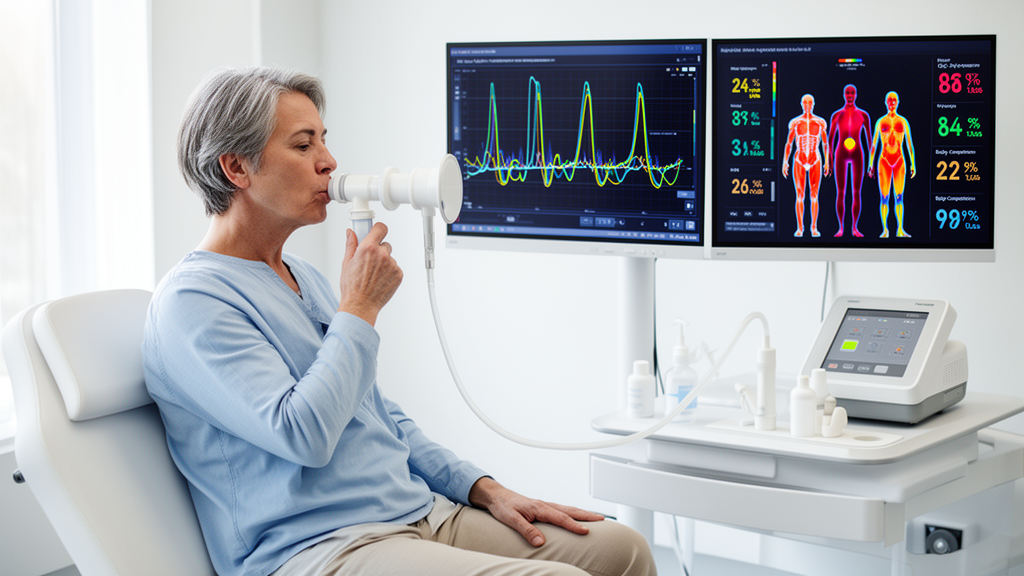
Measures of body composition derived from dual-energy X-ray absorptiometry provide additional information about pulmonary function beyond body mass index alone in adults with relapsing-remitting multiple sclerosis who are overweight or have obesity, according to a cross-sectional study. In unadjusted linear regression analyses, higher body mass index and body fat percentage were associated with lower forced vital capacity, while higher lean mass percentage, total lean mass, and trunk lean mass were associated with higher forced vital capacity and forced expiratory volume in one second.
When assessing forced vital capacity, researchers identified contrasting relationships across different tissue compartments. Higher body mass index and higher body fat percentage were each associated with lower forced vital capacity among the participants.
Similar patterns emerged during the evaluation of dynamic airflow metrics, specifically forced expiratory volume in one second and peak expiratory flow. A higher body fat percentage was associated with lower forced expiratory volume in one second, while higher lean mass percentage, total lean mass, and trunk lean mass were associated with higher values. In addition, total lean mass and trunk lean mass demonstrated positive associations with peak expiratory flow.
In contrast to the volume and flow metrics, the analysis revealed no evidence of associations between body mass index or any dual-energy X-ray absorptiometry measures and the ratio of forced expiratory volume in one second to forced vital capacity.
The statistical models also tested whether the observed relationships persisted after adjustment for sex. When the linear regression models were adjusted for sex, the associations previously observed for forced vital capacity, forced expiratory volume in one second, and peak expiratory flow were attenuated.
The investigation evaluated twenty adult participants with relapsing-remitting multiple sclerosis who were classified as overweight or living with obesity, pairing dual-energy X-ray absorptiometry scans with standard spirometry assessments.
Multiple sclerosis is a chronic neurological disorder that may impact pulmonary function through neurological impairment and respiratory muscle weakness. While overweight and obesity may further influence pulmonary function, the role of body weight and body composition in pulmonary function among people with multiple sclerosis remains understudied.
Larger longitudinal studies are needed to better understand how changes in body composition may relate to changes in pulmonary function over time in people with multiple sclerosis.
Subject of Research: Body composition and pulmonary function in multiple sclerosis
Article Title: Associations of BMI and DXA-derived body composition with pulmonary function in people with multiple sclerosis and overweight or obesity
Article References: Assiry, A. M., Alammari, A. A., Yohannes, A. M., McCabe, M. E., & Wingo, B. C. (2026). Associations of BMI and DXA-derived body composition with pulmonary function in people with multiple sclerosis and overweight or obesity. Frontiers in Neurology, 17, Article 2014377. https://doi.org/10.3389/fneur.2026.2014377
Image Credits: AI Generated
DOI: 10.3389/fneur.2026.2014377
Keywords: Multiple sclerosis, Body composition, Body mass index, Pulmonary function, Forced vital capacity, Forced expiratory volume, Peak expiratory flow, Dual-energy X-ray absorptiometry, Relapsing-remitting multiple sclerosis, Overweight, Obesity, Lean mass, Trunk lean mass, Body fat percentage, Spirometry, Respiratory muscle weakness
News Source: Ophelia Keating. (November 24, 2026). Body Composition Relates to Pulmonary Function in Adults with Multiple Sclerosis. Scienmag.