• HOME
  • NEWS
  • EXPLORE
    • CAREER
      • Companies
      • Jobs
    • EVENTS
    • iGEM
      • News
      • Team
    • PHOTOS
    • VIDEO
    • WIKI
  • BLOG
  • COMMUNITY
    • FACEBOOK
    • INSTAGRAM
    • TWITTER
Tuesday, November 24, 2026
BIOENGINEER.ORG
No Result
View All Result
  • Login
  • HOME
  • NEWS
  • EXPLORE
    • CAREER
      • Companies
      • Jobs
        • Lecturer
        • PhD Studentship
        • Postdoc
        • Research Assistant
    • EVENTS
    • iGEM
      • News
      • Team
    • PHOTOS
    • VIDEO
    • WIKI
  • BLOG
  • COMMUNITY
    • FACEBOOK
    • INSTAGRAM
    • TWITTER
No Result
View All Result
Bioengineer.org
No Result
View All Result
Home NEWS Science News Health

Interpretable Deep Learning Model Predicts Speech Motor Dysfunction in Parkinson’s Disease

by
November 24, 2026
in Health
Reading Time: 2 mins read
0
Interpretable Deep Learning Model Predicts Speech Motor Dysfunction in Parkinson’s Disease

Interpretable Deep Learning Model Predicts Speech Motor Dysfunction in Parkinson’s Disease

Share on FacebookShare on TwitterShare on LinkedinShare on RedditShare on Telegram

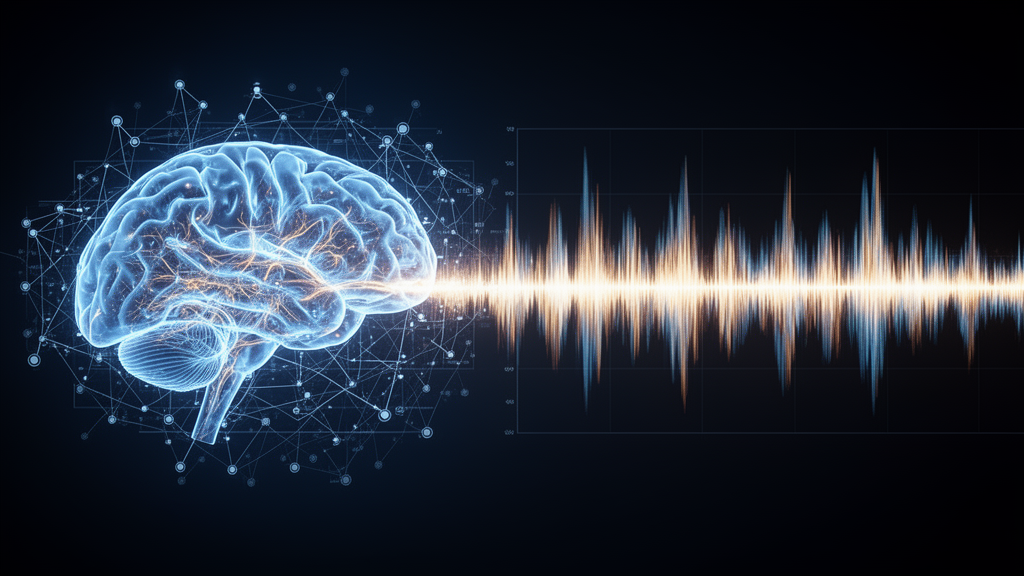
Researchers have developed an interpretable deep learning framework named MCTA-FusNet that integrates multimodal magnetic resonance imaging to predict speech motor dysfunction in Parkinson’s disease. Speech motor impairment affects approximately 90 percent of individuals diagnosed with the neurodegenerative condition, yet neuroimaging prediction models remain limited.

The proposed computational architecture combines structural MRI, resting-state functional MRI, and diffusion MRI through modality-specific encoders. To synthesize these varied data streams, the system incorporates a hierarchical triple-attention fusion mechanism designed to evaluate channel-, spatial-, and modality-level interactions across brain networks.

The team utilized cross-domain transfer learning to train and validate the framework across separate patient cohorts. MCTA-FusNet was initially pretrained on the PPMI dataset of 400 individuals to estimate motor symptom severity measured by UPDRS-III scores. Subsequently, the model was fine-tuned on the FAH-SYSU dataset of 81 patients to predict speech motor dysfunction, indexed by vocal response magnitude to pitch perturbations.

In performance evaluations, MCTA-FusNet outperformed all evaluated unimodal and multimodal models leveraging transfer learning. The framework achieved the lowest mean absolute error of 1.388 ± 0.62 and demonstrated the highest correlation between predicted and observed vocal response magnitude, recording a correlation coefficient of r = 0.731 with statistical significance at p < 0.001.

Interpretability analyses pinpointed the superior temporal gyrus, primary motor cortex, premotor cortex, and supplementary motor area as key anatomical predictors of speech motor impairment. Furthermore, elevated coherence and phase synchrony between auditory and premotor regions correlated significantly with exaggerated vocal response magnitude. The authors noted that this multimodal approach establishes a predictive and explanatory foundation offering potential for symptom-specific monitoring and therapeutic intervention.

Subject of Research: Deep learning prediction of Parkinson’s disease speech motor impairment

Article Title: Multimodal neuroimaging fusion with interpretable deep learning for speech motor dysfunction in Parkinson’s disease

Article References: Zhao, S., Dai, G., Wang, M., Zhu, X., Li, Y., Tan, M., Xie, J., Liu, D., Xu, Z., Lei, D., Wang, L., Chen, X., Yan, N., & Liu, H. (2026). Multimodal neuroimaging fusion with interpretable deep learning for speech motor dysfunction in Parkinson’s disease. PLOS Digital Health, 5(11), e0001864. https://doi.org/10.1371/journal.pdig.0001864

Image Credits: AI Generated

DOI: 10.1371/journal.pdig.0001864

Keywords: Parkinson's disease, speech motor dysfunction, MCTA-FusNet, multimodal neuroimaging, structural MRI, resting-state functional MRI, diffusion MRI, triple-attention fusion, cross-domain transfer learning, PPMI dataset, FAH-SYSU dataset, vocal response magnitude, pitch perturbations, UPDRS-III, superior temporal gyrus, primary motor cortex, premotor cortex, supplementary motor area

News Source: Diana Fleming. (November 24, 2026). Interpretable Deep Learning Model Predicts Speech Motor Dysfunction in Parkinson’s Disease. Scienmag.

Tags: cross-domain transfer learningdiffusion MRIFAH-SYSU datasetMCTA-FusNetmultimodal neuroimagingParkinson’s diseasepitch perturbationsPPMI datasetpremotor cortexprimary motor cortexresting-state functional MRIspeech motor dysfunctionStructural MRIsuperior temporal gyrussupplementary motor areatriple-attention fusionUPDRS-IIIvocal response magnitude
Share12Tweet7Share2ShareShareShare1

Related Posts

Global Journal Launches to Tackle Care Disparities in Rare Kidney Diseases

Global Journal Launches to Tackle Care Disparities in Rare Kidney Diseases

November 24, 2026
Albumin Variability Associates With ESA Hyporesponsiveness in Maintenance Hemodialysis Patients

Albumin Variability Associates With ESA Hyporesponsiveness in Maintenance Hemodialysis Patients

November 24, 2026

Spleen Imaging Accurately Predicts Esophageal Varices in Schistosomiasis Portal Hypertension

November 24, 2026

Engineered Nanoparticles Cross Blood-Brain Barrier to Target Alzheimer’s Disease Pathologies

November 24, 2026

POPULAR NEWS

  • Depot-Specific Autofluorescence Signatures Distinguish Rat Perivascular Adipocytes Without External Dyes

    Depot-Specific Autofluorescence Signatures Distinguish Rat Perivascular Adipocytes Without External Dyes

    29 shares
    Share 12 Tweet 7
  • Wilson Disease Liver Organoid Models Require Functional Validation According to Review

    29 shares
    Share 12 Tweet 7
  • Infrasound Alters Cancer Cell Membranes Without Boosting Cisplatin Chemotherapy Efficacy

    29 shares
    Share 12 Tweet 7
  • EuCARE Consortium Review Identifies Key Operational Lessons for Future Pandemic Preparedness

    29 shares
    Share 12 Tweet 7

About

We bring you the latest biotechnology news from best research centers and universities around the world. Check our website.

Follow us

Recent News

Global Journal Launches to Tackle Care Disparities in Rare Kidney Diseases

Albumin Variability Associates With ESA Hyporesponsiveness in Maintenance Hemodialysis Patients

Citrobacter Rodentium Activates Common Pilus Operon Using Distal Element and IHF

Subscribe to Blog via Email

Enter your email address to subscribe to this blog and receive notifications of new posts by email.

Join 89 other subscribers
  • Contact Us

Bioengineer.org © Copyright 2023 All Rights Reserved.

Welcome Back!

Login to your account below

Forgotten Password?

Retrieve your password

Please enter your username or email address to reset your password.

Log In
No Result
View All Result
  • Homepages
    • Home Page 1
    • Home Page 2
  • News
  • National
  • Business
  • Health
  • Lifestyle
  • Science

Bioengineer.org © Copyright 2023 All Rights Reserved.