A stage-dependent divergence in external mechanical efficiency distinguishes well-trained runners from less-trained individuals only as exercise intensity climbs, with efficiency disparities absent during initial treadmill stages but expanding across steeper inclines. In a cross-sectional study conducted in an exercise physiology laboratory and published in Current Research in Physiology, researchers Kara C. Hamilton, Joel E. Harden, and Karissa P. Rein evaluated the physiological trajectories of thirty-six adult male and female runners during incremental treadmill exercise to maximum exertion. While cardiorespiratory fitness evaluated through maximal oxygen uptake testing remains an established benchmark for endurance performance and all-cause mortality, submaximal metrics such as external mechanical efficiency and ventilatory efficiency provide critical insights into energy transfer and aerobic gas exchange. The team demonstrated that the proportion of metabolic energy converted into vertical work did not differ between training cohorts at lower inclines but separated significantly once running demand intensified.
To capture these physiological dynamics under standardized conditions, the investigation enrolled nineteen well-trained runners and seventeen less-trained runners. The well-trained cohort comprised ten males and nine females who reported training consistently over the preceding six months with an average weekly volume of 33.6 ± 14.3 miles, self-identified as competitive recreational runners competing regularly without financial compensation, and achieved a maximal oxygen uptake equal to or exceeding 120 percent of sex-specific predicted values based on Wasserman’s equation. Conversely, the less-trained group included seven males and ten females enrolled in a beginner running program who reported no regular running or organized race participation during the preceding five years and exhibited baseline fitness categorizations of fair or below according to American College of Sports Medicine age- and sex-normative standards. All participants were at least eighteen years of age, cleared of health contraindications to exercise, and provided informed consent under institutional review board approval.
Exercise testing followed a validated Modified Astrand treadmill protocol carried out over a six-month experimental window within an ambient temperature-controlled facility. Pre-test standardized conditions required participants to avoid vigorous physical activity for twenty-four hours, maintain adequate hydration, refrain from caffeine and alcohol on test day, and consume only a light meal two to three hours before reporting to the laboratory. Following anthropometric measurement of stature and body mass, metabolic data were collected continuously using a Parvo Medics TrueOne 2400 metabolic cart calibrated with a three-liter syringe and certified calibration gas mixtures containing sixteen percent oxygen and four percent carbon dioxide. Participants wore a Hans Rudolph facemask with supporting headgear and a Polar H9 heart rate monitor while running on a Trackmaster TMX 428CP motorized treadmill, with rate of perceived exertion tracked via a ten-point scale during the final fifteen seconds of each minute.
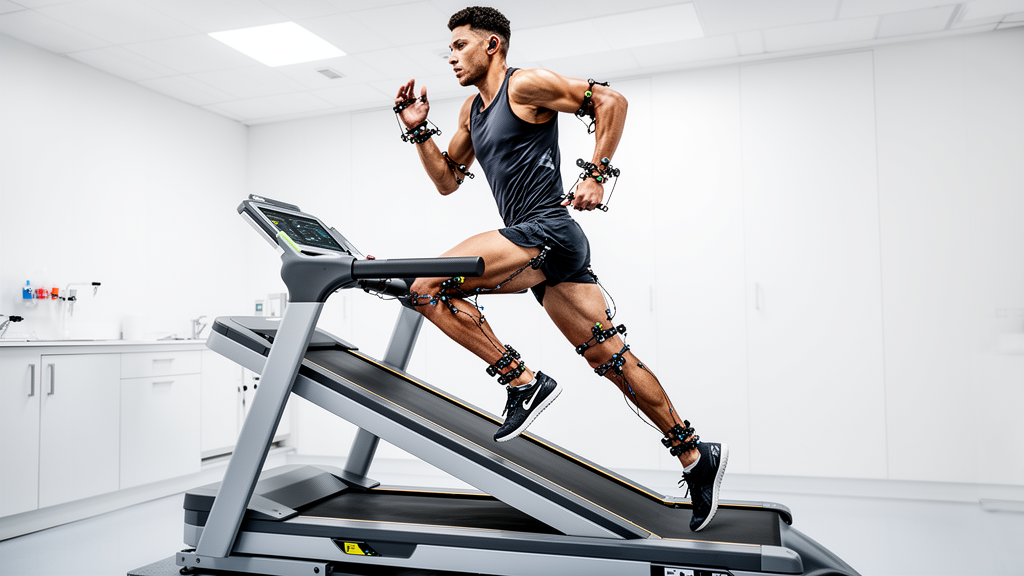
The Modified Astrand protocol maintained a constant participant-selected treadmill velocity while systematically increasing the grade by two percent every two minutes until volitional exhaustion. Because trained individuals sustain elevated workloads through greater anaerobic capacity, well-trained runners were instructed to select a velocity slightly above comfortable running, whereas less-trained runners were directed to establish an easy to very light pace. Participants confirmed their velocity selections and were permitted minor adjustments during an initial five-minute warm-up before entering the graded test. Maximal effort was confirmed when participants achieved at least two secondary criteria: an oxygen uptake plateau with changes of fifty milliliters per minute or less, a respiratory exchange ratio of at least 1.10, a heart rate within ten beats per minute of age-predicted maximum, or a perceived exertion rating of ten. Expired gases averaged across non-overlapping fifteen-second bins were sampled during the final thirty seconds of each two-minute stage to approximate steady-state physiological parameters.
External mechanical efficiency, designated as EME percentage, was quantified as external mechanical power divided by metabolic power multiplied by one hundred across exercise stages two through five. External mechanical power reflected the rate of vertical work calculated from participant body mass, gravitational acceleration of 9.81 meters per second squared, treadmill velocity in meters per second, and fractional grade incline, meaning EME percentage could not be derived for the horizontal, zero-grade baseline stage. Metabolic power was computed from measured oxygen consumption and carbon dioxide production using the Weir formulation to account for progressive substrate shifts during exercise. Overall ventilatory efficiency was determined by identifying the nadir ratio of minute ventilation to carbon dioxide production, obtained by averaging the three lowest consecutive fifteen-second intervals recorded during the testing session, where a lower ratio indicates more efficient carbon dioxide clearance per liter of ventilation.
Statistical evaluation using a linear mixed-effects model revealed significant main effects for exercise stage (F(3, 60.1) = 1414.7, p < 0.001) and training group (F(1, 32.0) = 12.2, p = 0.001), accompanied by a significant interaction between group and stage (F(3, 60.3) = 4.1, p = 0.010). The main effect of biological sex on mechanical efficiency was non-significant (F(1, 32.2) = 1.0, p = 0.321). Pairwise Bonferroni-adjusted comparisons demonstrated that while mechanical efficiency between groups showed no divergence during stage two at a two percent incline, well-trained runners achieved significantly superior mechanical efficiency across all subsequent inclines. At stage three with a four percent incline, well-trained runners reached 8.21 ± 0.52 percent compared to 7.60 ± 0.68 percent in less-trained runners (p = 0.016). At stage four with a six percent incline, values reached 11.50 ± 0.96 percent versus 10.39 ± 1.00 percent (p < 0.001), and at stage five with an eight percent incline, the well-trained group averaged 14.25 ± 1.36 percent compared to 12.60 ± 1.50 percent in less-trained counterparts (p < 0.001).
In marked contrast to mechanical efficiency patterns, an analysis of covariance controlling for age indicated that ventilatory efficiency was not influenced by training status, yielding a non-significant main effect for group (p = 0.48). Instead, ventilatory efficiency exhibited a significant main effect of biological sex (F(1, 31) = 6.4, p = 0.017). Male runners demonstrated a lower ventilatory equivalent for carbon dioxide, averaging 27.49 ± 4.09 compared to 29.96 ± 2.92 in female runners, indicating greater gas exchange efficiency irrespective of whether they belonged to the well-trained or less-trained category. Despite this biological difference, both male and female runners maintained average ventilatory efficiency values below the clinical threshold of thirty-four that defines healthy physiological function in adult populations.
Analysis of self-selected treadmill velocities revealed notable deviations from historical protocol guidelines, which typically advise starting intensities corresponding to fifty to sixty percent of peak oxygen consumption for less-trained individuals and seventy-five to eighty percent for trained competitors. One-sample Wilcoxon signed-rank tests confirmed that less-trained males started at a median of 67.9 percent (Z = 2.36, p = 0.018) and less-trained females started at a median of 65.0 percent (Z = 2.19, p = 0.028), both significantly above the 55 percent target. Conversely, well-trained males started at a median of 67.3 percent (Z = -2.7, p = 0.007) and well-trained females at 71.0 percent (Z = -2.3, p = 0.021), both significantly below the 77.5 percent target. However, a Kruskal-Wallis test detected no significant difference in starting percentage across the four cohorts (H(3) = 3.4, p = 0.33), demonstrating that simple comfort-based instructions produced homogeneous relative baseline intensities across groups.
Evaluation of total test duration via two-way analysis of variance identified a significant main effect of sex (F(1, 32) = 5.5, p = 0.026), with female participants completing shorter test protocols than male participants. Male runners achieved durations of 9.7 ± 0.9 minutes in the well-trained group and 8.9 ± 1.1 minutes in the less-trained group, whereas female runners completed 8.2 ± 1.8 minutes in the well-trained group and 7.7 ± 2.4 minutes in the less-trained group. Because the less-trained female mean fell below the recommended eight-minute minimum, a one-sample t-test was conducted, establishing that their mean duration did not differ significantly from eight minutes (t = -0.4, p = 0.665). Because overall group durations fell within the validated eight-to-twelve-minute window and all participants satisfied primary maximal criteria, self-selected speed pacing proved methodologically viable for experimental testing.
The authors discussed several neuromuscular and structural mechanisms that likely underpin the widening mechanical efficiency margin observed at steeper inclines. Unlike flat running economy or stationary cycling, running uphill against gravity places pronounced demands on stretch-shortening cycles and elastic energy storage within tendons and connective tissue structures. Endurance training fosters refined stride mechanics, optimized ground contact duration, reduced unnecessary vertical oscillation, and enhanced muscle coordination that together minimize metabolic waste. Furthermore, competitive endurance runners generally display an enriched proportion of oxidative type I muscle fibers, which enhances the efficiency with which metabolic energy is converted into external vertical power during heavy mechanical loading. The absence of training divergence at lower grades suggests that these neuromuscular advantages become measurable only when physiological demand challenges contractile capacity.
Conversely, the insensitivity of ventilatory efficiency to training status reflects the high baseline efficacy of pulmonary gas exchange in healthy adult populations. The authors noted that the observed sex difference in ventilatory equivalent ratios likely originates from anatomical disparities, such as larger airway diameters, diminished resistance, and lower dead space relative to total lung volume in males, which optimize alveolar ventilation. Because pulmonary parameters in healthy individuals remain well within normal physiological limits, ventilatory efficiency appears primarily governed by biological sex rather than exercise conditioning, contrasting with the distinct responsiveness of mechanical efficiency to chronic endurance training.
Several methodological limitations contextualize the scope of these findings. Participants in the less-trained group were younger (28.2 ± 10.6 years) than the well-trained cohort (36.5 ± 9.1 years, p = 0.016), and because all less-trained participants successfully achieved valid maximal exercise tests, they may have possessed greater baseline health than general sedentary populations. The modest sample size of seven to ten runners per subgroup constrained statistical power to detect subtle sex-by-training interaction effects. Additionally, mechanical efficiency was derived solely from external vertical work and power formulas, omitting horizontal, internal, and kinematic stride mechanics. Finally, two-minute stages may not have allowed complete steady-state oxygen kinetics in every participant, although sampling the final thirty seconds minimized transitional distortion. Overall, the study demonstrates that mechanical efficiency advantages in trained runners manifest specifically under elevated physiological stress, while ventilatory responses remain stable across training backgrounds.
Subject of Research: Stage-dependent external mechanical efficiency and ventilatory efficiency across incremental treadmill exercise in trained and less-trained adults
Article Title: External mechanical efficiency across incremental VO 2 max stages and ventilatory efficiency in well-trained and less-trained adults
Article References: Hamilton, K. C., Harden, J. E., & Rein, K. P. (2026). External mechanical efficiency across incremental VO2 max stages and ventilatory efficiency in well-trained and less-trained adults. Current Research in Physiology, 9, Article 100189. https://doi.org/10.1016/j.crphys.2026.100189
Image Credits: AI Generated
DOI: 10.1016/j.crphys.2026.100189
Keywords: external mechanical efficiency, ventilatory efficiency, VO2 max testing, Modified Astrand protocol, incremental exercise, running economy, cardiorespiratory fitness, ventilatory equivalent, metabolic power, vertical mechanical power, Weir equation, treadmill grade, training status, biological sex, submaximal physiological responses, treadmill speed selection, exercise physiology, type I muscle fibers
News Source: Ophelia Keating. (November 24, 2026). Trained Runners Show Mechanical Efficiency Advantage Only at Higher Graded Intensities. Scienmag.