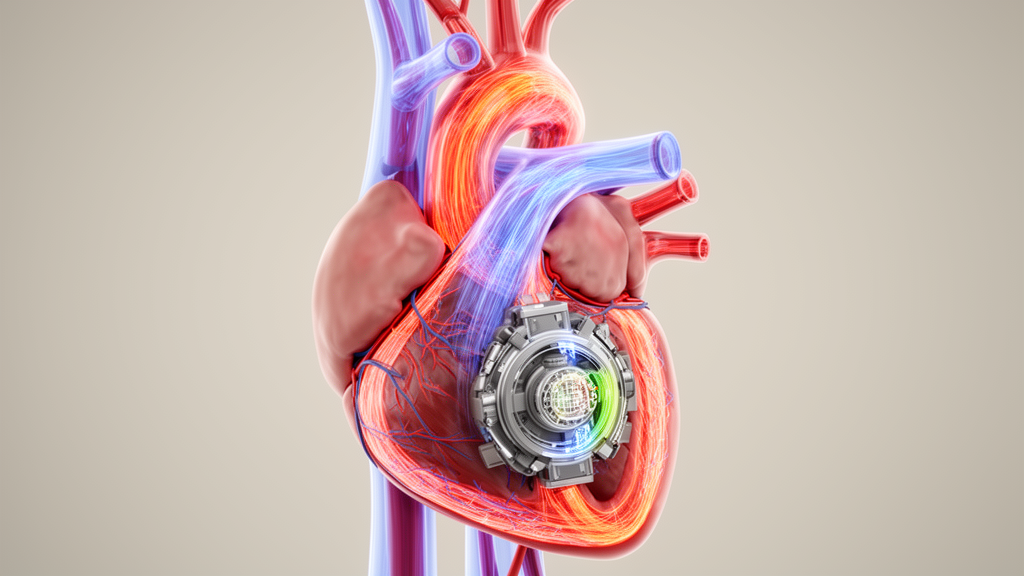
A comprehensive physiological perspective published in JHLT Open establishes a mechanism-based framework to explain and manage orthostatic hypotension in patients supported by continuous-flow left ventricular assist devices. While orthostatic hypotension is well documented throughout the broader heart failure population, investigators report that postural blood pressure instability represents an underappreciated complication of mechanical circulatory support, affecting approximately twelve percent of continuous-flow device recipients based on spontaneous clinical symptoms and climbing to nearly thirty percent when clinicians perform systematic orthostatic provocation testing. Prior medical literature has predominantly relied on isolated case presentations, modest case series, or clinical extrapolations derived from non-device patient populations lacking continuous-flow hemodynamics. The perspective synthesizes autonomic neuroscience, vascular biomechanics, and device engineering to clarify why posture-induced cerebral hypoperfusion develops despite standard device parameters, minimal fluid congestion, and seemingly stable Doppler-derived mean arterial pressures, providing a practical diagnostic and bedside management pathway.
The underlying hemodynamic perturbations stem directly from the physiological disruptions imposed by continuous-flow mechanical circulatory support. In healthy individuals, assuming an upright posture activates arterial baroreceptors, triggering coordinated sympathetic vasoconstriction and venous recoil that preserve central cardiac filling and arterial blood pressure. Continuous-flow pumps fundamentally alter these vascular dynamics by dramatically dampening physiological pulse pressure and blunting systolic-diastolic oscillations. Reduced arterial pulsatility diminishes cyclic mechanical strain across carotid sinus and aortic arch baroreceptors, significantly decreasing afferent signaling and limiting sympathetic reflex reserve during acute postural transitions. Furthermore, the sustained loss of pulsatile wall shear stress promotes chronic remodeling throughout the central arterial tree, including aortic stiffening and structural vascular fibrosis driven by accelerated fibrillar collagen deposition. Concurrently, the reduction in pulsatile shear stimuli suppresses endothelial nitric oxide synthesis and chronically activates both the systemic renin-angiotensin-aldosterone axis and sympathetic outflow, ultimately degrading downstream vascular compliance and baroreflex-mediated vasoconstrictor responsiveness.
Direct neurophysiological investigations employing human microneurography demonstrate that continuous-flow device recipients exhibit markedly elevated resting muscle sympathetic nerve activity compared to healthy matched controls. Rather than reflecting an exhausted or structurally degenerate autonomic reflex arc, this chronic sympathetic hyperactivity represents central baroreceptor unloading induced by minimal arterial pulse pressure, effectively resetting basal sympathetic outflow to a higher operating set point. Human tilt-table evaluations indicate that the efferent sympathetic reflex arc remains functional during gravitational stress, with peripheral sympathetic nerve traffic rising appropriately, and in several studied cohorts markedly augmenting, during upright tilt. Instead of autonomic efferent failure, the fundamental functional impairment is localized downstream: cardiac baroreflex sensitivity is markedly attenuated, and continuous-flow pumps operate at fixed rotational speeds that cannot dynamically translate surging sympathetic outflow into compensatory stroke volume or rapid blood pressure restoration, an observation historically documented in legacy axial pumps and remaining under active evaluation in contemporary centrifugal devices.
Mechanical pump properties interact directly with human venous return to compound postural circulatory instability. Unlike the biological left ventricle, which utilizes intrinsic Frank-Starling mechanisms to buffer acute reductions in circulating venous volume, continuous-flow blood pumps possess an inherent, pronounced preload sensitivity. Pump output is dictated by impeller rotational speed and the pressure differential between the left ventricular cavity and the systemic aorta. When gravitational blood shifting lowers left ventricular preload upon standing, the trans-pump pressure gradient widens abruptly, precipitating an immediate decline in estimated pump flow. In devices such as the centrifugal HeartMate 3, the pump mechanism demonstrates exquisite sensitivity to diminished filling pressure while exhibiting limited responsiveness to volume increases. Modest postural reductions in venous return dramatically reduce left ventricular end-diastolic dimensions, pulling the interventricular septum leftward and increasing the risk of mechanical inflow cannula obstruction, low-flow alarms, and frank suction events.
Gravitational blood redistribution within the venous capacitance system further exacerbates this preload vulnerability in device recipients. Total intravascular blood volume is functionally partitioned into an unstressed volume, which fills the vascular vascular bed without exerting wall tension, and a stressed volume, constituting roughly thirty percent of normal blood volume, which generates intravascular pressure to drive venous return. Advanced heart failure pathologically shifts volume into the stressed compartment, depleting unstressed venous capacitance by up to fifty percent prior to device implantation. Consequently, the splanchnic venous reservoir, which normally buffers postural shifts via robust sympathetic venoconstriction, lacks dynamic reserve upon standing, when between 500 and 1000 milliliters of blood shift downward into splanchnic and lower-extremity veins. Additionally, chronotropic incompetence occurs in approximately forty-four percent of continuous-flow device recipients independent of beta-blocker therapy, eliminating the compensatory heart rate acceleration normally required to sustain cardiac output when stroke volume abruptly diminishes.
To guide clinical differentiation, the framework categorizes patient presentations into two primary mechanistic phenotypes, the first being autonomic dysfunction-predominant failure. Illustrated by patients presenting with postural lightheadedness despite completely normal resting supine hemodynamics, this phenotype is characterized by extensive gravitational venous pooling and precipitous drops in right atrial pressure, pulmonary capillary wedge pressure, and left ventricular chamber volume upon standing. Because intrinsic right ventricular forward contractility remains preserved, bedside postural echocardiography demonstrates a small, hyper-collapsible inferior vena cava and a marked reduction in left ventricular internal dimensions without pulmonary congestion. Autonomic reflex evaluations frequently document blunted sympathetic responses and abnormal Valsalva maneuvers, such as absent phase four blood pressure overshoot. The cardiac index remains stable or falls only modestly, confirming that circulatory failure originates from inadequate venous return rather than primary pump failure or native myocardial collapse.
Conversely, the second distinct presentation is right ventricular failure-limited forward flow, which occurs when postural symptoms arise from an inability of the right heart to transport returning blood across the pulmonary circulation. Illustrated by patients with advanced heart failure and residual pulmonary vascular disease who develop presyncope upon walking, this phenotype displays elevated or rising right atrial pressure during upright tilt, often accompanied by an elevated right atrial to pulmonary capillary wedge pressure ratio and a marked drop in cardiac index. Upright echocardiography reveals a dilated, hypokinetic right ventricle, an engorged, plethoric, non-collapsible inferior vena cava, and abnormal septal motion. Rather than suffering from systemic volume sequestration, these patients experience an acute mismatch between passive venous inflow and right ventricular forward output, where gravitational stress unmasks right ventricular contractile limitations, reduces left ventricular filling, and secondarily impairs left-sided continuous-flow pump output.
Clinical practice frequently reveals complex intermediate presentations where autonomic impairment and right ventricular limitation coexist in the same individual. The dysfunctional right ventricle operates on a flattened, rightward-shifted Frank-Starling curve, which fundamentally alters its functional tolerance to circulating blood volume. On this flattened curve, the right ventricle possesses virtually no reserve to augment forward stroke volume when filling pressures increase, while simultaneously becoming extraordinarily vulnerable to modest decreases in preload. Consequently, even mild postural venous pooling typical of early autonomic impairment can destabilize a vulnerable right ventricle, acutely diminishing forward flow. Conversely, in patients with established right ventricular dysfunction, coexisting autonomic blunting removes the critical compensatory venoconstriction required to maintain right ventricular filling pressures within their narrow therapeutic window, creating a bidirectional circulatory vulnerability that demands meticulous diagnostic differentiation before initiating medical therapies that could inadvertently worsen hemodynamics.
Evaluating orthostatic intolerance in continuous-flow device recipients requires decoupling the clinical evaluation from traditional blood pressure thresholds. Classic criteria requiring a drop of at least twenty millimeters of mercury systolic or ten millimeters of mercury diastolic within three minutes of standing frequently fail in mechanical circulatory support. Diminished pulse pressure impedes automated oscillometric cuffs, requiring clinicians to measure Doppler opening pressure as a surrogate for mean arterial pressure. However, marked drops in pump flow and cerebral perfusion often occur despite stable Doppler opening pressures. Diagnostic protocols should prioritize symptoms of cerebral hypoperfusion coupled with physiological markers, utilizing Doppler sphygmomanometry across supine-to-standing transitions and extending diagnostic tilt-table testing beyond standard three-minute intervals, as retrospective observational data indicate that only forty-six percent of orthostatic hypotension episodes manifest within three minutes, while thirty-nine percent emerge only after ten minutes of sustained upright tilt.
Bedside physiological diagnostics integrate postural echocardiography, invasive catheterization, and continuous device telemetry to pinpoint the dominant circulatory limitation. Dynamic tracking of the device pulsatility index offers valuable diagnostic insight when interpreted alongside the total clinical picture. Although the pulsatility index traditionally reflects native myocardial contractility, severe postural preload reduction in autonomic failure can trigger paradoxical spikes in pulsatility index by causing minimum pump flow to plummet during transient cannula suction, artificially widening the flow amplitude. In contrast, patients with right ventricular limitation exhibit stable or falling pulsatility indices alongside progressive right heart dilation. Furthermore, echocardiographic speed ramp studies and prospective continuous ambulatory pulmonary artery pressure monitoring via implanted CardioMEMS sensors offer practical modalities to confirm whether exercise-induced filling pressures fall, signaling autonomic failure, or climb persistently, confirming right ventricular failure.
Therapeutic interventions must strictly align with the identified physiological phenotype to prevent severe iatrogenic complications. Autonomic-predominant preload failure requires strategies that expand circulating volume and enhance venous return, including increased dietary sodium and fluid intake, abdominal binders, full-length compression garments, cautious mineralocorticoid administration with fludrocortisone, and targeted alpha-one adrenergic vasoconstrictors such as midodrine. Clinicians must avoid pump over-speeding, which exacerbates left ventricular collapse, and carefully rationalize vasodilators or diuretics. In striking contrast, empiric volume administration in right ventricular failure can trigger catastrophic right heart overdistension and septal shift; management instead focuses on judicious diuresis, selective pulmonary vasodilators, cautious inotropy, and paradoxically lowering device speed to restore favorable interventricular septal positioning and optimize right ventricular mechanical ejection into the pulmonary vasculature.
Subject of Research: Physiological mechanisms, diagnostic paradigms, and phenotype-specific management of orthostatic hypotension in continuous-flow left ventricular assist device recipients
Article Title: Orthostatic hypotension in continuous-flow LVADs: Baroreflex unloading, preload dependence, and a phenotype-specific framework
Article References: Danyluk, A., Nenadic, I., Wright, S. P., Guichard, J., Howlett, J., Raj, S. R., Belkin, M. N., Sauer, A. J., Shah, H., Mak, S., & Fudim, M. (2027). Orthostatic hypotension in continuous-flow LVADs: Baroreflex unloading, preload dependence, and a phenotype-specific framework. JHLT Open, 15, Article 100710. https://doi.org/10.1016/j.jhlto.2026.100710
Image Credits: AI Generated
DOI: 10.1016/j.jhlto.2026.100710
Keywords: orthostatic hypotension, continuous-flow LVAD, baroreflex unloading, preload dependence, autonomic dysfunction, right ventricular failure, HeartMate 3, muscle sympathetic nerve activity, venous capacitance, chronotropic incompetence, pulsatility index, Doppler opening pressure, postural echocardiography, splanchnic blood pooling, CardioMEMS, baroreflex activation therapy
News Source: Ophelia Keating. (November 24, 2026). Physiologic Framework Explains Orthostatic Hypotension in Continuous Flow Heart Pump Patients. Scienmag.