To enhance both the permeance and solvent resistance of thin-film composite organic solvent nanofiltration membranes, researchers have developed an engineered polydopamine@amino-functionalized silica interlayer supported on a polyetherimide substrate. Reporting in Polymer Bulletin, the study outlines a tailored membrane platform designed specifically for pharmaceutical purification applications.
The fabrication procedure begins with the co-deposition of dopamine hydrochloride and amino-functionalized silica nanospheres directly onto the porous polyetherimide substrate to assemble the composite interlayer. Following this initial coating step, interfacial polymerization is carried out using piperazine and trimesoyl chloride to synthesize a selective polyamide separation layer on top. To maximize membrane performance, the authors systematically investigated and optimized key interlayer preparation parameters, including the concentration of amino-functionalized silica, the total deposition duration, and the size of the silica nanospheres.
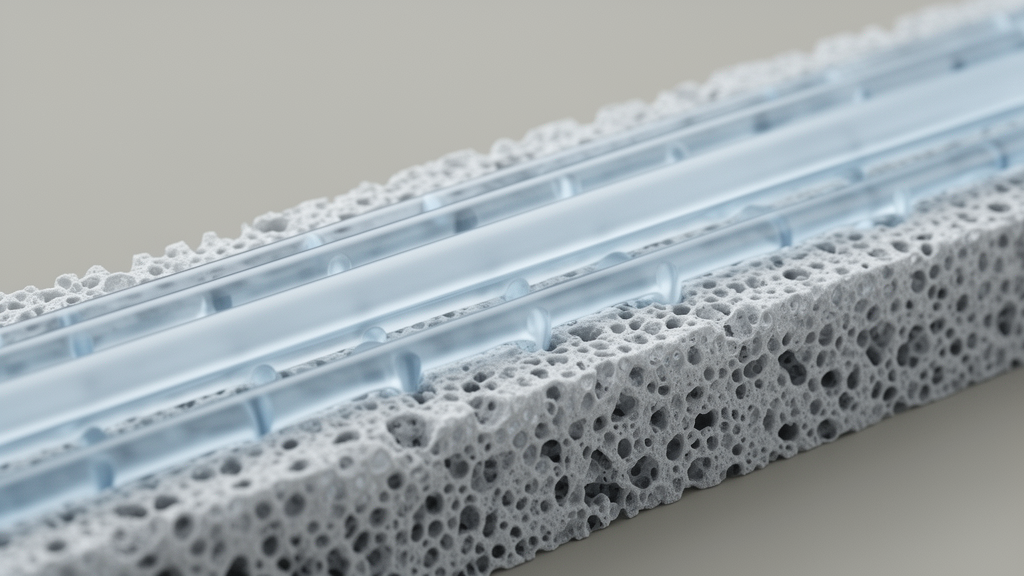
Within the assembled membrane structure, the polydopamine@amino-functionalized silica interlayer establishes interparticle voids that act as rapid transport channels for migrating solvent molecules. Furthermore, the presence of the interlayer directly directs the interfacial polymerization process, prompting the formation of a polyamide separation layer that is notably thinner, rougher, and highly cross-linked. These morphological and chemical modifications operate synergistically, delivering a substantial enhancement in solvent permeance while simultaneously maintaining high rejection rates for target solutes.
In addition to facilitating rapid solvent transport, the hybrid interlayer significantly improves the structural stability and chemical resilience of the composite membrane. Simultaneously, the functional amino groups located on the silica nanospheres actively participate in the interfacial polymerization reaction alongside piperazine and trimesoyl chloride, chemically anchoring the polyamide network and reinforcing the membrane against solvent degradation.
Performance assessments revealed that the optimized composite membrane achieved an ethanol permeance of 4.45 L·m−2·h−1·bar−1 and established a molecular weight cut-off of 429 Da. In separation trials focusing on pharmaceutical compounds, the membrane delivered a rifampicin rejection of 97.86 percent. Testing with additional model molecules showed rejections of 99.15 percent for vitamin B12, 98.57 percent for oxytetracycline dihydrate, and 98.70 percent for tetracycline hydrochloride, demonstrating broad effectiveness for small-molecule retention.
To determine operational longevity in harsh chemical settings, the researchers subjected the membrane to an extended stability test involving continuous immersion in N,N-dimethylformamide for 91 days. After three months of exposure, the membrane maintained an ethanol permeance of 3.92 L·m−2·h−1·bar−1 alongside a rifampicin rejection rate of 95.79 percent. These resilient operational metrics confirm exceptional long-term solvent resistance, demonstrating that the interlayer architecture holds practical promise for demanding industrial pharmaceutical purification.
Subject of Research: Organic solvent nanofiltration membranes for pharmaceutical purification
Article Title: Polydopamine@amino-functionalized silica interlayer enables organic solvent nanofiltration membranes for pharmaceutical purification
Article References: Wang, L., Jin, Y., Zhang, J., Li, S., Wang, X., Kong, Z., & Wang, H. (2027). Polydopamine@amino-functionalized silica interlayer enables organic solvent nanofiltration membranes for pharmaceutical purification. Polymer Bulletin, 84(1), Article 63. https://doi.org/10.1007/s00289-026-06784-w
Image Credits: AI Generated
DOI: 10.1007/s00289-026-06784-w
Keywords: organic solvent nanofiltration, polydopamine, amino-functionalized silica, polyetherimide, interfacial polymerization, piperazine, trimesoyl chloride, polyamide separation layer, pharmaceutical purification, rifampicin rejection, molecular weight cut-off, ethanol permeance, vitamin B12, oxytetracycline dihydrate, tetracycline hydrochloride, N,N-dimethylformamide, solvent resistance, thin-film composite membranes
News Source: Bethany Barker. (November 24, 2026). Engineered Silica Interlayer Boosts Nanofiltration Membranes for Pharmaceutical Solvent Purification. Scienmag.