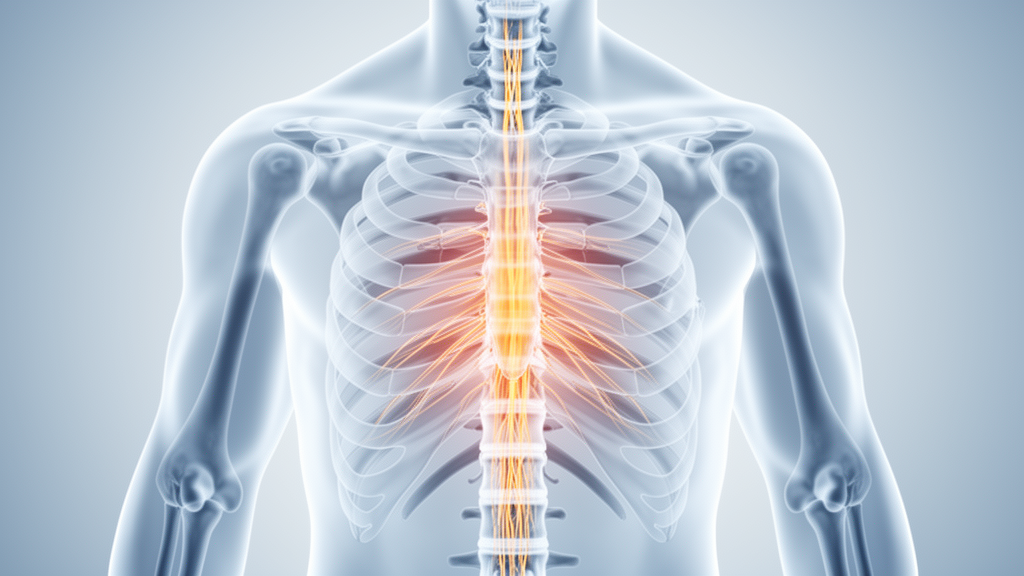
In a newly published randomized clinical investigation assessing regional analgesia for thoracic procedures, researchers determined that dividing an identical total dose of local anesthetic across two adjacent intercostal levels significantly decreased twenty-four-hour cough-evoked pain compared with a single-level injection following video-assisted thoracoscopic surgery. Effective pulmonary recovery after minimally invasive pulmonary resection heavily relies on a patient’s capacity to take deep breaths, cough vigorously, and clear bronchial secretions without experiencing debilitating dynamic discomfort. To evaluate whether altering the spatial delivery of local anesthetic without increasing drug exposure could mitigate dynamic pain, investigators compared single-point and dual-point ultrasound-guided intercostal pleural surface blocks among adult surgical patients, reporting their comparative findings in Pain and Therapy.
The prospective, single-center, parallel-group, assessor-blinded superiority trial enrolled sixty-four adult patients undergoing elective video-assisted thoracoscopic lobectomy or wedge resection at the Affiliated Cancer Hospital of Guizhou Medical University. The clinical study design was rigorously standardized, allocating participants in a one-to-one ratio using computer-generated permuted blocks with sealed envelopes. Eligible individuals were between forty-five and sixty-five years of age, presented with American Society of Anesthesiologists physical status classifications ranging from grade one to three, and had body mass indices between 18.5 and 27.0 kilograms per square meter. Stringent exclusion criteria eliminated individuals with local cutaneous infection, anatomical chest wall deformities, chronic pain syndromes, long-term opioid consumption, significant cardiovascular dysfunction, severe renal impairment, uncorrected coagulopathies, or previous ipsilateral thoracic interventions that could impede predictable fluid distribution across tissue planes.
Intercostal pleural surface block represents an ultrasound-guided regional anesthetic technique wherein anesthetic solution is deposited into the deep intercostal space immediately superficial to the parietal pleura. As defined operationally by the clinical team, the anatomical target is identified sonographically by the internal intercostal muscle layer and the intact, glistening hyperechoic pleural boundary, rather than by a validated distinct anatomical fascia. Historically, single-level injections have relied upon longitudinal craniocaudal fluid migration outward from an isolated injection site. By splitting the identical volume and mass of ropivacaine between two adjacent thoracic spaces, the investigators hypothesized that two-level administration would produce broader multi-segmental distribution along the parietal pleura and reduce movement-related incisional and pleural nociception without escalating systemic local anesthetic exposure or increasing pharmacological toxicity risks.
All study participants received general anesthesia through an identical target-controlled intravenous regimen accompanied by muscle relaxation, standardized protective one-lung mechanical ventilation, and continuous hemodynamic surveillance. Intercostal pleural surface blocks were performed following endotracheal intubation before the patient was positioned laterally for surgery. Anesthesiologists utilized high-frequency linear ultrasound probes positioned along the anterior axillary line to visualize the intercostal architecture along its longitudinal axis. Under continuous in-plane needle visualization, a twenty-two-gauge needle was advanced through the internal intercostal musculature to reach the surface immediately overlying the parietal pleura, avoiding the neurovascular bundle coursing along the inferior margin of the rib. Intermittent saline hydrodissection confirmed correct needle-tip placement by producing hypoechoic separation and downward pleural deflection.
The active local anesthetic solutions were strictly controlled across both experimental groups to isolate the true effect of multi-level anatomical delivery. Participants assigned to the single-level cohort received a solitary injection of thirty milliliters of 0.25 percent ropivacaine hydrochloride deposited at the fourth to fifth intercostal space. Those in the two-level cohort received exactly fifteen milliliters at the fourth to fifth space accompanied by an additional fifteen milliliters at the fifth to sixth intercostal space. Consequently, each patient received an identical total quantity of seventy-five milligrams of ropivacaine in thirty milliliters of solution, excluding small saline hydrodissection aliquots. Intraoperative and postoperative systemic analgesia protocols were identical across both cohorts, incorporating intravenous sufentanil and tropisetron prior to chest closure, followed by postoperative patient-controlled intravenous analgesia with rescue nonsteroidal anti-inflammatory medication.
Analysis of the trial’s prespecified primary outcome revealed that the two-level injection strategy successfully produced lower numeric rating scale pain scores during deep breathing and forced coughing twenty-four hours after surgical resection. The single-level cohort demonstrated a median cough-evoked pain score of 4.5 with an interquartile range from 3.0 to 5.0, whereas the two-level cohort exhibited a median cough-evoked score of 3.0 with an interquartile range from 2.0 to 4.0. This difference was statistically significant, yielding an asymptotic P value of 0.009 and an associated Hodges-Lehmann shift estimate of 1.00 point, accompanied by a ninety-five percent confidence interval ranging from 0.00 to 2.00. Because all sixty-four randomized participants completed the protocol without loss to follow-up or major deviations, intention-to-treat and per-protocol analytical sets were identical.
Exploratory secondary analgesic endpoints demonstrated concordant reductions favoring two-level block administration at selected early intervals. Twenty-four hours following surgery, resting pain scores were also statistically lower in the two-level cohort, with median scores of 2 compared with 3 in the single-level group. Furthermore, during the postoperative window spanning from six to twenty-four hours, participants receiving two-level blocks made fewer successful demands on their patient-controlled intravenous analgesia pumps, recording a median of 0.5 activations compared with 1.0 activation in the single-level group. Over the same postoperative time frame, the requirement for rescue intramuscular diclofenac injections was reduced among patients receiving two-level blocks. However, when evaluating the overall cumulative forty-eight-hour postoperative window, the proportion of participants requiring supplemental rescue analgesia showed no statistically significant difference, standing at 46.9 percent in the two-level group versus 65.6 percent in the single-level group.
Intraoperative observational parameters and hemodynamic variables revealed unexpected secondary findings that warrant clinical deliberation. Patients allocated to the two-level block group required a higher median cumulative dose of norepinephrine to maintain target blood pressure during the surgical procedure, consuming 0.5 milligrams compared with 0.3 milligrams in the single-level group. While the overall incidence of measured intraoperative hypotensive episodes remained comparable between cohorts at 90.6 percent and 81.3 percent, the reasons underlying increased vasopressor consumption could not be definitively linked to sympathetic blockade.
Surgeons performing intraoperative thoracoscopy systematically inspected the parietal pleural surface directly adjacent to the needle puncture sites to record procedural complications. Vascular injury, defined as localized bleeding or small hematoma at the intercostal puncture site, occurred in four out of thirty-two participants in the two-level group compared with two out of thirty-two in the single-level group. Pleural injury, defined specifically as the intraoperative thoracoscopic observation of local anesthetic-like fluid pooling in the pleural cavity at the puncture level, was recorded in five patients receiving two-level blocks compared with two patients receiving single-level injections. No individual experienced both vascular and pleural injuries concurrently. Crucially, all observed puncture-site incidents were minor and managed exclusively through surgical observation without active intervention, transfusion, or prolonged thoracostomy drainage.
To directly explore the anatomical spread of the injected solutions, the investigators conducted a planned exploratory sub-study involving twenty consecutively enrolled participants whose ropivacaine mixtures were supplemented with 0.5 milliliters of 0.1 percent methylene blue tracer. Direct thoracoscopic visual inspection revealed that the two-level injection technique achieved broader craniocaudal surface staining and continuous discoloration over a greater number of adjacent intercostal spaces. In contrast, the single-level technique demonstrated more prominent dorsal staining extending toward the paravertebral gutter. The authors emphasized, however, that visual surface tracer spreading serves merely as an anatomical observation and cannot be directly equated with neural blockade, dermatomal sensory loss, or local anesthetic tissue permeation.
Despite the observed improvement in twenty-four-hour dynamic pain scores, the trial demonstrated that the two-level technique did not translate into measurable functional recovery enhancements. The mean time elapsed until patients achieved unassisted postoperative ambulation was virtually identical between groups, averaging 24.66 hours in the two-level cohort and 24.31 hours in the single-level cohort. Similarly, median total postoperative hospitalization duration did not differ significantly, recorded at 8.69 days following two-level blocks versus 8.56 days following single-level injections. The investigators pointed out that postoperative discharge timing and ambulation milestones depend heavily on comprehensive institutional pathways, thoracic drain duration, and surgical factors rather than modest numerical differences in pain scores alone.
In their synthesis of the findings, the study authors maintained a measured perspective regarding the overall clinical utility of the dual-injection approach. While dividing the ropivacaine dose between two intercostal levels significantly reduced twenty-four-hour cough-evoked numeric rating scores, the one-point median shift falls within a range whose genuine patient-centered significance remains debatable. Furthermore, the necessity of introducing a second needle puncture inherently doubles the opportunities for pleural penetration and intercostal vascular damage, as reflected in the numerically elevated complication rates. Given the single-center setting, unblinded proceduralists, lack of formal dermatomal sensory mapping, and absence of demonstrated recovery acceleration, the researchers concluded that larger multicenter trials are essential before two-level intercostal pleural surface blocks can be recommended as a routine standard over single-level techniques.
Subject of Research: Comparison of single-level versus two-level ultrasound-guided intercostal pleural surface block for post-thoracoscopic analgesia
Article Title: Single-Level Versus Two-Level Ultrasound-Guided Intercostal Pleural Surface Block for Analgesia After Video-Assisted Thoracoscopic Pulmonary Resection: A Randomized Trial
Article References: Chen, L., Wan, Q., Huang, R., Wang, N., & Lin, X. (2026). Single-Level Versus Two-Level Ultrasound-Guided Intercostal Pleural Surface Block for Analgesia After Video-Assisted Thoracoscopic Pulmonary Resection: A Randomized Trial. Pain and Therapy. https://doi.org/10.1007/s40122-026-00904-0
Image Credits: AI Generated
DOI: 10.1007/s40122-026-00904-0
Keywords: intercostal pleural surface block, video-assisted thoracoscopic surgery, pulmonary resection, thoracic surgery, postoperative analgesia, ropivacaine, randomized controlled trial, cough-evoked pain, regional anesthesia, ultrasound guidance, pain management, patient-controlled intravenous analgesia, norepinephrine consumption, pleural injury, vascular injury, thoracic analgesia
News Source: Ophelia Keating. (November 24, 2026). Two-Level Chest Nerve Block Eases Postoperative Cough Pain in Randomized Trial. Scienmag.