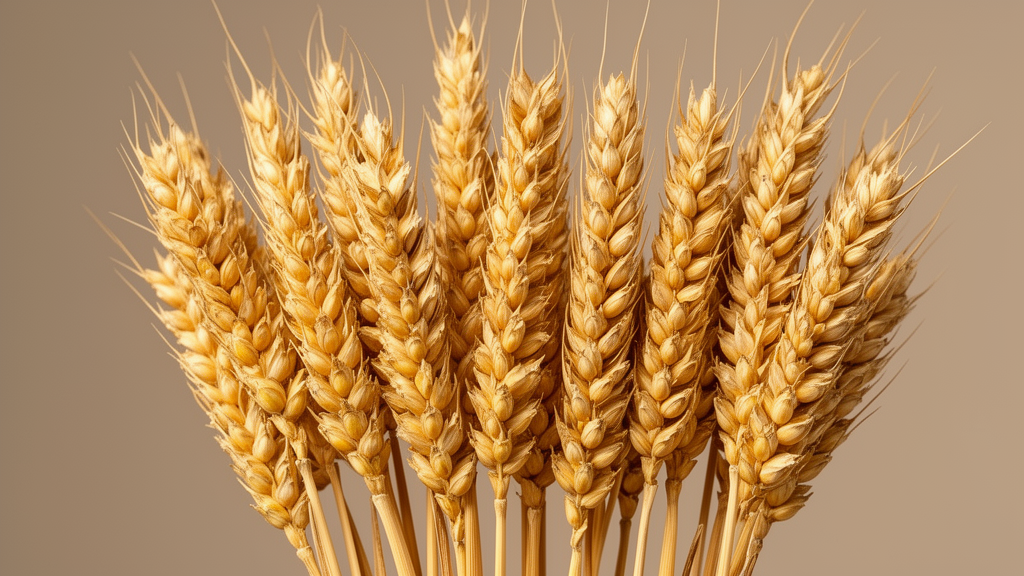
Advanced bread wheat mutant lines developed through cobalt-60 gamma irradiation demonstrated significant agronomic and technological improvements over established commercial cultivars under Egyptian growing conditions, with specific lines yielding higher harvests, stronger gluten networks, and longer-lasting Balady flatbread. Evaluated across two consecutive growing seasons at the Experimental Farm of the Nuclear Research Center in Inshas, Egypt, these ninth-generation (M9) lines revealed pronounced phenotypic divergence in grain structure, milling performance, and dough rheology. Among the evaluated genotypes, mutant line 152 achieved the highest overall grain yield of 1150.7 grams per square meter, equivalent to 32.22 ardab per feddan, alongside a harvest index of 39.72 percent, significantly surpassing commercial reference cultivars Giza-171 and Sakha-95. Concurrently, mutant line 104 exhibited superior physical grain characteristics, including high kernel weight and flour yield comparable to premier commercial benchmarks. Because Egypt produces only half of its domestic wheat consumption and remains the world’s largest wheat importer, identifying genetically stable genotypes with high productivity and superior baking attributes represents a critical objective for national food security.
The five investigated mutant lines—designated 104, 105, 122, 151, and 152—were developed through an induced mutagenesis breeding program using a cobalt-60 gamma-ray source applied to dry grains of distinct parental cultivars. Maryout-5 was treated at 250 Gray to generate line 104, Aseel-5 at 350 Gray for line 105, Sahel-1 at 300 Gray for line 122, and Sakha-93 at 250 and 300 Gray for lines 151 and 152, respectively. Physical mutagenesis in crop breeding must be distinguished from post-harvest food irradiation; in mutation breeding, only the parental seed is exposed to radiation to induce heritable genetic variation, leaving no chemical residues, and grains of advanced mutant generations never encounter radiation. Starting from approximately five hundred irradiated seeds per dose in the M1 generation, progenies were advanced by selfing and pedigree selection through the M9 generation based on earliness, plant height, spike traits, and grain yield until phenotypic uniformity and genetic stability were achieved.
Field trials were executed in a randomized complete block design with three replicates during the 2023/2024 and 2024/2025 growing seasons under well-watered conditions. Because the original parental cultivars were unavailable, the study evaluated the mutant lines directly against two commercial controls, Giza-171 and Sakha-95. Combined analysis of variance demonstrated highly significant genotype effects across all recorded agronomic traits, whereas genotype-by-season interactions were non-significant for every trait except biological yield. Across both seasons, line 152 delivered the highest grain yield of 1150.7 grams per square meter, representing a 28.5 percent increase over Giza-171 and 28.8 percent over Sakha-95, alongside a shorter stature of 97 centimeters and an elevated harvest index of 39.72 percent. Mutant line 104 produced 27.58 ardab per feddan, outyielding both reference cultivars by approximately 10 percent. Additionally, line 122 exhibited the longest spikes at 19.33 centimeters and the greatest spike density at 418 spikes per square meter.
Evaluation of physical grain characteristics across both seasons revealed pronounced genotypic differences that directly govern industrial milling yields and processing value. Giza-171 and mutant line 104 recorded the highest thousand-kernel weights, with line 104 measuring 55.08 grams in the first season and 54.94 grams in the second, closely matching Giza-171 at 55.27 and 55.58 grams. In test weight measurements, line 104 achieved 85.12 kilograms per hectoliter in 2023/2024 and 84.90 in 2024/2025, matching Giza-171 and outperforming Sakha-95 and line 105. Flour yield followed a similar trend, where line 104 achieved 70.51 and 70.44 percent extraction across the two seasons. Grain hardness, measured as the breaking force of individual kernels using a digital force gauge, revealed that line 152 was significantly the hardest genotype at 74.17 to 75.29 Newtons across seasons, whereas Sakha-95 recorded the lowest breaking resistance at 63.45 to 64.76 Newtons.
Chemical composition of whole meal and eighty-two percent extraction flour samples reflected significant genetic differentiation among the wheat lines. Whole-meal analysis across both growing seasons established that line 152 contained the highest crude protein content at 11.87 to 12.26 percent, followed by line 104, while Sakha-95 and lines 122 and 105 maintained the lowest protein levels. Because grain quantity was limited, flours milled from both seasons were composited for subsequent laboratory analyses. In composite eighty-two percent extraction flour, line 152 again recorded the highest protein content at 11.48 percent, surpassing Giza-171 at 10.17 percent and Sakha-95 at 9.58 percent, while displaying the lowest total carbohydrate concentration at 85.29 percent. Whole-meal mineral profiling demonstrated that potassium was the dominant macro-element, peaking in line 105 at 387.33 milligrams per hundred grams, whereas lines 151 and 152 contained the highest manganese concentrations at 4.12 and 4.05 milligrams per hundred grams.
Functional evaluation of composite flours demonstrated distinct variations in water holding capacity and oil holding capacity, properties that influence dough mixing characteristics and bread crumb moisture retention. Water holding capacity ranged between 72.84 percent and 87.35 percent, with mutant line 152, commercial cultivar Giza-171, and mutant line 104 recording the highest values, aligning with their elevated protein contents. Flour hydration capacity is influenced by kernel hardness, particle size, damaged starch, and the functional integrity of gluten proteins. In oil holding capacity determinations, Giza-171 achieved the highest retention at 107.71 percent, followed by line 152 at 104.48 percent, whereas line 105 exhibited the lowest value at 88.74 percent. The authors noted that variations in oil absorption reflect structural differences in the starch-protein matrix and the availability of hydrophobic binding sites, while enhanced water binding contributes directly to improved moisture preservation during bread storage.
Rheological profiling established that mutant line 152 formed an exceptionally robust gluten network with superior mixing tolerance and pasting behavior. Measured using the Glutomatic system, line 152 achieved the highest wet gluten at 33.80 percent, dry gluten at 11.35 percent, and gluten index at 92.08 percent, significantly exceeding Giza-171 at 91.54 percent and Sakha-95 at 87.90 percent. Mixolab dough testing, conducted as single determinations on composite flours, revealed that line 152 required the highest water absorption at 58.72 percent, while recording the longest dough development time at 4.86 minutes and dough stability time at 8.65 minutes. In torque measurements, line 152 recorded the highest resistance to protein weakening (C2) at 0.57 Newton-meters, peak starch gelatinization (C3) at 1.89 Newton-meters, and hot gel stability (C4) at 1.78 Newton-meters. Crucially, line 152 exhibited the lowest starch retrogradation torque (C5) at 2.11 Newton-meters compared to 3.39 Newton-meters in Sakha-95, indicating delayed crumb firming.
Flat Balady bread loaves were produced from eighty-two percent extraction flour following traditional fermentation, sheeting on wheat bran, and short baking at 450 to 500 degrees Celsius. Crust color exhibited lower lightness (L*) and higher redness (a*) and yellowness (b*) than crumb sections, reflecting Maillard browning and sugar caramelization during baking. Proximate chemical analysis of the baked bread showed that line 152 contained the highest finished protein content at 11.61 percent, compared with 10.26 percent for Giza-171 and 9.88 percent for Sakha-95. Bioactive compound analysis revealed that bread prepared from line 152 possessed the highest total phenolic content at 80.77 milligrams of gallic acid equivalents per hundred grams and the highest DPPH radical scavenging activity at 16.48 percent, followed by line 104 at 78.54 milligrams and 15.83 percent. The researchers noted that moderate radical scavenging values across all samples were expected due to bran removal during milling and thermal degradation during high-temperature baking.
Sensory evaluation by fifteen semi-trained panelists across a nine-point hedonic scale established that Balady bread made from lines 151 and 152 achieved high overall acceptability scores of 8.76 and 8.73, comparable to Giza-171 at 8.88, with no significant differences observed in layer separation, crumb distribution, or chewing ability. During ambient storage up to 72 hours, bread freshness and staling behavior were monitored through moisture retention and alkaline water retention capacity (AWRC). Fresh bread moisture at zero time peaked in line 152 at 37.63 percent and steadily declined across all samples due to normal moisture loss in tied polyethylene bags. AWRC values declined progressively over storage, but bread from line 152 retained significantly superior hydration values, dropping from 321.15 percent at zero time to 241.82 percent after 72 hours, whereas Sakha-95 fell from 271.16 percent to 186.38 percent. Consequently, line 152 exhibited the slowest staling rate, driven by higher gluten content, enhanced water binding, and retarded amylopectin retrogradation.
The agronomic gains observed in lines 152 and 104 suggest meaningful commercial value within Egypt’s wheat cultivation and processing sectors. Based on the 2025 official procurement price of 2200 Egyptian pounds per ardab, the yield advantage of line 152 corresponds to an estimated additional gross return of 15,700 to 15,800 Egyptian pounds per feddan over commercial checks, while line 104 offers approximately 5500 to 5600 pounds per feddan in added gross revenue. However, the authors underscored that these estimates derive from experimental research plots and require validation under standard farming conditions. Moving toward official variety registration, both lines must undergo multi-location testing across diverse growing regions—including drought and heat-stress environments—to confirm adaptation and disease resistance against rusts. In addition, molecular marker genotyping is planned to confirm the underlying genetic mutations, and seasonal stability of quality traits must be verified using non-composited flours before commercial release.
Subject of Research: Agronomic performance, physicochemical properties, and Balady breadmaking quality of gamma-induced bread wheat mutants
Article Title: Physicochemical and technological characterization of some Elite γ-Induced Bread Wheat Mutants
Article References: Abd El-Salam, R. S., Ayaad, M. H., Alazab, K. F., Basyouny, M. A. E., Sobieh, S. E. S., Abdelaleem, M. A., Othman, M. A., Hassan, I. O., Abdelrahman, M. T., & Afify, M. A. (2026). Physicochemical and technological characterization of some Elite γ-Induced Bread Wheat Mutants. Journal of Radiation Research and Applied Sciences, 19(4), Article 102809. https://doi.org/10.1016/j.jrras.2026.102809
Image Credits: AI Generated
DOI: 10.1016/j.jrras.2026.102809
Keywords: Bread wheat, Induced mutagenesis, Gamma irradiation, Triticum aestivum, Balady bread, Mutant line 152, Mutant line 104, Giza-171, Sakha-95, Grain yield, Mixolab rheology, Gluten index, Bread staling, Alkaline water retention capacity, Flour extraction, Thousand-kernel weight, Crop breeding
News Source: Alan Morgan. (November 24, 2026). Gamma-Irradiated Bread Wheat Mutants Demonstrate Superior Grain Yield and Breadmaking Traits. Scienmag.