A comprehensive narrative review synthesizing research across neurolinguistics, neuroimaging, speech-language pathology, and computational acoustics indicates that articulating complex Arabic phonemes may provide a potent, high-demand stimulus for post-stroke speech and cognitive rehabilitation. Neurogenic communication impairments, including post-stroke aphasia, dysarthria, and apraxia of speech, affect roughly one-third of stroke survivors and frequently result in long-term functional disability. While conventional rehabilitation protocols often depend on simplified phonetic targets or repetitive non-speech exercises that may offer restricted neuromotor activation, the unique phonetic inventory of Arabic presents distinct neuromuscular challenges. Sounds such as the pharyngealized coronal stop Ḍād, the voiced pharyngeal fricative ʿAyn, the voiceless uvular fricative Khāʾ, and the voiceless uvular plosive Qāf demand intricate, non-standard coordination of deep vocal tract structures. By framing articulatory complexity as a restorative resource, the synthesis suggests that systematic practice with these challenging consonants recruits preserved cortico-subcortical motor pathways, engages auditory-motor feedback mechanisms, and promotes experience-dependent neuroplasticity across distributed brain networks.
Conventional therapeutic paradigms frequently encounter difficulties in driving optimal functional recovery because simplified phonetic stimuli may inadequately stimulate distributed motor speech circuitry. The Arabic phonetic framework diverges sharply from Latinate languages by systematically embedding pharyngeal, uvular, and emphatic sounds into daily conversational speech rather than restricting them to isolated liturgical or specialized environments. Producing these consonants requires high-precision regulation of respiratory airflow, laryngeal positioning, and posterior tongue movements within a biomechanically restricted articulatory workspace. In stroke survivors with compromised speech pathways, engaging these high-demand targets is hypothesized to bypass localized cortical lesions by recruiting alternative sensorimotor networks. By challenging the speech motor system with targets that necessitate superior muscular precision, structured phonetic therapy seeks to stimulate preserved perilesional language zones alongside interconnected subcortical structures, transforming routine articulation drills into rigorous neurocognitive exercises.
The neuromuscular profiles of specific Arabic consonants demonstrate the physiological depth required for their production. The emphatic consonant Ḍād involves lateral coronal contact where the posterolateral tongue presses against the upper molars combined with pharyngeal constriction, requiring coordinated multi-muscle activation across orofacial and pharyngeal groups. The phoneme ʿAyn demands epiglottopharyngeal constriction with an active voiced laryngeal component, compelling precise laryngeal tension and pharyngeal wall contraction without complete airway occlusion. In contrast, the uvular fricative Khāʾ relies on sustained, turbulent airflow directed through a narrow constriction between the uvula and the posterior pharyngeal wall without vocal cord vibration. Meanwhile, the voiceless uvular plosive Qāf necessitates robust posterior tongue dorsum elevation to establish complete uvular closure followed by a forceful release of intraoral pressure, producing a sharp acoustic burst. Each of these gestures demands precise timing and spatial control of deep muscular structures that rarely operate with such complexity during simpler anterior or bilabial speech sounds.
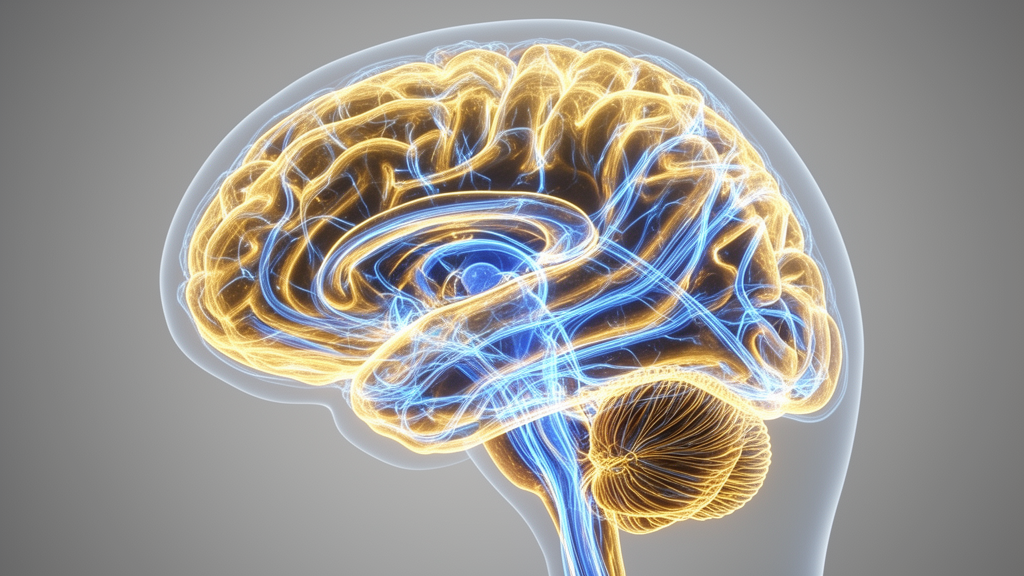
This articulatory complexity depends directly on an intricate network of peripheral cranial nerves working in tight synchronization with central brain regions. Motor execution of these movements requires coordinated signaling from the hypoglossal nerve for tongue positioning and retraction, the facial nerve for anterior lip tension, the glossopharyngeal nerve for pharyngeal elevation, and branches of the vagus nerve, specifically the pharyngeal plexus and recurrent laryngeal nerve, for pharyngeal constriction and laryngeal modulation. Centrally, the motor commands originate and undergo coordination within the primary motor cortex, premotor areas, Broca’s area, and the supplementary motor area, which governs the temporal sequencing and initiation of articulatory motor programs. The insular cortex assists by integrating multisensory speech representations and linking motor output with somatosensory feedback. Subcortically, the cerebrocerebellum fine-tunes motor timing, coordination, and rapid transitions, while cortico-striatal circuits involving the basal ganglia and thalamus facilitate motor selection, movement inhibition, and the procedural automatization of learned articulatory sequences.
A critical neurobiological dimension of complex phoneme training involves continuous closed-loop sensorimotor calibration driven by predictive coding and state-feedback control mechanisms. Speech production does not operate as an isolated open-loop motor execution system; instead, it relies on ongoing sensory monitoring where internal feedforward predictions are constantly compared against sensory consequences. Auditory cortical structures, particularly Heschl’s gyrus and the posterior superior temporal gyrus, actively detect acoustic prediction errors by computing discrepancies between intended targets and actual vocal output. Concurrently, the somatosensory cortex processes proprioceptive signals from the tongue root, soft palate, and pharyngeal walls. Because pharyngeal and uvular consonants generate acoustically and biomechanically distinct sensory profiles, subtle articulatory deviations trigger pronounced prediction error signals. These error signals travel across dorsal sensorimotor pathways, including the arcuate fasciculus, to drive online corrective modifications in frontal premotor regions and cerebellar loops, reinforcing synaptic efficiency and supporting adaptive sensorimotor recalibration during stroke recovery.
To translate these phonetic mechanisms into structured clinical practice, the review highlights the application of minimal pair contrasts and authentic lexical targets designed to train auditory discrimination and motor precision concurrently. Contrasts such as uvular versus velar stops, exemplified by Qalb meaning heart and Kalb meaning dog, force the speaker to differentiate between posterior tongue dorsum contact at the uvula and standard velar elevation. Similarly, contrasting pharyngeal and glottal sounds, such as ʿAlam meaning flag versus Alam meaning pain, requires switching between active muscular constriction of the pharyngeal wall and simple vocal fold closure. Additional pairings, such as the vocalic shift between ʿAlam and ʿIlm meaning knowledge, challenge the speaker to maintain pharyngeal constriction while adjusting vowel height, taxing fine vocalic control. Furthermore, fricative contrasts like the uvular Khāʾ in Khal meaning vinegar versus the pharyngeal Ḥāʾ in Ḥal meaning solution contrast sustained posterior vibration with high airflow resistance, providing rigorous drills for respiratory-articulatory coordination.
The review explicitly differentiates targeted phonetic training from traditional non-speech oral motor exercises, which have generated ongoing controversy regarding their clinical efficacy. Non-speech exercises, such as tongue elevation, jaw resistance, or lip puckering, concentrate primarily on peripheral muscle strength and range of motion without engaging symbolic language systems. Evidence indicates that improvements in non-speech oral movements frequently fail to generalize to functional speech production because vocal recovery requires task-specific motor learning. In contrast, complex phoneme articulation requires transforming abstract phonological goals into structured articulatory motor programs within a symbolic communicative framework. This process recruits higher-order cognitive systems, including working memory and prefrontal attentional networks, alongside sensorimotor loops. By embedding high-intensity muscular actions within meaningful communicative tasks, phonetic training establishes a closed-loop neurobiological environment that drives activity-dependent synaptic plasticity far more effectively than isolated, non-speech motor drills.
When extending this framework to non-native speakers, distinct cognitive and neuroplastic mechanisms come into play that require careful clinical governance. In native speakers, rehabilitation focuses primarily on reactivating and stabilizing previously established phonological representations and motor programs that were disrupted by neurological injury. For non-native individuals, however, producing sounds like ʿAyn or Qāf requires de novo motor learning, perceptual adaptation, and the construction of entirely novel phonological categories. Non-native speakers must actively inhibit deeply ingrained, native phonetic schemas while simultaneously managing high cognitive-motor loads. This process places substantial demands on domain-general executive control systems, recruiting prefrontal networks and basal ganglia loops involved in task switching and inhibitory control. Furthermore, covert rehearsal through inner speech mechanisms engages the phonological loop and central executive to maintain unfamiliar motor targets prior to physical execution. Consequently, the authors caution that introducing these sounds to non-native patients without graded, clinician-guided training could induce frustration or foster maladaptive compensatory movements.
Because pharyngeal and uvular articulations take place entirely within the posterior vocal tract, they remain concealed from conventional visual inspection, presenting a notable clinical challenge for feedback and correction. To overcome this anatomical barrier, the review highlights emerging technological approaches that integrate digital speech analysis and artificial intelligence into rehabilitation protocols. Automated acoustic processing systems can instantaneously capture a patient’s vocalizations, analyze formant transitions, bandwidth variations, and spectral peaks, and project this data onto real-time visual displays or digital anatomical models. This dynamic biofeedback translates hidden physiological actions—such as pharyngeal wall narrowing, tongue backing, and soft palate elevation—into explicit, objective visual targets that patients can actively monitor and adjust. Integrating acoustic corpora, such as specialized Arabic speech-disorder datasets, with automated machine-learning evaluation tools enables objective tracking of articulatory precision and allows clinicians to personalize therapy intensity according to each patient’s residual neuromotor capacity.
Despite the therapeutic potential of leveraging complex phonetics, the authors emphasize substantial clinical limitations and the preliminary nature of current evidence. Articulating high-resistance pharyngeal and uvular phonemes imposes considerable respiratory and muscular demands that may exceed the physiological tolerance of individuals with severe dysarthria, marked oral fatigue, or acute stroke-related exhaustion. Crucially, the current literature base relies on theoretical neurophonetic models, acoustic analyses, and small observational case reports, such as documented improvements in phonetic consistency following structured Arabic recitation rules in single stroke cases, rather than large-scale randomized controlled trials. There is currently an absence of direct comparative evidence proving clinical superiority over established speech-language therapies. Rigorous randomized clinical trials, dosage studies, and cross-linguistic investigations combining neuroimaging with real-time acoustic biofeedback will be essential before high-complexity phonetic training can be validated as a standardized intervention in neurorehabilitation.
Subject of Research: Therapeutic potential of complex Arabic phoneme articulation in neurogenic speech rehabilitation
Article Title: Clinical Neurophonetic mechanisms of complex Arabic phoneme articulation: implications for motor and cognitive rehabilitation
Article References: Rachid, M., Warda, A., Elnady, F., Salem, T., & Warda, M. (2026). Clinical Neurophonetic mechanisms of complex Arabic phoneme articulation: implications for motor and cognitive rehabilitation. Frontiers in Human Neuroscience, 20, 1844047. https://doi.org/10.3389/fnhum.2026.1844047
Image Credits: AI Generated
DOI: 10.3389/fnhum.2026.1844047
Keywords: neurogenic communication disorders, speech rehabilitation, stroke recovery, Arabic phonetics, neuroplasticity, sensorimotor integration, predictive coding, dysarthria, apraxia of speech, aphasia, auditory feedback, Broca's area, basal ganglia, cerebellum, cranial nerves, oral motor exercises, acoustic biofeedback, minimal pairs
News Source: Cassandra Pierce. (November 24, 2026). Complex Arabic Phonemes Engage Distributed Neural Circuits for Stroke Speech Rehabilitation. Scienmag.