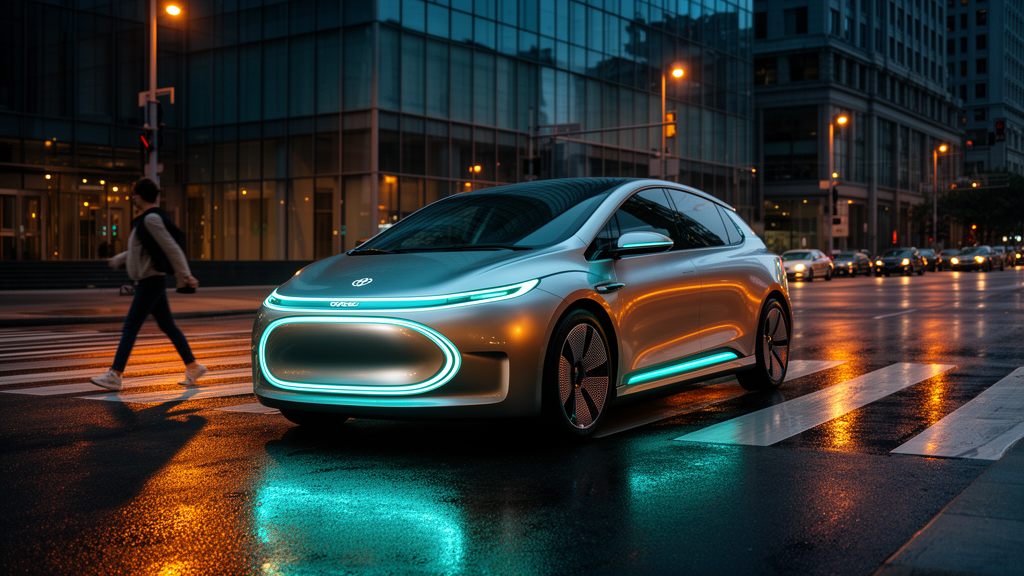
External human-machine interfaces engineered for automated driving platforms remain overwhelmingly fixed in their signaling behaviors despite continuous fluctuations in pedestrian attentiveness, sensory capabilities, and ambient environmental conditions. In a theoretical investigation published in Design Science, researchers addressed this persistent operational disconnect by establishing a communication-theoretic design framework that conceptualizes encounters between autonomous vehicles and pedestrians as adaptive, negotiated social interactions within shared public space. Conventional vehicle external interfaces typically broadcast pre-scripted, static visual cues that fail to accommodate real-world complexities such as street noise, visual clutter, acute pedestrian distraction, and sensory impairments. To resolve these limitations, the authors integrated foundational linguistic and media theories into an actionable engineering taxonomy. By synthesizing Roman Jakobson’s structural code-channel model with the four communicative affordances articulated by Jeffrey Treem and Paul Leonardi—visibility, persistence, editability, and association—the authors established a structured foundation for orchestrating visual, auditory, and haptic modalities. Rather than presenting validated empirical performance outcomes, the theoretical study provides a formal conceptual architecture, seven provisional design heuristics, and six illustrative scenario prototypes designed to systematically steer future virtual reality simulations and field-based automotive evaluations toward inclusive pedestrian-vehicle coordination.
The conceptual framework directly addresses the operational realities of street-level crossings, where navigating road traffic requires pedestrians to rapidly interpret automated vehicular intent under severe time constraints. Within this context, the authors repositioned the autonomous vehicle not as an inert piece of mechanical road infrastructure, but as an algorithmically governed, machine-agent communicator functioning within a computer-mediated communication paradigm. Guided by Jakobson’s six-element model—sender, message, receiver, channel, code, and context—the framework analyzes how automated systems encode intent and select appropriate communicative pathways. Simultaneously, the framework integrates Treem and Leonardi’s communicative affordances to define how information becomes functionally actionable for road users: visibility governs how vehicle intentions become socially accessible; persistence regulates the temporal duration of emitted cues; editability defines the system’s capacity to dynamically modify, escalate, or de-escalate signals during active encounters; and association ensures signals are unequivocally linked to the specific yielding vehicle. Furthermore, the architecture incorporates critical human-automation interaction constructs developed by Zhou and colleagues, specifically dynamic learned trust—which evolves through ongoing, iterative interactions—and forward incompatibility, which designates the communicative disorientation pedestrians experience when familiar human driver mannerisms, such as direct eye contact and informal hand waving, are eliminated from vehicular encounters.
To evaluate whether existing interface developments currently utilize formal communication frameworks, the researchers executed a systematic analytic scoping review of published interface prototypes across four primary academic repositories: the ACM Digital Library, IEEE Xplore, Scopus, and the proceedings of the AutomotiveUI and Human-Robot Interaction conferences. The search parameters encompassed literature published between January 2017 and December 2024, utilizing targeted Boolean combinations of terms including external interfaces, autonomous vehicles, pedestrian crossing, and multimodal displays. From an initial corpus of approximately 60 retrieved records, strict inclusion criteria required each evaluated study to present a physical prototype, dynamic virtual reality setup, or simulation mock-up that actively communicated vehicle intent during crossing encounters; perception-only and attitude-only survey studies lacking interface implementations were systematically excluded. Twenty distinct studies met these criteria. Two independent investigators double-coded the complete corpus across ten discrete descriptive dimensions using a standardized codebook, measuring attributes such as novelty, anthropomorphism, transparency, communication mode, grounding in communication theory, multimodal adaptation, pedestrian input channels, message content, visual placement, and the implementation of interactive feedback loops.
The quantitative results of this analytic scoping mapping revealed profound theoretical and functional deficits across modern automated vehicle interface design. Inter-rater reliability assessments demonstrated substantial to near-perfect coding agreement across evaluative dimensions, yielding a median estimable Cohen’s kappa of 0.95, with perfect concordance recorded for communicative mode, transparency, and intention channels. Crucially, the review documented that zero out of the twenty evaluated studies (0%) explicitly grounded their interface design choices in established communication theory. While multimodal signaling was relatively prevalent, appearing in 30% of the examined implementations (6 of 20), adaptable multimodality—defined strictly as dynamic, state-contingent switching, escalation, or de-escalation across sensory channels based on pedestrian situational awareness—was entirely absent across the entire corpus (0 of 20). Only 10% of designs (2 of 20) incorporated any pedestrian-to-vehicle communication mechanism, such as wireless network handshakes or wearable sensor inputs, and only 10% (2 of 20) positioned visual signals at the vehicle windshield level. Furthermore, although 30% of systems (6 of 20) introduced anthropomorphic signaling features such as expressive robotic eyes, exactly zero studies (0 of 20) established an explicit bidirectional feedback loop capable of confirming that a pedestrian had successfully received, interpreted, or acknowledged the automated vehicle’s broadcasted intent.
Synthesizing these coding results revealed three dominant structural gaps that severely restrict the communicative robustness of contemporary vehicular interfaces. First, the majority of evaluated prototypes exhibited an arbitrary allocation of visual signaling hardware across vehicle bumpers, roofs, grilles, and side panels without an empirical or theoretical rationale explaining how visual placement enhances pedestrian visual search, gaze alignment, or cognitive legibility. Second, existing systems operated almost exclusively as unilateral broadcast mechanisms; they projected informational cues outward but lacked sensory or networking pipelines to register pedestrian behavioral responses, attentional tunneling, or physical constraints. Third, existing designs neglected the fundamental norms of conversational reciprocity that underpin everyday human interaction. In pedestrian road crossings, human interaction relies extensively on micro-level turn-taking and acknowledgment to establish common ground and resolve ambiguity. By failing to verify receipt or acknowledge pedestrian actions, conventional interfaces presume instantaneous human comprehension without verification, elevating the risk of pedestrian hesitation, cognitive overload, or premature, hazardous crossing decisions in complex traffic environments.
To overcome these empirical gaps, the authors translated their communication-theoretic synthesis into seven provisional, theory-informed design principles, designated P1 through P7. Principle 1, channel-receiver fit, dictates that sensory channel selection must align dynamically with the pedestrian’s immediate cognitive state, sensory faculties, and surrounding environmental conditions such as ambient noise, glare, or weather. Principle 2, calibrated persistence, mandates that signal duration must be tightly calibrated to support coordinated decision-making without prolonging displays in ways that cause visual clutter, sensory fatigue, or cognitive distraction. Principle 3, editability and escalation, requires interfaces to dynamically alter signaling channels—escalating from visual cues to haptic or auditory alerts when distraction is detected, and promptly de-escalating once acknowledgment occurs. Principle 4, association and grounding, requires signals to unmistakably identify which vehicle is yielding and precisely who is being addressed through localized windshield anchoring or targeted projections. Principle 5, reciprocity by default, introduces concise bidirectional acknowledgments that mirror everyday human conversational norms. Principle 6, cultural and regulatory localization, requires communicative codes and symbols to adhere to regional traffic customs and regulatory mandates. Finally, Principle 7, sensory economy, demands the deployment of the minimal effective modality mix necessary to achieve mutual understanding, explicitly prohibiting uncoordinated multimodal broadcasts that overburden human attentional capacity.
The operational utility of the framework and its principles was systematically instantiated through six illustrative scenario vignettes spanning three progressive communication tiers. Level 1 addresses single-modal communication tailored for attentive pedestrians with unimpaired sensory capabilities. In Scenario 1, an autonomous vehicle encountering an alert, undistracted pedestrian relies exclusively on a windshield-anchored visual display paired with a bumper-projected crosswalk illuminated in high-contrast cyan, deliberately chosen for its strong visual contrast and lack of conflict with standard automotive turn signals and brake lights. Because the pedestrian is attentive, the auditory channel remains completely silent, thereby preserving community acoustic environments and fulfilling sensory economy. In Scenario 2, the vehicle encounters a sighted pedestrian utilizing a wheelchair. Operating via a localized wireless handshake using Wi-Fi or Bluetooth Low Energy, the vehicle alters its communicative code by displaying a personalized wheelchair pictogram on the windshield rather than a standard walking pedestrian silhouette. This adaptation enhances the communicative affordance of association by confirming to the user that the vehicle has recognized their specific presence, achieving social accessibility without introducing extraneous sensory channels.
Level 2 expands the framework to multimodal escalation strategies designed for scenarios where attention is compromised or specific sensory channels are inaccessible. In Scenario 3, the vehicle’s computer-vision tracking detects an approaching pedestrian who is visibly distracted by a handheld mobile device and failing to reduce walking speed. Rather than maintaining a static visual display that remains outside the pedestrian’s narrowed visual field, the system operationalizes editability and escalation: it augments the windshield display by emitting a brief, directional audio alert and transmitting a transient haptic vibration to the user’s paired smartwatch. Crucially, as soon as motion tracking observes the pedestrian looking up or hesitating, the system instantly de-escalates, silencing secondary alerts to prevent sensory overload. In Scenario 4, the platform encounters an audio-disconnected runner wearing sound-isolating headphones or an individual with hearing loss, recognized via a wearable device flag. The interface immediately substitutes the unviable auditory channel with synchronized haptic wrist pulses and high-contrast visual displays, ensuring immediate visibility and personal association while keeping external community noise at zero.
Level 3 articulates tailored communication pathways configured for pedestrians navigating with visual impairments, utilizing Universal Design logic to ensure non-exclusive perceptual accessibility. In Scenario 5, when approaching a color-blind pedestrian identified through digital profile data, the interface avoids hue-dependent color coding entirely. Instead of relying on green or amber lights, the display executes an edit at the Jakobsonian code level by deploying a high-contrast, black-and-white chevron pattern that dynamically scales in frequency relative to the vehicle’s deceleration rate, ensuring full legibility through motion and contrast alone. In Scenario 6, when sensing a pedestrian with severe visual impairment utilizing a smart cane or accessibility profile, the vehicle activates synchronized spoken auditory cues alongside a directional haptic pulse delivered directly through the pedestrian’s cane or wearable device. Concurrently, a minimal visual indicator remains active on the vehicle windshield to preserve situational awareness for surrounding sighted bystanders. Once on-board sensors confirm the pedestrian has crossed the traffic lane, the audio-haptic channel terminates immediately, resetting the interface and preventing auditory channel fatigue.
Across all three operational tiers, the authors incorporated an overarching, cross-cutting micro-reciprocity layer that establishes closed-loop bidirectional communication between pedestrians and automated driving systems. Drawing directly from conversation-analytic research on rapid human turn-taking, which identifies response windows between sub-second latencies and approximately two seconds as normative for social coordination, the framework programs automated vehicles to deliver concise, context-sensitive confirmations—such as a subtle windshield smile, brief animation, or a text prompt stating you are welcome—whenever a pedestrian waves or signals courtesy. The authors emphasize that their contribution represents a design-theoretic foundation rather than a set of finalized, behaviorally validated safety claims; empirical validation regarding crossing hesitation, trust calibration, and emotional response is intentionally deferred to planned virtual reality experiments and controlled closed-course field evaluations. By replacing static, one-way displays with an adaptable, affordance-grounded communicative ecology, the framework provides an extensible engineering methodology for developing legible, context-sensitive, and universally accessible urban mobility platforms.
Subject of Research: Communication-theoretic framework for adaptive and bidirectional external human-machine interfaces on autonomous vehicles
Article Title: Designing adaptive, bidirectional eHMIs for autonomous vehicles: a communication-theory framework for inclusive pedestrian interaction
Article References: Rahmati, H., & Hasan, R. (2026). Designing adaptive, bidirectional eHMIs for autonomous vehicles: a communication-theory framework for inclusive pedestrian interaction. Design Science, 12, Article e43. https://doi.org/10.1017/dsj.2026.10094
Image Credits: AI Generated
Keywords: autonomous vehicles, external human-machine interfaces, eHMI, pedestrian-vehicle interaction, communicative affordances, Jakobson communication model, dynamic learned trust, forward incompatibility, multimodal signaling, reciprocal acknowledgment, sensory economy, road-crossing safety, universal design, channel-receiver fit, calibrated persistence, assistive mobility, wearable interaction, inclusive design
News Source: Denise Maddox. (November 24, 2026). Adaptive Communication Theory Framework Proposed for Autonomous Vehicle External Interfaces. Scienmag.