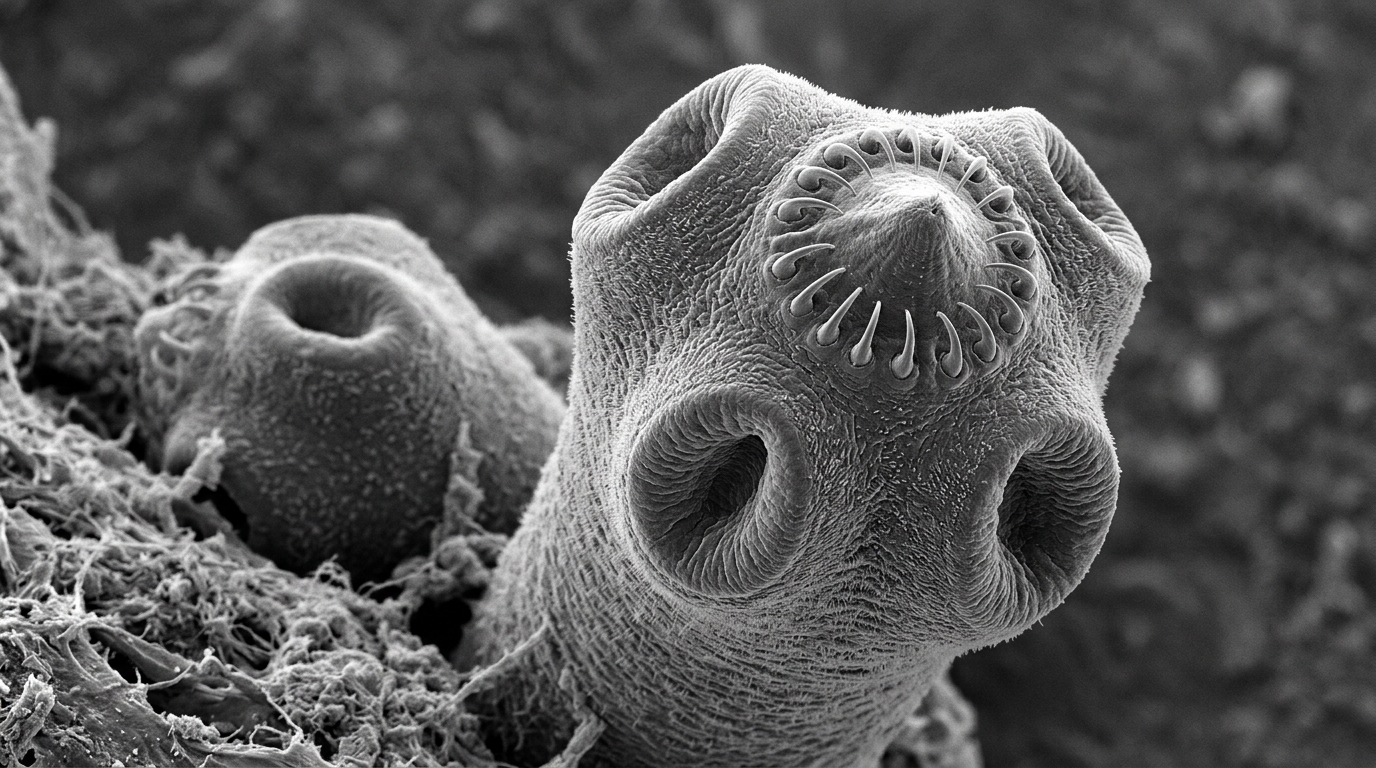
A newly validated multiplex TaqMan quantitative real-time polymerase chain reaction assay successfully identified three dominant pathogenic Echinococcus species simultaneously within a single reaction tube. Designed to address ongoing surveillance difficulties across the Qinghai–Tibet Plateau, the diagnostic method uses a lyophilized pre-mixed one-step system targeting Echinococcus granulosus s.s., Echinococcus multilocularis, and Echinococcus shiquicus.
On the Qinghai–Tibet Plateau, the co-endemicity of multiple parasite species has created persistent obstacles for standardized echinococcosis surveillance and control. Existing molecular workflows have traditionally depended on cumbersome combinations of conventional and nested polymerase chain reaction assays. According to the study, these earlier approaches suffer from low detection efficiency, heightened contamination risks, poor repeatability when handling low-parasite-load specimens, and an inability to perform single-tube multi-species identification.
During laboratory evaluation, the new multiplex assay demonstrated excellent analytical performance, displaying high specificity, strong linearity, and a low limit of detection of 400 copies/mL. When evaluated against confirmed biological samples, the testing system achieved a diagnostic sensitivity of 93.44 percent and a specificity of 100 percent. These results proved significantly superior to conventional combined polymerase chain reaction assays, which yielded an overall sensitivity of only 67.21 percent.
The lyophilized system consistently detected trace amounts of parasite DNA within complex and heterogeneous field samples, including fecal specimens collected from definitive hosts as well as tiny atypical lesions gathered from intermediate hosts. In addition to resolving single infections, the diagnostic platform accurately differentiated mixed multi-species infections that commonly complicate regional diagnosis.
With its simplified operational workflow, reduced risk of contamination, high reproducibility, and suitability for procedural standardization, the lyophilized multiplex assay provides an efficient technical tool for high-altitude endemic regions. The researchers conclude that the platform offers practical support for high-throughput epidemiological surveillance, precise pathogen tracing, and reliable differential diagnosis of echinococcosis.
Subject of Research: Multiplex quantitative PCR detection of Echinococcus species on the Qinghai-Tibet Plateau
Article Title: Multiplex TaqMan qPCR assay for the rapid detection of Echinococcus spp. in the Qinghai-Tibet Plateau
Article References: Cai, H., Liu, N., Meng, F., Guo, S., Liu, J., Han, G., Ma, W., Wang, W., Su, Y., Zheng, J., Chao, J., Qi, T., Li, J., Zhang, X., Zhang, Q., & Shao, G. (2026). Multiplex TaqMan qPCR assay for the rapid detection of Echinococcus spp. in the Qinghai-Tibet Plateau. PLOS Neglected Tropical Diseases, 20(11), e0014908. https://doi.org/10.1371/journal.pntd.0014908
Image Credits: AI Generated
DOI: 10.1371/journal.pntd.0014908
Keywords: Echinococcus, Echinococcus granulosus s.s, Echinococcus multilocularis, Echinococcus shiquicus, Qinghai-Tibet Plateau, TaqMan qPCR, multiplex qPCR, lyophilized PCR system, echinococcosis surveillance, pathogen detection, parasite DNA, definitive host feces, intermediate hosts, analytical sensitivity, differential diagnosis, mixed multi-species infections, epidemiological surveillance
News Source: Ophelia Keating. (November 24, 2026). Novel Multiplex PCR Assay Accurately Detects Three Echinococcus Parasite Species Simultaneously. Scienmag.