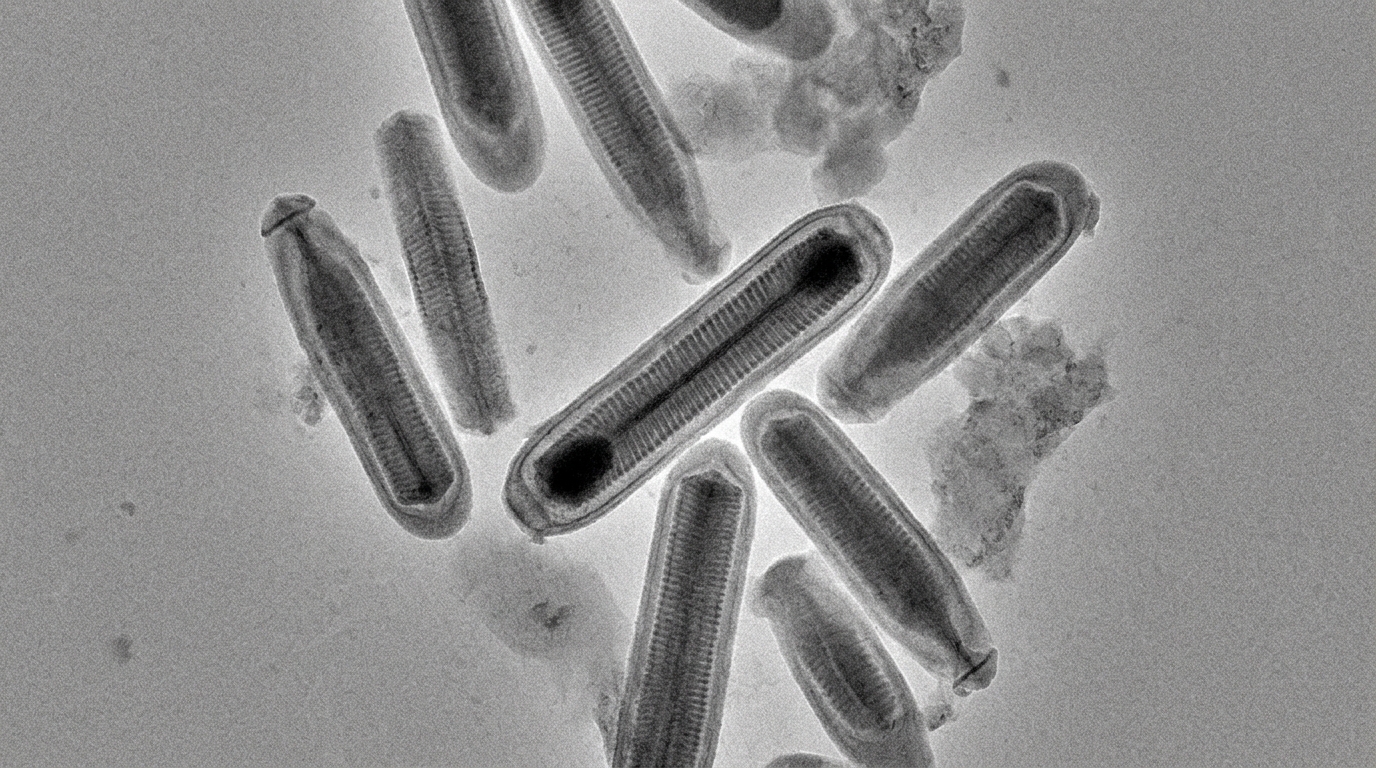
A nine-month kinetic investigation into the longevity of recombinant baculovirus vectors in chemically defined culture medium has revealed that the physical length of an inserted heterologous gene serves as the primary determinant of long-term viral stability, while storage temperature and upstream harvesting intervals exert no statistically significant influence on biological decay. Published in the journal Biotechnology Letters by a research team led by Rodrigo Jorge Atanes Netto, Fernanda Angela Correia Barrence, and Eutimio Gustavo Fernández Núñez, the experimental study tracked the infectivity, surface charge, and hydrodynamic dimensions of viral stocks over two hundred seventy-three days of continuous storage. Across eight unique experimental formulations, the overall mean one-log10 decay time of viral titer reached eighty days. Crucially, statistical modelling revealed that recombinant baculoviruses engineered with smaller genetic inserts maintained functional infectivity substantially longer than vectors carrying larger coding sequences, providing bioprocess engineers with actionable parameters for viral vector manufacturing.
Insect cell-baculovirus expression vector systems, widely designated as IC-BEVS, have established themselves as essential technological platforms across modern biopharmaceutical manufacturing for the production of complex heterologous proteins that require intricate post-translational modifications, including glycosylation and phosphorylation. These eukaryotic expression platforms are extensively utilized to assemble immunogenic virus-like particles, which represent nanoscale protein architectures capable of containing viral epidemics and infectious outbreaks across human and veterinary populations. In standard molecular engineering within this expression architecture, the endogenous polyhedrin promoter drives abundant target protein expression following the homologous replacement of the native polh gene. However, ensuring consistent manufacturing yields, reliable volumetric productivity, and strictly reproducible critical quality attributes across production campaigns demands rigorous standardization of the core biotechnological input: the recombinant baculovirus vector stock itself.
Industrial bioprocess standardization has increasingly driven a transition away from complex media formulations toward chemically defined media in upstream processing stages. Complex media contain undefined biological digests with variable compositions that introduce lot-to-lot heterogeneity and complicate downstream purification cascades, whereas chemically defined alternatives possess fully cataloged qualitative and quantitative formulations that minimize downstream interference and enhance upstream homogeneity. To evaluate vector longevity under these controlled nutritional environments, the research team adapted Spodoptera frugiperda Sf9 insect cells from standard serum-free Sf-900 III culture medium into chemically defined EX-CELL CD medium. Using the Bac-to-Bac construction framework, researchers prepared recombinant bacmid constructs incorporating two distinct structural protein genes from the rabies virus: the matrix protein gene, comprising seven hundred nineteen base pairs, and the larger glycoprotein gene, consisting of one thousand six hundred twenty-one base pairs.
To systematically untangle the operational parameters governing biological vector inactivation, the researchers executed a full two-level factorial design encompassing three independent variables. These parameters comprised the size of the inserted heterologous gene at seven hundred nineteen or one thousand six hundred twenty-one base pairs, the storage temperature maintained at either negative eighty degrees Celsius in an ultra-freezer or positive one point five degrees Celsius inside a standard laboratory refrigerator, and the viral harvest time established at either forty-eight or seventy-two hours post-infection. Recombinant viral batches, designated as batch L3, were generated by inoculating clarified precursor stocks into chemically defined EX-CELL CD insect cell medium at a cell concentration of one million cells per milliliter with a multiplicity of infection of zero point one plaque-forming units per cell.
A total of two hundred eighty-eight analytical aliquots were prepared in microcentrifuge tubes to conduct comprehensive temporal testing. Two hundred sixteen samples were allocated for monthly viral titration assays across nine consecutive months, examining two vector constructs, two harvesting intervals, and two temperature environments across experimental triplicates. An additional seventy-two samples were designated for quarterly colloidal evaluation at three-month intervals using electrophoretic light scattering and dynamic light scattering on a dedicated particle sizing analyzer. Continuous environmental monitoring confirmed precise equipment performance, recording an average ultra-freezer temperature of negative seventy-eight point seventy-three degrees Celsius with a standard deviation of one point twenty-nine degrees, alongside an average refrigerator temperature of one point thirty-five degrees Celsius with a standard deviation of one point three degrees.
Quantification of infectious viral titers across the nine-month timeframe relied on standardized end-point dilution assays using the adherent Sf9-ET Easy Titer reporter cell line cultured in serum-free medium within flat-bottomed ninety-six-well microplates. Samples removed from their designated storage chambers were immediately brought to thermal equilibrium within a controlled water bath set at twenty-eight degrees Celsius before undergoing tenfold serial dilutions across seven dilution rows. Following a ninety-six-hour incubation period sheltered from light at twenty-eight degrees Celsius, culture wells were treated with phosphate-buffered saline and examined under inverted fluorescence microscopy to identify distinct fluorescent foci. By calculating the fifty percent tissue culture infectious dose per milliliter, the authors derived precise viral titers expressed as plaque-forming units per milliliter through a standard conversion factor of zero point sixty-nine.
To mathematically capture the viral titer degradation profiles across the two hundred seventy-three days of storage, three distinct kinetic formulations were fitted to the dataset: a monophasic first-order linear model, a Weibull model incorporating an empirical shape parameter, and a biphasic model accounting for dual linear decay rates. The first-order model, which estimates inactivation through a single decay rate constant, yielded Pearson correlation coefficients ranging from negative zero point seven hundred forty-eight to negative zero point nine hundred thirteen, averaging negative zero point eight hundred fifty-two across conditions up to its validity limit. The Weibull formulation exhibited comparable correlation coefficients between zero point five hundred thirty-six and zero point nine hundred forty, averaging zero point seven hundred ninety-nine, yet its shape parameter failed to provide a superior statistical fit over the simpler linear model.
Comparative evaluation using one-way analysis of variance and Tukey post hoc testing demonstrated that the first-order kinetic model produced significantly greater absolute prediction errors than both the Weibull and biphasic models during their respective validity windows. Furthermore, the biphasic formulation demonstrated superior analytical robustness by accurately characterizing the full two hundred seventy-three-day dataset across all eight experimental combinations. The adjusted coefficient of determination for the biphasic models ranged between zero point two hundred sixty-six and zero point eight hundred seventy-four, averaging zero point five hundred eighty-one. Across these biphasic fits, calculated one-log10 decay times varied from thirteen to one hundred seventy days, reflecting an initial pronounced inactivation rate during the early months that transitioned into a extended plateau phase of biological stability.
Analysis of variance conducted on the two-level factorial design demonstrated that the inserted heterologous gene size was the sole independent factor exerting a statistically significant effect on the one-log10 decay time, achieving a significance value of p equals zero point zero twenty-nine on the standardized Pareto evaluation. A one-tailed paired t-test comparing vectors carrying the seven hundred nineteen base-pair insert against those harboring the one thousand six hundred twenty-one base-pair insert corroborated this outcome with a p-value of zero point zero two. In sharp contrast, neither storage temperature, harvest time, nor any two-way factor interactions crossed the threshold of statistical significance. The empirical regression model derived from the coded factors demonstrated that smaller genetic sequences substantially delayed viral degradation, yielding an average one-log10 decay time of eighty days across all experimental batches.
The biological mechanism underlying this biphasic decay profile appears closely tied to structural constraints governing nucleocapsid assembly and colloidal stability in chemically defined suspensions. During initial viral replication, vectors carrying larger heterologous inserts experience suboptimal nucleocapsid assembly across a subpopulation of virions, predisposing them to accelerated functional denaturation and rapid early titer loss. Once this fragile subpopulation is inactivated, the remaining optimally assembled virions persist over extended periods, generating the near-zero decay observed in the second kinetic phase. Simultaneously, dynamic light scattering and electrophoretic measurements revealed a consistent increase in mean hydrodynamic particle diameter accompanied by increasingly negative zeta potential slopes across all samples. This parallel rise in physical dimensions and absolute surface charge confirms that particle aggregation occurs via short-range non-electrostatic interactions, such as hydrophobic attractions, rather than simple electrostatic collapse.
Subject of Research: Viral inactivation kinetics and colloidal stability of recombinant baculoviruses in chemically defined media
Article Title: Stability of recombinant baculoviruses for biopharmaceutical applications in chemically defined medium
Article References: Jorge Atanes Netto, R., Correia Barrence, F. A., Públio Rabello, J., Teruya, M. M., Farias, V., & Fernández Núñez, E. G. (2026). Stability of recombinant baculoviruses for biopharmaceutical applications in chemically defined medium. Biotechnology Letters, 48(2), Article 51. https://doi.org/10.1007/s10529-026-03720-w
Image Credits: AI Generated
DOI: 10.1007/s10529-026-03720-w
Keywords: recombinant baculovirus, chemically defined medium, viral stability, inactivation kinetics, biphasic model, gene size, storage temperature, harvest time, viral titer decay, dynamic light scattering, zeta potential, particle aggregation, Spodoptera frugiperda, Sf9 cells, virus-like particles, biopharmaceutical manufacturing, factorial design
News Source: Juliet Wilcox. (November 24, 2026). Inserted Gene Size Dictates Recombinant Baculovirus Stability in Chemically Defined Medium. Scienmag.