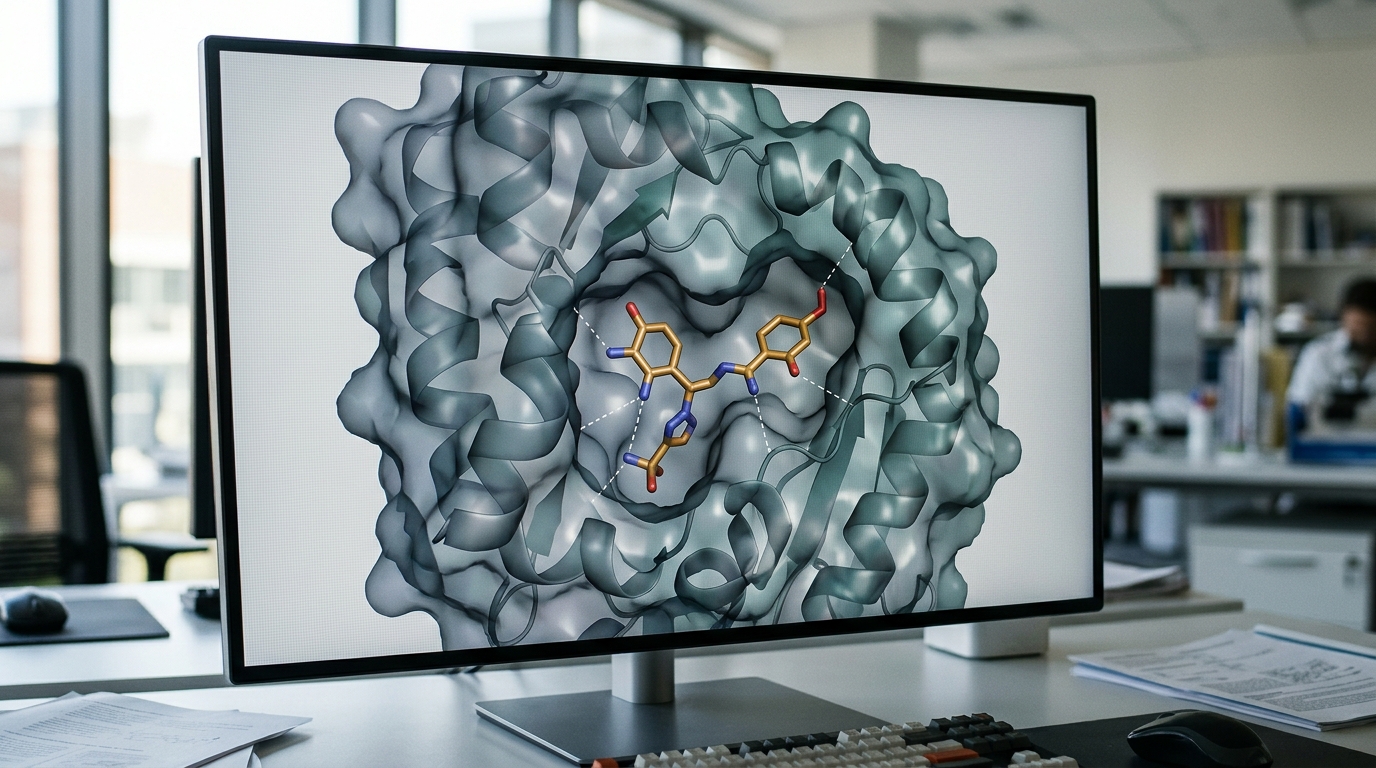
Researchers have introduced PharMistral, a 7-billion-parameter open-weight large language model designed to generate novel drug-like molecules using only protein sequences. This approach addresses a significant bottleneck in drug discovery, where the lack of high-quality structural information often limits the design of new therapeutics for emerging biological targets.
The development of PharMistral stems from the limitations of existing generative models in the biomedical field. While large language models have shown promise in specific modalities such as text or isolated molecular representations, they often lack the joint understanding of protein-ligand interactions required for targeted drug design. Structure-based methods, which rely on detailed 3D binding pockets, are computationally expensive and require high-quality structural data that is frequently unavailable. Sequence-conditioned methods offer a workaround but often lack the scale and generalization capabilities of modern large language models.
To bridge this gap, the research team employed a two-stage training pipeline. The first stage involved joint continued pre-training on a massive corpus of over 300,000 human protein sequences and more than 1 million drug-like SMILES strings. This process allowed the model to learn a shared biochemical representation by processing both proteins and small molecules individually. The second stage consisted of end-to-end fine-tuning on approximately 300,000 high-affinity protein-ligand pairs extracted from the ChEMBL-26 database, enabling the model to learn the conditional distribution of ligands given a specific protein sequence.
The model utilizes the original Mistral-7B tokenizer without modification, applying it to both amino acid sequences and SMILES strings. This shared vocabulary ensures that protein and molecular tokens exist in the same discrete space, allowing the transformer architecture to process both modalities seamlessly. During the pre-training phase, the model was trained on a mixed corpus where protein and SMILES sequences were randomly permuted, with a specific ratio to balance the data streams. The fine-tuning phase focused exclusively on the ligand tokens, masking the protein prefix to ensure the model learned to predict the molecular structure based on the target protein.
Evaluation of the model focused on four primary research questions: chemical quality and diversity, target relevance, target generalization, and drug-likeness. In terms of chemical quality, PharMistral demonstrated a validity rate of 99.55% on held-out targets. Among the valid molecules generated, 57.21% were unique, and 35.65% were novel relative to the training set. This high level of novelty suggests that the model is not merely memorizing known compounds but is capable of exploring new chemical spaces. Furthermore, scaffold analysis revealed that a significant portion of the generated molecules possessed Bemis-Murcko scaffolds that were absent from the training data.
Target relevance was assessed through molecular docking simulations using AutoDock Vina. The model was tested against 17 protein targets with experimentally determined 3D structures. The results indicated that generated molecules frequently achieved binding scores below the -8.18 kcal/mol threshold, which is indicative of moderate to strong bioactivity. For nine of the seventeen proteins, the generated ligands achieved docking scores up to 1.9 kcal/mol better than the best reference ligands found in the ChEMBL database. This performance suggests that the model can identify chemically plausible binding patterns that align with known biological interactions.
The study also compared PharMistral directly with DeepTarget, a previous sequence-conditioned generative model. PharMistral consistently produced a higher percentage of chemically valid molecules across all tested proteins. For example, on the 6CM4 target, PharMistral achieved a validity of 99.90%, compared to 74.39% for DeepTarget. In terms of binding affinity, PharMistral outperformed DeepTarget on several targets, including 7DUA and 7KK4, where it achieved the best binding affinity among the generative models tested. However, DeepTarget showed slightly better performance on the 8V3O target in terms of binding affinity and synthetic accessibility.
Drug-likeness and ADMET properties were evaluated using ADMETlab 2.0, a machine learning-based tool for predicting pharmacokinetic and toxicological characteristics. The analysis revealed a mixed picture across different protein targets. For the 4A69 target, the generated molecule showed excellent safety with a low toxicity score. In contrast, compounds generated for 3ZCW and 3D59 showed higher predicted toxicity levels, suggesting the need for further refinement. The model also demonstrated the ability to rediscover four approved drugs that were not present in the training set, linking them correctly to their specific protein targets. This finding supports the idea that the model captures transferable target-related signals beyond direct memorization.
Despite these promising results, the study acknowledges several important limitations. The definition of “unseen” targets in this context refers only to protein sequences not explicitly present in the training set; it does not imply that the test proteins are entirely unrelated to training proteins at the homology level. Additionally, the novelty of the generated molecules is defined relative to the training set and does not guarantee absolute novelty with respect to broader public chemical databases such as ZINC or PubChem. The model does not explicitly optimize for binding affinity or ADMET properties during generation, relying instead on post-hoc evaluation through docking and predictive models.
The authors emphasize that docking scores are an imperfect proxy for actual binding and that stronger experimental validation is needed to support firm conclusions about the efficacy of the generated compounds. Future work will focus on improving the model through guided generation strategies, such as reinforcement learning or classifier-guided decoding. The team also plans to adopt more rigorous data-splitting protocols, including homology-aware training and test splits, to better assess the model’s generalization capabilities. The public release of checkpoints and scripts aims to facilitate reproducibility and further research in this field.
PharMistral represents a significant step forward in structure-free drug generation, leveraging the scale of large language models to address the challenges of designing ligands for novel targets. By combining joint biochemical adaptation with sequence-only ligand generation, the model offers a scalable and reproducible pipeline for early hit discovery. While the current results are primarily computational, the high validity and novelty of the generated molecules provide a strong foundation for future experimental validation and optimization.
The integration of large language models into drug discovery continues to evolve, with PharMistral highlighting the potential of unified transformers to process diverse biochemical data. The model’s ability to generate diverse and drug-like candidates without structural constraints opens new avenues for exploring chemical space.
By making the model’s checkpoints and scripts publicly available, the authors encourage collaboration and independent verification of their findings. The comprehensive evaluation framework, which covers cheminformatics, docking, and ADMET profiles, provides a robust benchmark for future generative models.
In conclusion, PharMistral demonstrates that a sequence-conditioned autoregressive language model can generate valid, novel, and drug-like ligands for unseen protein targets. The model’s performance in chemical validity, target relevance, and drug-likeness suggests its potential as a powerful tool for generative drug discovery.
Subject of Research: PharMistral: Drug generation for novel protein targets by Mistral Large Language Model
Article Title: PharMistral: Drug generation for novel protein targets by Mistral Large Language Model
Article References: Bendjeddou, A., Zeinalipour, K., Bardou, D., Maggini, M., Scarselli, F., & Bianchini, M. (2026). PharMistral: Drug generation for novel protein targets by Mistral Large Language Model. Computer Methods and Programs in Biomedicine Update, 10, Article 100257. https://doi.org/10.1016/j.cmpbup.2026.100257
Image Credits: AI Generated
DOI: 10.1016/j.cmpbup.2026.100257
Keywords: PharMistral, Drug, generation, novel, protein, targets, Mistral, Large, Language, Model
News Source: Ophelia Keating. (November 24, 2026). AI model generates drug-like molecules from protein sequences alone. Scienmag.