Philosophers of science Rachel A. Ankeny and Sabina Leonelli report that the emerging scientific domain of precision toxicology is actively transforming the epistemic status of model organisms, converting standard laboratory species into hybrid instruments that simultaneously represent evolutionary biology and drive environmental interventions. In an extensive conceptual analysis published in Biology and Philosophy, the researchers trace how non-mammalian organisms such as fruit flies, nematodes, and water fleas are being repurposed to address persistent bottlenecks in chemical safety testing. The authors evaluate how precision toxicology adapts what they identify as the model organism research repertoire, a coherent blueprint of scientific reasoning, material standards, and shared infrastructures that first gained prominence during late-twentieth-century molecular biology and genomic sequencing programs. Rather than merely adopting these organisms as cheap laboratory surrogates, precision toxicology incorporates high-throughput screening, multi-omics technologies, and evolutionary ecology to investigate how chemical exposures disrupt conserved biomolecular pathways across diverse biological systems.
The conceptual shift toward precision toxicology has been largely driven by widespread recognition of the structural limitations inherent in twentieth-century toxicological methods. Traditional toxicological testing has long relied on mammalian models, predominantly rodents such as rats and mice, as surrogates to predict adverse chemical impacts on human physiology. However, these conventional animal tests are notoriously time-consuming, expensive, and ethically fraught, which has severely restricted the throughput of chemical safety evaluations. Published figures indicate that more than 350,000 chemicals and chemical mixtures are registered globally for production and commercial use with little to no associated toxicological data. Furthermore, metanalyses cited in the analysis reveal that traditional rodent studies correctly predict specific toxic responses in human subjects only about 50 percent of the time. Classical study protocols also frequently relied on administering maximum tolerable doses, sometimes exceeding human-relevant environmental exposures by more than 1,000-fold, creating substantial difficulties in distinguishing genuine physiological hazards from experimental artifacts.
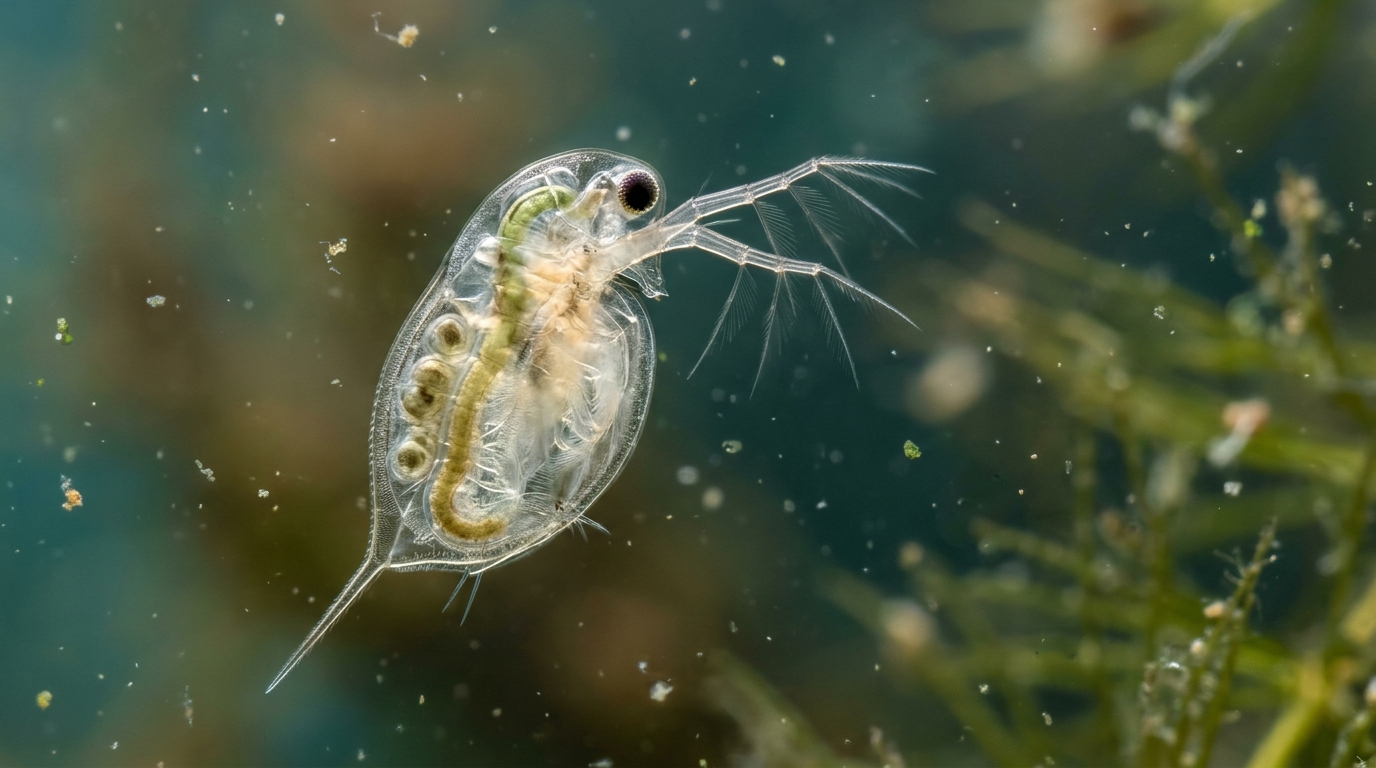
These systemic testing deficits catalyzed the global rise of the new approach methods movement, commonly termed NAMs, which aims to implement the 3Rs principles of replacement, reduction, and refinement in animal experimentation. European Union regulatory bodies established early requirements to curtail vertebrate testing while simultaneously mandating risk assessments for chemical impacts on broader ecosystems and wildlife at realistic exposure concentrations. Similar regulatory transitions are emerging within the United States, where the Environmental Protection Agency has adopted a resolution to phase out mammalian chemical testing by 2035, accompanied by supportive initiatives across the Food and Drug Administration and the National Institutes of Health. In response to these shifting regulatory mandates and testing backlogs, toxicologists have turned toward alternative organisms, including the nematode Caenorhabditis elegans, the fruit fly Drosophila melanogaster, and the cladoceran water flea Daphnia magna, to establish rapid and predictive toxicity assessments.
To evaluate these methodological transitions, Ankeny and Leonelli deploy their philosophical concept of a research repertoire, defined as a heuristic framework capturing the conditions under which specific ways of conducting research persist, expand, and serve as an epistemic blueprint across scientific communities. The original model organism repertoire was characterized by a commitment to the multi-perspectival investigation of standardized organisms, the development of centralized specimen repositories, pre-publication data sharing, and long-term public funding for foundational molecular research. In precision toxicology, this repertoire is extensively modified to meet applied environmental and societal mandates. The authors demonstrate that precision toxicology practitioners capitalize on decades of accumulated genomic and phenotypic data from standard organisms while redirecting that knowledge toward actionable risk evaluation, fine-grained variability analysis, and targeted intervention strategies designed to remediate chemical hazards in complex living systems.
A primary function analyzed by the authors is the use of model organisms to evaluate toxic effects and environmental exposures. Within precision toxicology, the microscopic nematode Caenorhabditis elegans serves as a fast and cost-effective screening tool for tracking neurotoxicological outcomes relevant to mammalian development, acting as an empirical bridge between cell-based in vitro assays and intact animal systems. Because fundamental modes of toxic action and signaling pathways are evolutionarily conserved between nematodes and humans, researchers can interrogate the toxicity of individual compounds, nanomaterials, and mixtures. Similarly, research using Daphnia has illuminated how historical chemical stress affects genetic diversity. While acquired tolerance was historically thought to provide general fitness advantages, empirical investigations revealed that historical chemical stress caused reduced genome-wide diversity in Daphnia, decreasing cross-generational tolerance to novel chemical stressors despite retaining fitness when re-exposed to identical historical chemicals.
The second major application examined in the study is the deployment of model organisms as indicator or sentinel species. Toxicology has a long history of utilizing sentinels, such as non-model fish species monitored in proteomic ecotoxicology studies to detect aquatic contaminant stress. Precision toxicology advances this practice by combining established model species with advanced molecular profiling to establish projectability to human health. Researchers utilize Drosophila melanogaster alongside metabolomics and epigenetic tools to identify adverse outcome pathways triggered by sublethal chemical exposures, leveraging orthologous genes to extrapolate risks across species boundaries. Furthermore, the freshwater crustacean Daphnia magna functions as both an ecologically vital keystone organism and an ideal sentinel due to its short generation time, sequenced genome, and ability to reproduce clonally. Generating genetically identical clones provides an invariant baseline against which minute molecular responses to environmental stressors can be measured and interpreted.
The third key role identified by Ankeny and Leonelli is the utilization of model organisms as bioremediators, where an organism’s biological functions are deployed to actively reduce environmental contamination. The model plant Arabidopsis thaliana has a documented history of environmental decontamination due to its capacity to metabolize metal ions and proliferate across variable soil conditions. In aquatic environments, Daphnia magna has demonstrated remarkable efficacy in decontaminating wastewater by reducing concentrations of pharmaceuticals such as codeine and naproxen, heavy metals such as arsenic, pesticides such as atrazine, and synthetic persistent chemicals such as perfluorooctane sulfonate. In precision toxicology, this bioremediation capacity is coupled with omics technologies, allowing scientists to track exposure-induced gene expression and metabolic networks under real-world exposure conditions, thereby identifying early biomolecular warning signatures at concentrations far below conventional lethal toxicity thresholds.
These diverse applications converge in large-scale collaborative programs such as the PrecisionTox consortium, established in 2021 to integrate genetics, metabolomics, and developmental biology. The initiative coordinates research across five distinct model organisms: fruit flies, nematodes, water fleas, and embryos of both the clawed frog and the zebrafish. By screening these five species in parallel, researchers seek to identify conserved biological pathways disrupted by chemical exposures and map what researchers term toxicity by descent. This approach posits that shared evolutionary ancestry permits rigorous cross-species extrapolation, bridging the historical divide between human clinical toxicology and environmental ecotoxicology. Rather than focusing exclusively on establishing lethal endpoints in isolated species, precision toxicology models explore how conserved biomolecular interactions predict adverse human health outcomes across a wide spectrum of individual genetic susceptibilities.
Ankeny and Leonelli emphasize that these research practices dissolve the traditional philosophical dichotomy between representation and intervention in scientific modeling. Whereas earlier philosophers often categorized models as either representational stand-ins for wider phenomena or material instruments for laboratory manipulation, precision toxicology relies on models that function as both simultaneously. Model organisms operate as material tools to decontaminate wastewater or signal environmental contamination while concurrently serving as representational models that project toxicological hazards onto human populations via conserved biological mechanisms. Furthermore, precision toxicology demands that experimental organisms exhibit situatedness, requiring them to be studied within variable, realistic environmental conditions rather than the strictly controlled, homogeneous laboratory environments typical of mid-twentieth-century molecular genetics, thereby capturing the ecological complexities of real-world chemical exposures.
The materialization of this emerging repertoire also relies heavily on specialized data infrastructures and institutional coordination across borders. Facing resource constraints, precision toxicology researchers have partnered with established model organism networks, such as the dedicated Toxicology Community formed within the European life sciences infrastructure ELIXIR in 2018. This initiative develops computational standards and interoperable databases that adapt existing genetic and phenotypic repositories to toxicological demands. Simultaneously, precision toxicology has inherited the open-science ethos of early genome sequencing projects, advocating for public data sharing, standardized experimental protocols, and transparent methodologies. However, the authors observe an emerging tension between this open-science ethos and the substantial commercial value associated with proprietary chemical screening kits, patentable environmental monitoring devices, and scalable wastewater bioremediation technologies.
Ultimately, Ankeny and Leonelli argue that precision toxicology illustrates how scientific research repertoires evolve through the pragmatic borrowing and recontextualization of established tools. By aligning high-throughput genomic methodologies with pressing societal mandates surrounding environmental remediation, climate change resilience, and chemical regulation, precision toxicology establishes a novel epistemic space within the contemporary biosciences. As the field expands its focus on fine-grained physiological variations and complex ecological interactions, the authors project that researchers will increasingly incorporate ecologically situated, non-model organisms possessing well-characterized genomes, including killifish and amphipods. Model organisms currently provide an indispensable operational bridge, demonstrating that the future of toxicological modeling lies in integrating evolutionary theory, material intervention, and multi-scale biological data to safeguard environmental and human health.
Subject of Research: Philosophical analysis of model organism repertoires and epistemic practices in precision toxicology
Article Title: Model organism futures in precision toxicology: tracking the emergence of a research repertoire
Article References: Ankeny, R. A., & Leonelli, S. (2026). Model organism futures in precision toxicology: tracking the emergence of a research repertoire. Biology & Philosophy, 41(1), Article 7. https://doi.org/10.1007/s10539-026-10009-9
Image Credits: AI Generated
DOI: 10.1007/s10539-026-10009-9
Keywords: precision toxicology, model organisms, epistemic repertoires, toxicology, Caenorhabditis elegans, Daphnia magna, Drosophila melanogaster, bioremediation, sentinel species, new approach methods, PrecisionTox consortium, comparative genomics, environmental exposure, toxicity by descent, regulatory toxicology, situatedness, ELIXIR
News Source: Drew Townsend. (November 24, 2026). Precision Toxicology Reshapes How Model Organisms Represent Environmental Health Risks. Scienmag.