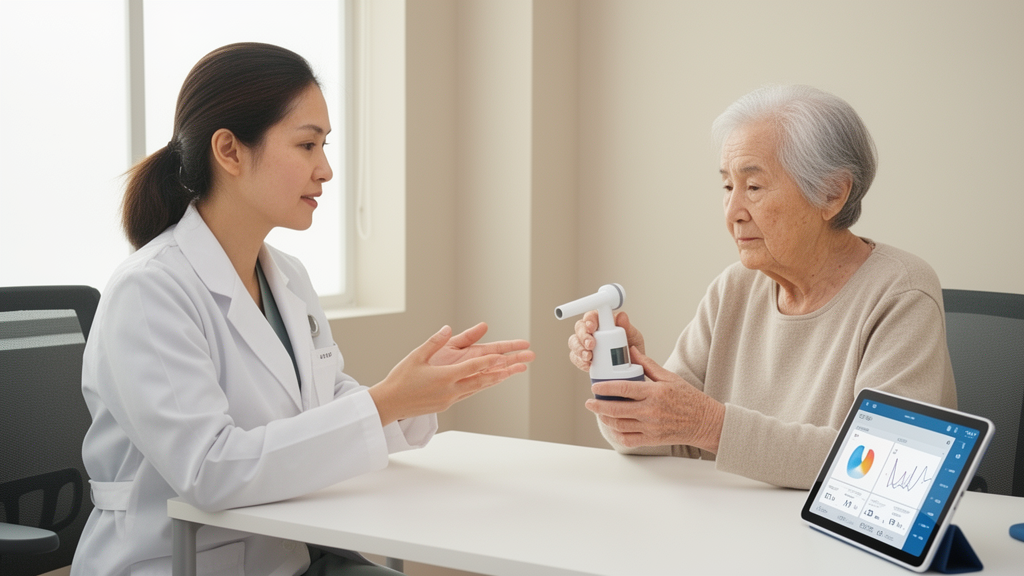
A comprehensive systematic search and narrative synthesis published in COPD: Journal of Chronic Obstructive Pulmonary Disease has mapped the extensive landscape of patient-reported barriers and facilitators governing self-management in chronic obstructive pulmonary disease. Led by Sereena Raju and Judith Dyson alongside colleagues from Birmingham City University and the Hull York Medical School, the study prospectively registered on PROSPERO addressed how individuals living with this chronic respiratory condition navigate therapeutic regimens, clinical recommendations, and daily lifestyle modifications. Synthesizing evidence across sixty-three studies encompassing 6,972 patients, the research team identified a complex interplay of clinical, psychological, interpersonal, and structural factors that determine whether patients successfully adopt treatment plans. The investigators categorized these diverse influences into five overarching thematic domains: healthcare systems, emotional experiences, communication with healthcare professionals, social factors, and physical environments.
To capture contemporary patient experiences following recent clinical guidance updates, the authors conducted a systematic search across MEDLINE, CINAHL Complete, PsycINFO, and the Cochrane Database of Systematic Reviews in March 2025. Following the Preferred Reporting Items for Systematic Reviews and Meta-Analyses guidelines and methods adapted from the Cochrane Handbook of Systematic Reviews, the researchers evaluated studies published from October 2017 to March 2025. The initial retrieval yielded 5,960 citations, which were reduced to 5,681 unique records after removing 279 duplicates. Screening of titles and abstracts eliminated 5,556 records, leaving 125 full-text publications for detailed eligibility assessment. The authors excluded 62 reports due to irrelevant focus or behaviours exceeding National Institute for Health and Care Excellence recommendations, retaining 63 papers. Quality assessment was conducted using Centre for Evidence-Based Medicine checklists for qualitative studies and Centre for Evidence-Based Management tools for surveys, appraising methodological rigor without excluding studies based on quality thresholds.
The necessity for an updated synthesis stems from the severe burden and shifting clinical frameworks surrounding chronic obstructive pulmonary disease. The condition is an incurable, progressive respiratory illness caused by tobacco smoking or toxic exposures, defined by persistent breathlessness, chronic cough, sputum production, and wheezing. Approximately 37 percent of affected patients suffer from depression, as physical limitations and acute symptom exacerbations impair daily functioning. Although 2019 National Institute for Health and Care Excellence guidelines emphasize non-pharmacological care, correct inhaler technique, pulmonary rehabilitation, and smoking cessation, practitioner concordance with guidelines remains low globally, with patient reluctance to engage with treatment plans frequently cited by practitioners as a substantial clinical barrier.
Within the first major thematic domain, healthcare systems, the synthesis documented critical institutional obstacles and enablers related to clinical access and treatment administration. Patients across several studies reported insufficient appointment duration, particularly during general practitioner visits, where constrained consultations prevented thorough exploration of self-management plans. Structural difficulties included delayed prescription renewals, hospital communication breakdowns across disparate clinical teams, and system-wide workload pressures. Information disparities were evident; one investigation showed that 75 percent of participants lacked confidence in locating reliable health information, while another highlighted missing internet access for lifestyle resources. Regarding inhalers, patient surveys demonstrated that easy handling and short inhalation duration were highly valued, yielding mean importance ratings of 1.3 and 1.7 respectively on a four-point scale where one was very important. Adverse side effects like unpleasant aftertastes hindered medication use, alongside equipment burdens involving cumbersome long-term oxygen therapy and non-invasive ventilation devices. Financial obstacles arose from prescription fees, specialist visits, and travel expenses—including paying 35 dollars for transit—though Irish medical cards and Iranian subsidies served as helpful financial facilitators.
The second theme revealed the substantial impact of emotional states and psychological adaptations on chronic obstructive pulmonary disease management. Widespread social stigma, frequently stemming from assumptions that the condition was self-inflicted through smoking, produced deep shame and fear of clinical judgment that discouraged individuals from using mobility aids like walking frames, administering inhalers in public, or seeking professional help. Emotional distress, low mood, and severe isolation directly undermined essential health behaviours, including regular medication adherence, completion of action plans, physical activity, and balanced nutrition. Conversely, positive psychological factors emerged as powerful facilitators of self-care. Several studies reported that maintaining an optimistic perspective—such as one participant conceptualizing the disease as an operational project—and possessing strong intrinsic motivation to prevent physical decline bolstered daily management. Furthermore, patients who accepted their diagnosis showed higher engagement with interventions like rollator mobility devices and long-term oxygen therapy, whereas emotional denial and reluctance to learn about disease progression created persistent barriers.
Examining the third domain of communication with healthcare professionals, the authors identified pervasive informational gaps and comprehension deficits that impaired patient self-efficacy. In one cited study, 75 percent of individuals indicated that they did not understand clinical guidance well enough to take appropriate actions, while another recorded that patients missed a mean of 5.3 days of prescribed medication due to confusion regarding administration schedules. Participants frequently exhibited limited knowledge regarding proper nutrition, the long-term biological consequences of smoking, and the necessity of consistent medication use, often harboring unaddressed concerns regarding drug side effects or questioning therapeutic utility. Symptom appraisal was similarly problematic; patients often perceived an inability to control breathlessness, underestimated clinical severity, or deferred lifestyle adjustments because they felt their disease had not advanced sufficiently. Distinct cultural interpretations also shaped engagement, ranging from traditional spiritual beliefs attributing chronic respiratory symptoms to witchcraft in an African study, to reliance on herbal remedies from traditional practitioners within an Asian cohort.
The synthesis further detailed how clinical dialogue altered management outcomes. Stark educational divides appeared across specific populations, with one investigation identifying poor disease knowledge among 68 percent of Indigenous participants compared to 19 percent of non-Indigenous peers, alongside significant sex-specific differences in unmet information needs, as women prioritized guidance on palliative care (p = 0.04) while men sought advice on maintaining relationships (p = 0.02). Patients widely rejected paternalistic warnings and technical medical jargon, expressing a clear preference for empathetic consultations that respected individual goals and permitted shared decision-making. To overcome memory challenges, successful individuals relied on practical self-management tools, including medication logs, compartmentalized organizers, visible medicine placement, heart rate monitors, and structured activity goals such as walking forty minutes daily. While clinician turnover and disjointed hospital shifts frustrated patients by forcing them to repeat medical histories, enduring trust in providers, accessible written leaflets, and proactive prescription monitoring by community pharmacists reinforced treatment concordance.
Under the fourth thematic domain, social dynamics exerted substantial leverage over patients’ daily capacity to sustain self-care routines. Robust emotional and practical support from family and friends functioned as a vital facilitator across multiple behaviours, helping individuals maintain inhaler schedules, travel to appointments, operate respiratory devices, and preserve general wellbeing. Conversely, absent support networks or reluctance to accept assistance exacerbated vulnerability, leaving isolated individuals struggling to manage functional decline. Furthermore, customary social gatherings frequently disrupted dietary adherence, while cultural traditions such as fasting interfered with scheduled pharmacotherapy regimens. Conversely, positive cultural connections emerged as beneficial assets, illustrated by Australian Aboriginal participants utilizing their cultural bond with the natural environment to practice grounding breathing techniques that alleviated respiratory symptoms.
The fifth theme highlighted the critical role of environmental exposures and socioeconomic conditions in shaping disease self-management. Ambient environmental irritants acted as immediate triggers of respiratory deterioration; participants consistently identified adverse weather, atmospheric smoke, pollen, and chemical fragrances as direct causes of acute coughing and breathlessness that curtailed outdoor mobility, though favorable climatic conditions supported exercise. Concurrently, socioeconomic deficits imposed structural barriers to healthy lifestyle adoption. Multiple studies recorded how food insecurity and the absence of safe community walking spaces, paved paths, or dedicated recreational facilities prevented patients from maintaining balanced diets or engaging in routine physical exercise.
In their discussion and conclusion, the authors contextualized their synthesis within the 2019 National Institute for Health and Care Excellence framework, observing that while traditional service constraints and communication gaps persist, modern evidence reveals heightened prominence for financial barriers, diagnostic acceptance, patient coping strategies, continuity of care, and environmental exposures. These patient accounts closely parallel documented healthcare professional perspectives, where clinicians identify compressed consultations, fragmented pathways, deficient training, and unaddressed health literacy as major systemic challenges. The review emphasized that existing multi-component self-management programmes, delivered digitally or in clinical settings, historically yield minimal improvements in health-related quality of life or respiratory hospital admissions, frequently because they fail to report theoretical frameworks, omit core intervention parameters, or neglect emotional distress. Consequently, the authors conclude that future self-management interventions must be co-designed in direct partnership with patients, explicitly incorporating tailored behaviour change techniques that dismantle systemic, emotional, and environmental barriers while capitalizing on existing interpersonal and community facilitators.
Subject of Research: Patient-reported barriers and facilitators to chronic obstructive pulmonary disease self-management
Article Title: Barriers and Facilitators to Treatment Plan Adoption and Self-Management in People with Chronic Obstructive Pulmonary Disease (COPD): A Systematic Search and Narrative Synthesis
Article References: Raju, S., Dyson, J., Harvey, H., Chatterjee, A., Kolas, J., Cowdell, F., Sykes, D. L., & Crooks, M. G. (2026). Barriers and Facilitators to Treatment Plan Adoption and Self-Management in People with Chronic Obstructive Pulmonary Disease (COPD): A Systematic Search and Narrative Synthesis. COPD: Journal of Chronic Obstructive Pulmonary Disease, 23(1), Article 2656201. https://doi.org/10.1080/15412555.2026.2656201
Image Credits: AI Generated
DOI: 10.1080/15412555.2026.2656201
Keywords: Chronic obstructive pulmonary disease, COPD self-management, Patient-reported barriers, Narrative synthesis, Systematic review, Inhaler adherence, Long-term oxygen therapy, Healthcare communication, Person-centred care, Emotional distress, Disease stigma, Environmental triggers, Continuity of care, Pulmonary rehabilitation, Non-invasive ventilation, Health literacy, PRISMA guidelines
News Source: Ophelia Keating. (November 24, 2026). Systematic Review Reveals Core Barriers and Facilitators in Managing COPD. Scienmag.