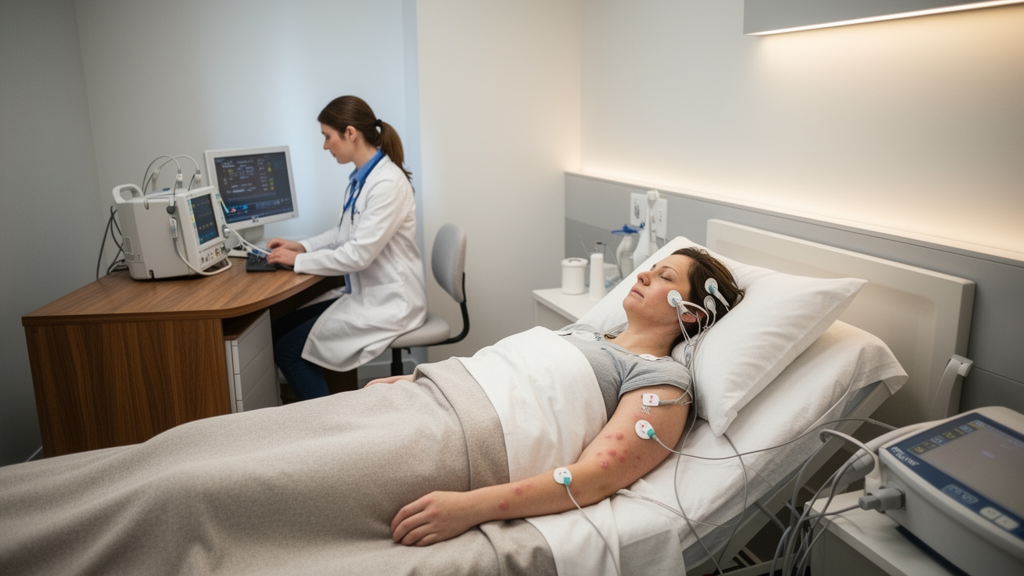
Methodological and reporting inconsistencies significantly complicate the interpretation of recent research linking chronic spontaneous urticaria to obstructive sleep apnoea and sleep disturbances, according to a scientific correspondence published in the World Allergy Organization Journal. Researchers analyzing a recent investigation by Podder and colleagues highlighted that self-reported screening questionnaires cannot establish the true clinical prevalence of sleep disorders in individuals diagnosed with chronic spontaneous urticaria. Because the original investigation did not incorporate polysomnography or objective overnight sleep studies, attributing definitive diagnoses to participants exceeds the evidentiary boundaries of the study design.
A primary concern centers on the interchangeable use of distinct clinical concepts, specifically sleep disturbance, poor sleep quality, and diagnosed sleep disorders. The Pittsburgh Sleep Quality Index serves as a validated screening instrument designed to gauge self-reported sleep quality, where a global score greater than five signifies poor sleep quality rather than a clinically confirmed sleep disturbance. Similarly, the STOP-Bang questionnaire functions exclusively to estimate the relative risk of obstructive sleep apnoea rather than to establish a definitive diagnosis. Consequently, characterizing participant outcomes as poor sleep quality and intermediate-to-high risk for obstructive sleep apnoea reflects the underlying screening methodology far more accurately than asserting disease prevalence.
Substantial discrepancies in reported statistical models present another major interpretive challenge within the published findings. The original abstract reported that uncontrolled urticaria yielded an odds ratio of 0.5, suggesting a reduction in the odds of experiencing poor sleep, whereas the multivariate analysis in the main text identified uncontrolled disease as a positive predictor with an odds ratio of 1.5 and a 95 percent confidence interval spanning 1.3 to 1.8. Because uncontrolled urticaria represents a central pillar of the study’s conclusions, clarifying whether these conflicting figures arose from separate univariate and multivariate models or represent an uncorrected reporting error remains essential for evaluating the relationship between disease control and sleep quality.
Incomplete diagnostic and clinical definitions also limit the comparability and rigor of the reported findings. In the evaluation of disease control, the cutoff value for the Urticaria Control Test was not explicitly defined, leaving a score of twelve unclassified despite the instrument’s established and validated threshold of twelve. Furthermore, the criteria used to define dyslipidemia lacked essential clinical details, including specific lipid fractions, numerical thresholds, patient fasting status, and ongoing lipid-lowering treatments. The threshold used to classify erythrocyte sedimentation rate as raised was likewise omitted, which is particularly notable because 95.7 percent of participants were classified as having elevated rates, a proportion substantially higher than expected in a general chronic spontaneous urticaria cohort.
The statistical modeling strategies used in the study also warrant comprehensive clarification and reporting. The published work omitted crucial details regarding variable selection criteria, model-building frameworks, collinearity diagnostics, calibration metrics, and discrimination performance for the multivariate regression analyses. These reporting gaps are especially pronounced given an unexpectedly elevated odds ratio of 12.3, with a 95 percent confidence interval of 5.7 to 26.8, observed for female gender in relation to intermediate-to-high obstructive sleep apnoea risk. This extreme estimate could stem from variable coding methods, the high proportion of female participants in the sample, or collinearity among predictors, highlighting the necessity of sensitivity analyses and transparent model specifications.
Given these limitations, researchers emphasize that broader clinical implications regarding routine screening and patient management must be tempered. While screening for sleep problems in patients with chronic spontaneous urticaria remains a reasonable clinical consideration, the investigation did not demonstrate that early identification and subsequent referral lead to improved patient outcomes. A more balanced conclusion would acknowledge that poor sleep quality and intermediate-to-high obstructive sleep apnoea risk appear common among individuals with chronic spontaneous urticaria, while recognizing that prospective investigations incorporating objective sleep assessments, polysomnography, and appropriate control groups are essential to clarify these associations.
Subject of Research: Methodological and reporting considerations in chronic spontaneous urticaria sleep research
Article Title: Sleep quality and obstructive sleep apnoea risk in chronic spontaneous urticaria: Methodological and reporting considerations
Article References: Miao, A., & Liu, X. (2026). Sleep quality and obstructive sleep apnoea risk in chronic spontaneous urticaria: Methodological and reporting considerations. World Allergy Organization Journal, 19(11), Article 101490. https://doi.org/10.1016/j.waojou.2026.101490
Image Credits: AI Generated
DOI: 10.1016/j.waojou.2026.101490
Keywords: chronic spontaneous urticaria, obstructive sleep apnoea, sleep quality, sleep disturbance, Pittsburgh Sleep Quality Index, STOP-Bang questionnaire, polysomnography, Urticaria Control Test, erythrocyte sedimentation rate, dyslipidemia, multivariate regression analysis, odds ratio, collinearity diagnostics, screening instruments, model calibration, study methodology
News Source: Ophelia Keating. (November 24, 2026). Methodological Issues Challenge Reported Sleep Apnoea Prevalence in Chronic Urticaria. Scienmag.