Single-molecule measurements tracking individual DNA helicases have revealed that motor diffusivity and stepping fluctuations expose essential kinetic intermediates that remain undetectable through conventional velocity measurements alone. By monitoring three distinct enzymes—the bacteriophage T4 gp41 replicative motor, the Escherichia coli RecQ repair helicase, and the E. coli RecG recombination motor—biophysicists applied a continuous-time random walk framework to characterize their displacements, velocities, and diffusion constants. This stochastic modeling framework proved that reproducing observed motor dynamics across varying mechanical forces and nucleotide concentrations universally requires incorporating an off-pathway pausing state alongside forward and backward stepping reactions. Traditional kinetic models that omit pause intermediates, such as standard Poisson stepping models or unconstrained random walk models, fail to match experimental variance and diffusivity data. Resolving these diffusive fluctuations provides a direct window into the mechanochemical cycle of nucleic acid motors, demonstrating that pausing constitutes an intrinsic feature shaping motor diffusivity and biological regulation.
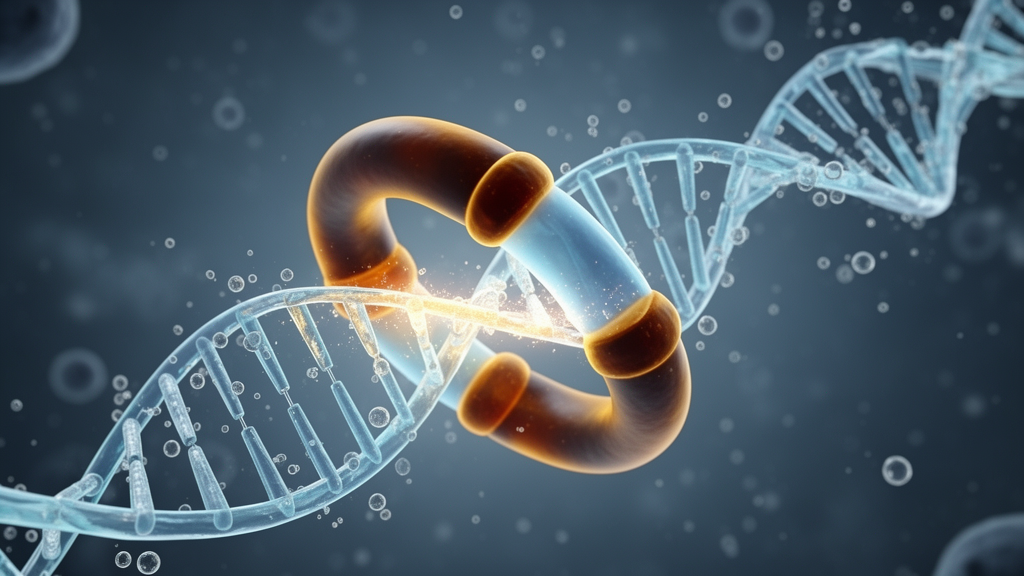
Helicases are ubiquitous motor proteins across all living organisms, catalyzing essential genome maintenance tasks by converting chemical energy from adenosine triphosphate hydrolysis into directional mechanical work along nucleic acids. These molecular machines drive diverse biological functions: unwinding duplexes during replication and transcription, rewinding DNA and forming multi-branched structures during recombination and repair, and disrupting nucleoprotein interactions. In cellular environments, these enzymes operate as nanoscale motors advancing in discrete nanometer steps while generating forces in the piconewton range. At this scale, the mechanical work performed per step is on the order of a few piconewton-nanometers, comparable to the thermal energy unit where one thermal energy unit equals four piconewton-nanometers at room temperature. Because the free energy liberated by hydrolyzing one adenosine triphosphate molecule reaches roughly ten to twenty thermal energy units, these molecular engines function within a strong Brownian bath where thermal fluctuations play a central role, requiring precise statistical treatments of stochastic fluctuations.
To observe single enzyme dynamics in real time, the researchers employed force spectroscopy setups combining magnetic tweezers and counter-propagating dual-beam optical tweezers. In the magnetic tweezers configuration, individual DNA hairpins were mechanically tethered between an antibody-treated glass surface passivated with bovine serum albumin and a streptavidin-coated magnetic bead inside a microfluidic chamber. Permanent magnets positioned above the chamber applied constant pulling forces between 5 and 15 piconewtons, calibrated with ten percent error through bead fluctuations via the equipartition theorem. An inverted microscope connected to a CMOS camera recorded diffraction rings under monochromatic red light illumination, tracking three-dimensional bead positions at 30 to 80 hertz with nanometer resolution while monitoring 50 to 100 beads simultaneously. For high-load regimes above 15 piconewtons and reaching 35 piconewtons, optical tweezers held a polystyrene bead in a laser trap against a micropipette tip, measuring rewinding forces via deflected light momentum under automated force feedback.
The experimental assays utilized two engineered DNA hairpins, termed h1.2 and h1.4, featuring stem lengths of approximately 1.2 and 1.4 kilobase pairs flanked by biotinylated and digoxigenin-labeled single-stranded tails. For hexameric gp41 from bacteriophage T4, an auxiliary 40-mer oligonucleotide complementary to a sequence 500 base pairs from the fork was hybridized to generate extended single-stranded tails required for efficient enzyme loading prior to unwinding assays. Experiments examining monomeric E. coli RecQ utilized a truncated variant lacking the HRDC domain, observing hairpin unwinding under single-molecule conditions optimized at a 30 picomolar protein concentration. For monomeric E. coli RecG, assays evaluated DNA rewinding on partially unzipped hairpins created either by pulling molecules near the 15-piconewton unzipping force or by using short blocking oligonucleotides. Optical tweezers explored rewinding at elevated tensions exceeding 15 piconewtons, confirming that RecG actively rewinds duplex DNA against substantial external resisting forces before stalling and dissociating around 35 piconewtons.
Experimental traces tracked DNA extension over time, converting recorded nanometer changes into base pairs via elastic models of single-stranded DNA. From these calibrated traces, the authors extracted mean displacement and mean square displacement across multiple independent tethers. Average velocity was calculated from the linear slope of mean displacement versus time, while diffusivity was determined as half the linear slope of mean square displacement over time, applying an initial millisecond offset to eliminate bead Brownian noise. Pauses along trajectories were analyzed using a change-point detection algorithm set to detect events exceeding a threshold duration on the order of fractions of a second. Histograms of pause durations and time intervals between pauses exhibited exponential decay distributions, confirming single-rate-limiting kinetics. Fitting these exponential distributions yielded direct measurements of the pause exit rate and pause entry rate across varied force and adenosine triphosphate concentrations, demonstrating robust consistency with continuous-time random walk model simulations.
To interpret these kinetic measurements within a unified theoretical framework, the authors formulated a continuous-time random walk model describing helicase displacement along a one-dimensional lattice. In this model, an active enzyme executes forward steps with probability, backward slippage steps with probability, or enters an auxiliary pause state with probability, satisfying probability normalization. Each transition is governed by exponentially distributed intrinsic waiting times. Employing the Montroll-Weiss formalism in Fourier-Laplace space, the authors solved the walk in the long-time asymptotic limit, deriving analytical expressions for both macroscopic velocity and diffusion constant. Transition rates incorporated substrate dependence via Michaelis-Menten kinetics, where catalytic forward rates depend on nucleotide concentration, alongside Bell-like exponential factors describing force sensitivity via transition-state distances. This analytical formulation mapped single-molecule observables directly to underlying chemical and mechanical transitions governing the helicase mechanochemical cycle.
Model selection was conducted by fitting the theoretical equations to experimental velocity and diffusivity measurements across varying force and substrate levels, evaluating fits through reduced chi-square values alongside Akaike and Bayesian Information Criteria. When the experimental data were fitted against simplified sub-models—such as pause-free random walks or unidirectional Poisson stepping processes—the pause-free architectures yielded reduced chi-square values significantly greater than unity, decisively failing to capture the observed dynamics. Incorporating an off-pathway pause state proved essential for all three helicases. For RecQ, the full general model including backward slippage provided the best fit, whereas gp41 and RecG showed comparable statistical validity between unidirectional and general models; however, direct observations of large slippage events exceeding ten base pairs justified selecting the general model across all three enzymes. Optimization identified forward step sizes of one base pair for gp41 and RecQ, and three base pairs for RecG, alongside backward slippage steps spanning two to four base pairs.
A fundamental mechanical distinction emerged when contrasting duplex unwinding or rewinding against translocation along single-stranded DNA. In assays where gp41 reached the hairpin loop or where RecG advanced following blocking-oligonucleotide displacement, the enzymes translocated along single-stranded DNA while the hairpin reformed behind them. Under these single-stranded conditions, translocation velocity and diffusivity remained completely independent of applied force, demonstrating that mechanical load does not alter the motor’s core translocation engine. Instead, external force acts strictly by modifying base-pair stability at the double-stranded fork junction. This mechanistic separation explains the contrasting behaviors of passive and active helicases: the passive gp41 unwinding motor displayed extreme force sensitivity, with velocity and diffusivity shifting tenfold over a five-piconewton change, whereas active RecQ and RecG motors showed forward stepping rates largely insensitive to mechanical force, driving strand separation or duplex rewinding across varied mechanical loads.
The simultaneous determination of velocity and diffusivity enabled evaluation of fundamental thermodynamic constraints through the Thermodynamic Uncertainty Relation, characterized by a dimensionless factor that bounds non-equilibrium fluctuations relative to entropy production. Assuming tight mechanochemical coupling where each forward step consumes one adenosine triphosphate molecule, researchers estimated entropy production and thermodynamic efficiency across varying loads. Unwinding helicases gp41 and RecQ exhibited large uncertainty factors ranging from 100 to 500 and low efficiencies below fifteen percent, which further declined under assisting forces because input chemical free energy is predominantly dissipated as heat. Conversely, RecG rewinding DNA against opposing mechanical loads exhibited small uncertainty factors between 10 and 20 that approached the theoretical lower bound of 2 under high tensions. Near its stalling force around 35 to 40 piconewtons, RecG achieved thermodynamic efficiency approaching unity, demonstrating that molecular motors reach maximum thermodynamic efficiency when driving uphill mechanical tasks where delivered work matches available chemical energy.
Analysis of the randomness parameter yielded values consistently exceeding unity, reflecting substantial motor diffusivity driven by stochastic stepping dynamics. Model simulations incorporating the actual hairpin nucleotide sequence confirmed that this elevated diffusivity is governed by off-pathway pausing rather than sequence-dependent free energy variations along the DNA substrate. Functionally, off-pathway pausing may serve an essential regulatory role in cellular environments. Pausing may provide a strategy to control helicase activity, stalling isolated enzymes in the absence of accessory proteins required for replication or repair. The continuous-time random walk framework formulated in this work establishes that analyzing diffusive fluctuations provides critical kinetic insights inaccessible to standard velocity measurements alone. Applicable to diverse template-directed molecular machines, including polymerases and cytoskeletal translocases, fluctuation-based modeling establishes a robust foundation for deciphering the non-equilibrium physics and regulatory mechanisms of biological motors.
Subject of Research: Single-molecule random walk modeling of DNA helicase diffusivity and mechanochemical efficiency
Article Title: Continuous-time random walk model for the diffusive motion of helicases
Article References: Rodríguez-Franco, V., Spiering, M. M., Bianco, P., Ritort, F., & Manosas, M. (2025). Continuous-time random walk model for the diffusive motion of helicases. QRB Discovery, 6, Article e26. https://doi.org/10.1017/qrd.2025.10011
Image Credits: AI Generated
Keywords: DNA helicases, single-molecule biophysics, continuous-time random walk, magnetic tweezers, optical tweezers, diffusivity, thermodynamic uncertainty relation, RecG helicase, gp41 helicase, RecQ helicase, mechanochemical cycle, ATP hydrolysis, hairpin unzipping, off-pathway pauses, Brownian fluctuations, molecular motors, enzyme kinetics
News Source: Drew Townsend. (November 24, 2026). Diffusivity Modeling Shows Off-Pathway Pauses Shape Single-Molecule DNA Helicase Dynamics. Scienmag.