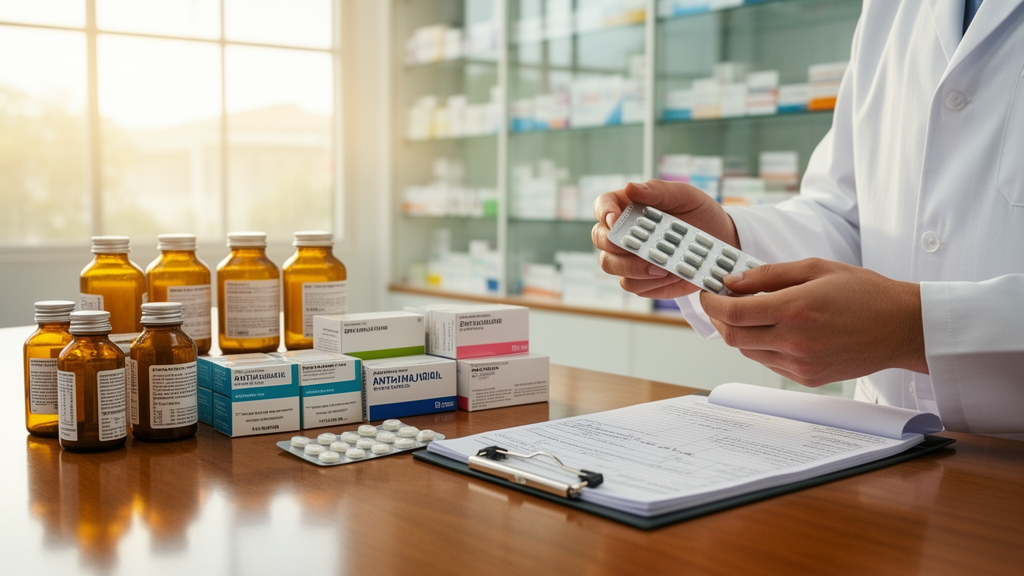
In a retrospective observational quality improvement study across two UK secondary care hospitals, researchers identified prescribing errors or missed doses in 38 percent of adult malaria cases, along with an average seven-hour delay from laboratory diagnosis to the first antimalarial dose. The evaluation examined adult malaria admissions at Queen Elizabeth Hospital Birmingham and Birmingham Heartlands Hospital between January 2023 and December 2025. Although diagnostic confirmation proved consistent across both sites, therapeutic inefficiencies persisted as modifiable patient safety risks.
The multi-centre project evaluated diagnostic and therapeutic pathways following an earlier quality improvement initiative at Queen Elizabeth Hospital Birmingham. That earlier initiative uncovered system-level inefficiencies, including delays in laboratory reporting, delays in specialist consultation, and deficiencies in clinical documentation. Prompt diagnosis and timely initiation of evidence-based therapy remain critical in the United Kingdom, where imported malaria continues to represent a clinically significant parasitic infection requiring coordinated clinical care.
Researchers extracted electronic clinical and laboratory records for all laboratory-confirmed malaria cases diagnosed between 1 January 2023 and 31 December 2025 across both hospitals. Paediatric patients under 18 years of age and suspected cases with negative laboratory results were excluded. Primary project objectives focused on characterising Plasmodium species distribution, while secondary objectives evaluated disease severity, parasitaemia burden, overall length of stay, prescribing delays, and discrepancies in antimalarial therapy.
The final study cohort comprised 91 adult patients who met all inclusion criteria. All patients reported recent travel, most frequently to African destinations, where Nigeria represented 35 percent of cases, followed by Congo, Sudan, and Sierra Leone. Among Asian travel destinations, Pakistan accounted for 15 percent, followed by India and Bangladesh. Additionally, a history of mosquito bites was documented in 38 percent of presentations.
Malaria was the initial working diagnosis in 64 percent of hospital presentations. Rapid diagnostic testing returned positive results in all 91 cases, although parasites were not visualised on peripheral blood films in three patients. Plasmodium falciparum was the predominant species at 66 percent, followed by Plasmodium vivax at 27 percent. Eleven patients, representing 12 percent of cases, had parasitaemia greater than 2 percent, and two required intensive care admission.
Therapeutic evaluations revealed that the mean interval from laboratory diagnosis to the first antimalarial dose was seven hours, driven primarily by hospital drug stock issues and prescribing inaccuracies. Prescribing errors or missed doses occurred in 38 percent of patients, while the mean hospital length of stay was three days. These therapeutic delays and prescribing inaccuracies highlighted persistent clinical vulnerabilities following successful diagnostic identification.
To address these modifiable safety risks, the study authors recommended introducing standardised malaria pathways, mandatory infectious diseases specialist consultation, and electronic prescribing order sets featuring dose validation. Furthermore, the authors highlighted the need for improved pharmacy stock governance alongside regular multidisciplinary audit cycles. These interventions aim to optimise therapeutic pathways and clinical outcomes for imported malaria cases managed across United Kingdom secondary care facilities.
Subject of Research: Diagnostic and therapeutic pathways for imported malaria in UK hospitals
Article Title: A multi-centre quality improvement initiative evaluating diagnostic and therapeutic pathways for malaria
Article References: Ali, U. A., Sahani, S., Ahsan, A., Shehbaz, M., & Irshad, M. W. (2026). A multi-centre quality improvement initiative evaluating diagnostic and therapeutic pathways for malaria. Clinical Infection in Practice, 32, Article 100704. https://doi.org/10.1016/j.clinpr.2026.100704
Image Credits: AI Generated
DOI: 10.1016/j.clinpr.2026.100704
Keywords: malaria, Plasmodium falciparum, Plasmodium vivax, prescribing errors, treatment delays, Queen Elizabeth Hospital Birmingham, Birmingham Heartlands Hospital, quality improvement, rapid diagnostic testing, parasitaemia, blood film microscopy, imported malaria, electronic prescribing, pharmacy stock governance, infectious diseases consultation, secondary care
News Source: Ophelia Keating. (November 23, 2026). UK Study Identifies 38 Percent Error Rate in Malaria Prescriptions. Scienmag.