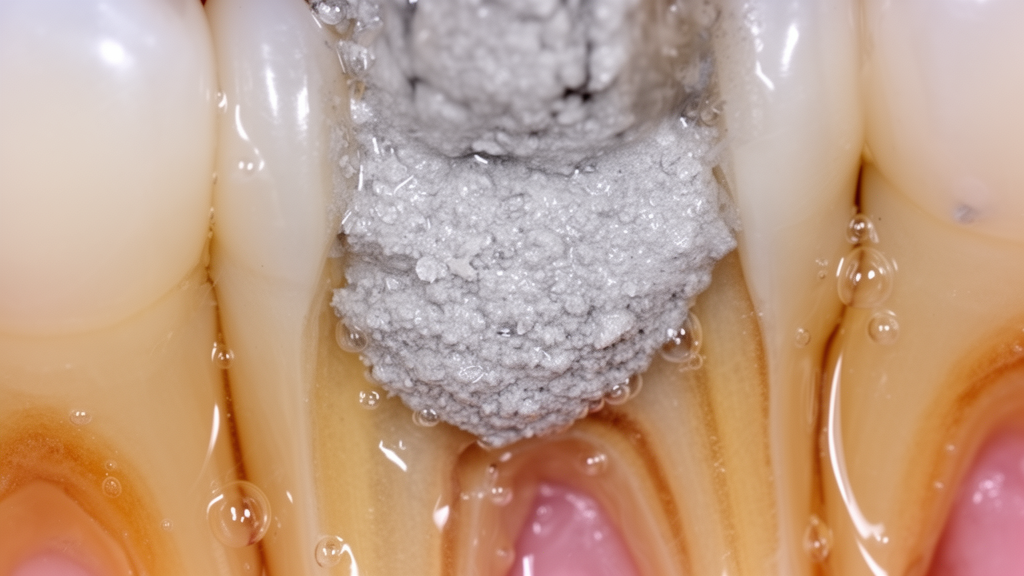
Endodontic irrigants and continuous chelation mixtures do not compromise the push-out bond strength or surface microhardness of fast-setting hydraulic calcium silicate cement, according to a standardized laboratory study evaluating chemical exposure during root perforation repair simulation. Investigators examined how RetroMTA, a calcium silicate formulation containing a zirconium oxide radiopacifier and a calcium zirconia complex, responded to sodium hypochlorite at standard and diluted concentrations, conventional alternating regimens with ethylenediaminetetraacetic acid, and novel continuous chelation solutions incorporating 1-hydroxyethane-1,1-diphosphonic acid. Across experimental intervals corresponding to one day and fourteen days of cement hydration, none of the irrigation protocols produced statistically significant alterations in displacement resistance or indentation microhardness compared with physiological saline controls. The experimental data demonstrated that continuous chelation mixtures combining Dual Rinse HEDP with sodium hypochlorite preserved the physical integrity and dentinal interfacial retention of the fast-setting material just as effectively as traditional single-agent rinses.
Accidental root perforations represent severe iatrogenic complications that breach the structural barrier between the internal root canal system and surrounding periodontal supporting tissues. Hydraulic calcium silicate cements, categorized broadly as mineral trioxide aggregate variants, serve as primary therapeutic materials for perforation repair, root-end fillings, vital pulp capping, and apexification due to their biocompatibility and capacity to create an effective hydraulic seal. Classic formulations such as ProRoot MTA demonstrate high biocompatibility but present practical challenges in routine clinical practice, notably prolonged initial setting times, cumbersome handling characteristics, and a recognized tendency to cause tooth discoloration linked to their bismuth oxide radiopacifier. RetroMTA addresses these shortcomings by replacing bismuth oxide with zirconium oxide and incorporating a calcium zirconia complex, accelerating hydration kinetics while curbing potential esthetic discoloration.
Despite the biological advantages of hydraulic cements, their clinical deployment during perforation repair often forces immediate or early contact with aggressive root canal irrigants. Sodium hypochlorite represents the universal benchmark irrigant because of its unmatched tissue-dissolving potency and broad antimicrobial activity. Nevertheless, sodium hypochlorite is inherently incapable of removing the inorganic, mineralized fraction of the smear layer generated along instrumented canal walls. Consequently, traditional protocols supplement sodium hypochlorite with a decalcifying chelating agent, conventionally 17 percent ethylenediaminetetraacetic acid. Sequential use of these agents entails recognized drawbacks: alternating hypochlorite and ethylenediaminetetraacetic acid leads to direct chemical interactions that consume available free chlorine, impairing antimicrobial efficacy while potentially promoting dentinal erosion in the root canal space.
Dual Rinse HEDP has emerged as a continuous chelation alternative designed to circumvent the incompatibilities inherent to conventional sequential irrigation routines. When dissolved directly into hypochlorite irrigants immediately before treatment, HEDP maintains available chlorine stability, allowing concurrent organic debridement and inorganic smear-layer dissolution throughout mechanical shaping without excessive demineralization of adjacent root dentin. However, the introduction of novel chemical formulations raises critical questions regarding their safety profile when contacting freshly placed calcium silicate repair cements. Previous research demonstrated that acidic chelators such as 17 percent ethylenediaminetetraacetic acid could hinder cement hydration, lower flexural strength, and diminish surface microhardness, underscoring the urgent necessity to characterize how continuous HEDP chelation influences modern fast-setting calcium silicate materials.
To evaluate these interactions, researchers established a standardized push-out bond strength model utilizing one hundred ninety-six uniform root slices harvested from extracted single-rooted human teeth with straight anatomical configurations. The tooth specimens were stored in a 0.5 percent chloramine-T solution at 4 degrees Celsius prior to preparation. Precision cutoff equipment operating with a water-cooled low-speed diamond saw produced transverse midroot slices measuring exactly 3.00 plus or minus 0.05 millimeters in thickness. Gates Glidden burs sizes two through five were progressively operated to standardize the internal lumen diameter of each slice to 1.3 millimeters. Prepared dentin slices were situated on glass slabs with their lower surfaces resting against blood-soaked gauze saturated with fresh human blood collected from healthy volunteers under ethical authorization, faithfully simulating the moist biological conditions of an osseous perforation defect while upper surfaces received moist saline cotton pellets during incubation at 37 degrees Celsius under fully saturated humidity.
The root slice specimens were divided equally into two primary hydration categories of ninety-eight samples each, representing setting durations of one day and fourteen days before chemical exposure. Each hydration category was then randomized into seven treatment subgroups containing fourteen slices each. The tested irrigation protocols comprised 2 percent sodium hypochlorite alone, 5.25 percent sodium hypochlorite alone, Dual Rinse HEDP mixed with 2 percent sodium hypochlorite, Dual Rinse HEDP mixed with 5.25 percent sodium hypochlorite, 2 percent sodium hypochlorite followed sequentially by 17 percent ethylenediaminetetraacetic acid, 5.25 percent sodium hypochlorite followed by 17 percent ethylenediaminetetraacetic acid, and normal saline serving as the untreated control. In the continuous chelation groups, one capsule of sustained-release HEDP powder was dissolved into ten milliliters of the respective hypochlorite solution. The upper cement surfaces were exposed to hypochlorite or HEDP mixtures for thirty minutes with solution renewals every five minutes, whereas ethylenediaminetetraacetic acid was delivered for three minutes without renewal.
Displacement resistance was quantified through push-out mechanical testing on a universal testing apparatus equipped with a one-millimeter-diameter cylindrical stainless-steel punch operating at a crosshead speed of one millimeter per minute. The maximum compressive force required to cause dislodgement was registered in Newtons, and push-out bond strength values were converted to megapascals by dividing failure loads by the internal circumferential surface area. Concurrently, surface microhardness was evaluated using one hundred ninety-six polymethyl methacrylate cylindrical molds featuring an internal diameter of six millimeters and a height of four millimeters prepared in accordance with ASTM E384 standards. Following identical setting intervals and irrigation regimens, the cement surfaces were polished with silicon carbide abrasives of 1000, 2000, and 3000 grit. A Vickers microhardness tester delivered a 300-gram load for ten seconds via a 136-degree diamond pyramid indenter, averaging three independent indentations per sample.
Statistical evaluation through one-way analysis of variance confirmed that neither the one-day nor the fourteen-day RetroMTA specimens exhibited significant variations in push-out bond strength relative to the saline control, with recorded probability values of p = 0.947 and p = 0.897, respectively. Mean bond strengths hovered uniformly between 2.120 and 2.541 megapascals across all experimental conditions. In the one-day cohort, 2 percent sodium hypochlorite produced 2.345 plus or minus 0.637 megapascals, 5.25 percent hypochlorite yielded 2.438 plus or minus 0.916 megapascals, 2 percent hypochlorite with HEDP yielded 2.485 plus or minus 0.540 megapascals, 5.25 percent hypochlorite with HEDP recorded 2.120 plus or minus 0.684 megapascals, and the sequential chelating regimens produced 2.316 and 2.266 megapascals compared to 2.291 megapascals for saline. Similar consistency was documented after fourteen days, where values ranged from 2.182 megapascals in the diluted HEDP group to 2.541 megapascals in the concentrated hypochlorite group, with saline registering 2.420 megapascals.
Surface microhardness measurements paralleled the mechanical retention results, showing no statistically significant discrepancies between the irrigation protocols and the normal saline control for one-day (p = 0.882) or fourteen-day (p = 0.861) specimens. Vickers hardness numbers remained resilient across all cohorts, spanning 34.496 to 36.959 kilograms per square millimeter at one day and 34.655 to 37.568 kilograms per square millimeter at fourteen days. Furthermore, three-way analysis of variance demonstrated that neither hypochlorite concentration, chelator selection, nor hydration interval exerted a statistically significant main effect on push-out bond strength (p = 0.862, p = 0.442, and p = 0.999, respectively) or surface microhardness (p = 0.546, p = 0.714, and p = 0.648, respectively). Interaction analyses confirmed that two-way and three-way interaction effects among all evaluated variables were statistically insignificant, verifying that chemical combinations did not induce synergistic degradation of the cement matrix.
Stereomicroscopic examination of debonded root slices at 25 times magnification revealed that cohesive failure within the cement bulk predominated across all experimental groups, whereas adhesive failure along the dentin-cement interface occurred infrequently. This failure pattern underscores that the adhesive bond formed between RetroMTA and root dentin remained structurally superior to the internal cohesive strength of the material itself, regardless of whether specimens encountered concentrated hypochlorite, continuous Dual Rinse HEDP, or sequential ethylenediaminetetraacetic acid. The rapid setting characteristics associated with the calcium zirconia complex likely allowed RetroMTA to achieve sufficient mechanical maturation within twenty-four hours to withstand subsequent chemical exposure. While these ex vivo and in vitro findings indicate that continuous chelation with Dual Rinse HEDP does not compromise the retention or hardness of RetroMTA, the authors emphasize that clinical outcomes depend on complex oral dynamics, necessitating confirmation through well-designed clinical trials.
Subject of Research: Effects of root canal irrigation protocols on the push-out bond strength and surface microhardness of fast-setting RetroMTA
Article Title: The Mechanical Footprint of Dual Rinse 1‐Hydroxyethane 1,1‐Diphosphonate on Fast‐Set Mineral Trioxide Aggregate Microhardness and Dislocation Resistance
Article References: Akbari Iraj, S., Kaboli, A., & Shokouhinejad, N. (2026). The Mechanical Footprint of Dual Rinse 1‐Hydroxyethane 1,1‐Diphosphonate on Fast‐Set Mineral Trioxide Aggregate Microhardness and Dislocation Resistance. The Scientific World Journal, 2026(1), Article 5210867. https://doi.org/10.1155/tswj/5210867
Image Credits: AI Generated
DOI: 10.1155/tswj/5210867
Keywords: RetroMTA, Dual Rinse HEDP, Sodium Hypochlorite, Push-Out Bond Strength, Surface Microhardness, Hydraulic Calcium Silicate Cements, Root Perforation Repair, Endodontic Irrigants, Continuous Chelation, Vickers Microhardness, EDTA, Dislocation Resistance, Zirconium Oxide, Cohesive Failure, Dentin Adhesion, Ex Vivo Study, Endodontics
News Source: Ophelia Keating. (November 23, 2026). Root Canal Irrigants Do Not Impair Fast-Set Calcium Silicate Cement Stability. Scienmag.