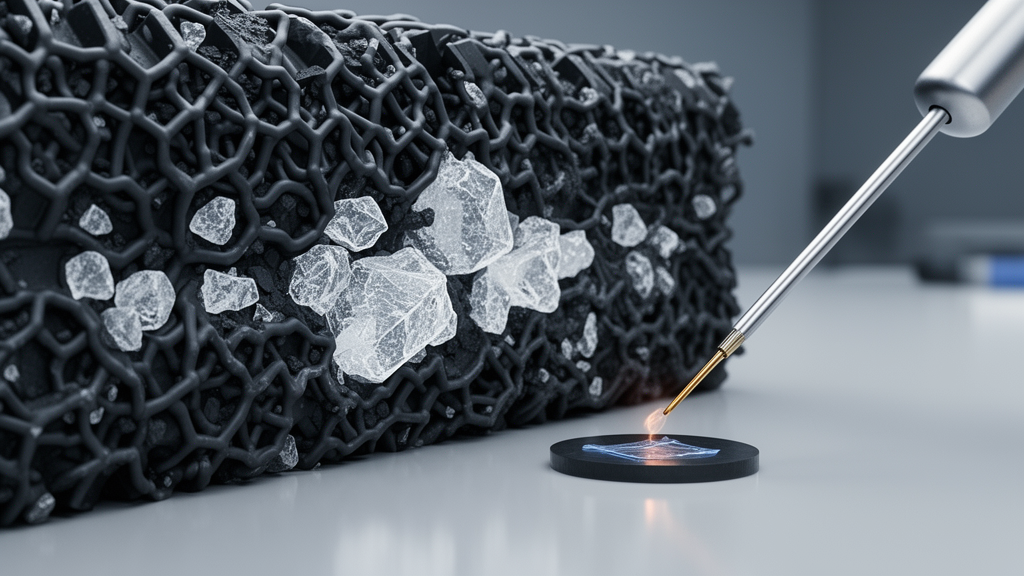
Tire and road wear particles generated through vehicular friction represent an increasingly recognized and pervasive category of environmental microplastic contamination, yet accurately quantifying their mass in complex environmental matrices remains subject to severe analytical hurdles. In a comprehensive investigation published in Analytical and Bioanalytical Chemistry, researchers Elisabeth Støhle Rødland and Cassandra Rauert systematically demonstrated that pyrolysis–gas chromatography/mass spectrometry, the premier technique utilized for measuring tire wear mass, is deeply vulnerable to chemical variability within tire treads. Pyrolysis–gas chromatography/mass spectrometry operates as an indirect analytical mechanism that does not quantify intact polymers directly, but instead tracks specific thermal decomposition fragments produced during flash heating, using calibration relationships to calculate original polymer mass and subsequently extrapolating tire wear particle burdens. However, by comparing pure commercial elastomers and vulcanized tire tread specimens of strictly known formulation, the authors discovered that elastomer microstructure accounts for roughly half of the observed variability in pyrolysis marker formation across formulations, creating extensive analytical bias that undermines single-marker quantification protocols.
The scale of tire wear generation makes accurate measurement vital, as global estimates suggest that well over one million metric tons of tire wear particles are emitted into urban, atmospheric, and aquatic compartments annually across Europe, China, and the United States alone. Unlike conventional microplastic particles consisting of homogeneous thermoplastic resins, tire treads are intricate engineered composite matrices containing synthetic elastomers, natural rubber, mineral fillers, curing agents, and specialized organic additives. Standardized methodologies, including technical specifications ISO/TS 20593 and ISO/TS 21396, have traditionally relied upon individual marker compounds to quantify specific rubber fractions, designating 4-vinylcyclohexene to quantify synthetic polybutadiene rubber and dipentene to measure natural rubber. In synthetic copolymers like styrene-butadiene rubber, secondary decomposition compounds such as the styrene-butadiene dimer 4-phenylcyclohexene and styrene-butadiene trimer have also been widely utilized. The investigation highlights that these marker fragments do not form at fixed, universal stoichiometric ratios; rather, their generation is dictated by monomer sequence distributions and polymer chain geometry, leading to systematic underestimations or overestimations when uniform calibration metrics are applied across diverse tire types.
To evaluate these underlying chemical mechanisms under controlled laboratory conditions, the authors evaluated seven vulcanized tire tread samples alongside four pure elastomer polymers, including two distinct styrene-butadiene rubber variants denoted SBR1 and SBR2, a polybutadiene rubber, and natural rubber. These materials were chosen because they reflect commercial formulations, incorporating deliberate variations in styrene content and cis- and trans-1,4-butadiene spatial configurations. For comparative and calibration benchmarks, commercial polyisoprene and SBR1500 were analyzed in parallel. Cryomilled particulate treads and single scalpel-cut tread slivers were introduced directly into microfurnace pyrolyzers connected to gas chromatography systems paired with single and tandem mass spectrometers across two independent participating institutes, the Norwegian Institute for Water Research and the Queensland Alliance for Environmental Health Sciences. Analytical evaluations tested single-shot and double-shot pyrolysis operational regimes alongside systematic temperature increments ranging from 500 to 700 degrees Celsius to decouple instrumental operational effects from chemical matrix phenomena.
Temperature optimization experiments established that individual marker generation responds uniquely to thermal conditions, showing that no universal operating temperature optimizes all analytical fragments at once. For synthetic rubber markers, the relative contributions of 4-vinylcyclohexene and 4-phenylcyclohexene declined markedly as temperatures increased from 500 to 700 degrees Celsius, whereas fragmentation markers including benzene, alpha-methylstyrene, ethylstyrene, butadiene trimer, and styrene-butadiene trimer exhibited marked increases. Recovery tests on tire tread TT5 revealed that pyrolysis temperatures below 600 degrees Celsius caused consistent overestimation of styrene-butadiene rubber, whereas temperatures between 600 and 675 degrees Celsius caused noticeable recovery drops. The multi-marker composite M4, incorporating benzene, alpha-methylstyrene, ethylstyrene, and butadiene trimer, achieved optimal one hundred percent recovery at 700 degrees Celsius, while single markers showed optimal recoveries at disparate points, such as 4-vinylcyclohexene peaking at eighty percent recovery between 550 and 600 degrees Celsius. In natural rubber trials, dipentene consistently overestimated polymer mass between 122 and 325 percent across all temperatures, while 2,4-dimethyl-4-vinylcyclohexene showed lower temperature dependence and improved accuracy, ultimately prompting the selection of 700 degrees Celsius as a balanced compromised condition.
Beyond temperature dependence, the physical preparation and aggregation state of calibration standards introduced substantial systematic discrepancies in instrumental response. When researchers evaluated elastomers dissolved in chloroform and reconstituted as thin solvent-cast films in sample cups against solid elastomers weighed directly without dissolution, solvent-cast materials consistently produced higher normalized chromatographic signal intensities across all markers. This discrepancy aligns with fundamental principles of heat transfer, where casting forms a thin polymer layer with high surface area that promotes rapid thermal contact and minimizes secondary condensation reactions relative to solid rubber granules. Because existing standard protocols frequently recommend preparing calibration series from solvent-cast standards such as SBR1500, these findings demonstrate that calibrations based on dissolved idealized polymers fail to emulate the thermal decomposition physics of solid, vulcanized microparticles found in real environmental samples. Comparisons between scalpel-cut tread slivers and cryomilled tread particles further revealed that physical subsampling and milling characteristics shift marker response, increasing 4-vinylcyclohexene and styrene-butadiene dimer intensities by twenty-nine and eleven percent respectively in milled particles.
Chemical cross-linking introduced during industrial vulcanization was found to fundamentally alter thermal degradation chemistry, distinguishing tire treads from raw reference elastomers. Statistical comparisons demonstrated significant differences in normalized marker yield between vulcanized tire treads and raw elastomers for almost all evaluated compounds with a p-value below 0.005, with alpha-methylstyrene representing the sole exception. Vulcanized tire treads produced notably elevated benzene levels compared to pure elastomers, an effect attributed to secondary cracking and aromatization promoted by tightly cross-linked network architecture and aromatic processing additives. Conversely, pure polybutadiene generated disproportionately elevated levels of 4-vinylcyclohexene, while raw SBR1 produced excessive styrene-butadiene dimer signals compared to vulcanized treads incorporating those identical elastomer stocks. These persistent divergent responses prove that attempting to quantify environmental tire debris by directly referencing non-vulcanized elastomer standards introduces fundamental chemical biases that cannot be corrected by simple linear scaling factors.
Microstructural characterization revealed that geometric configurations within the polymer backbone exert primary control over the specific chemical pathways followed during flash pyrolysis. Redundancy analysis evaluating all samples demonstrated that explanatory variables explained sixty-seven percent of total variation in marker response, with sample type accounting for thirty-four percent, elastomer mass contributing 9.3 percent, and cis-1,4-butadiene microstructure accounting for eighteen percent. When redundancy analysis was restricted strictly to the five investigated tire tread formulations, microstructural parameters accounted for forty-nine percent of the adjusted variation in marker response. Within this tread-only redundancy model, forward selection identified cis-1,4-butadiene as the leading factor explaining twenty-three percent of variance, followed by styrene content at fourteen percent, 1,2-vinyl content at thirteen percent, and trans-1,4-butadiene at ten percent. Formulations enriched in cis-1,4-butadiene, typically utilized in winter tires to preserve elasticity in freezing weather, produced far greater quantities of the dimer 4-vinylcyclohexene than summer tires dominated by trans-1,4-butadiene, proving that market and seasonal formulation shifts directly alter environmental marker yields.
When individual marker algorithms were benchmarked against vulcanized tread specimens of known composition using commercial SBR1500 calibration curves, the ISO-recommended single marker 4-vinylcyclohexene systematically underestimated synthetic rubber content, yielding recoveries as low as sixteen to twenty-five percent and never reaching acceptable accuracy thresholds. The styrene-butadiene dimer correlated with polymer styrene content but regularly overestimated synthetic rubber in low-styrene blends. Multi-marker combinations, particularly the four-marker suite M4, substantially outperformed single markers by dampening formulation-dependent variations, achieving accuracies between eighty-six and 117 percent across several tread formulations. The stability of M4 was heavily anchored by the dominant and consistent pyrolytic formation of benzene, as alternative combinations lacking benzene, such as M3 and BUT, exhibited far wider regression scatter across different rubber types. Nonetheless, no single marker or composite marker suite succeeded in maintaining acceptable recovery within an eighty to one hundred and twenty percent window across all evaluated commercial treads, proving that marker yields remain inextricably linked to specific manufacturing recipes.
Environmental validation experiments using spiked marine sediment underscored how natural geochemical matrices compound these analytical distortions. Spiking cryomilled tire tread into uncleaned organic-rich marine sediment produced massive positive matrix interferences, with unconditioned sediment samples generating anomalous recoveries exceeding three hundred percent across certain marker combinations. Chemical digestion procedures designed to remove organic matter, including twenty-four-hour treatments with ten percent potassium hydroxide, hydrogen peroxide, and Fenton’s reagent, successfully eliminated severe overestimation, enabling multi-marker combinations like M4 and M3 to recover between eighty and one hundred percent of expected rubber content. However, testing these chemical treatments on pure tire tread without sediment revealed that harsh oxidation from potassium hydroxide and hydrogen peroxide induced slight rubber degradation or sample transfer losses, reducing reference recoveries to seventy-two to seventy-eight percent, whereas Fenton’s reagent maintained robust recoveries comparable to untreated controls while mitigating matrix distortion.
Collectively, these empirical findings confirm that conventional pyrolysis methods utilizing single chemical markers and idealized polymer standards introduce systematic analytical error into environmental tire wear measurements. Because commercial tire manufacturing dynamically alters elastomer ratios, cis/trans isomer balances, and cross-linking additives according to vehicle specifications, climate requirements, and seasonal needs, universal calibration schemes cannot reliably represent heterogeneous environmental samples. Interlaboratory evaluations conducted between the Norwegian Institute for Water Research and the Queensland Alliance for Environmental Health Sciences demonstrated good baseline reproducibility, with calculated concentrations agreeing within a factor of two across identical treads, confirming that analytical variance stems primarily from material chemistry rather than instrumental instability. The authors conclude that advancing the field requires adopting harmonized multi-marker analytical frameworks, standardized chemical cleanup protocols tailored to sediment and soil matrices, and market-representative reference materials derived from actual commercial vulcanized blends rather than virgin synthetic polymers.
Subject of Research: Quantification of tire and road wear particles using pyrolysis–gas chromatography mass spectrometry
Article Title: Advancing pyrolysis–gas chromatography mass spectrometry for tire wear particle mass quantification: effects of elastomer type, microstructure, and sample preparation
Article References: Rødland, E. S., & Rauert, C. (2026). Advancing pyrolysis–gas chromatography mass spectrometry for tire wear particle mass quantification: effects of elastomer type, microstructure, and sample preparation. Analytical and Bioanalytical Chemistry. https://doi.org/10.1007/s00216-026-06892-6
Image Credits: AI Generated
DOI: 10.1007/s00216-026-06892-6
Keywords: pyrolysis gas chromatography mass spectrometry, tire and road wear particles, microplastics quantification, elastomer microstructure, styrene butadiene rubber, butadiene rubber, natural rubber, 4-vinylcyclohexene, dipentene, multi-marker analysis, redundancy analysis, marine sediment matrix, vulcanization, solvent-cast calibration, sample preparation, chemical digestion, cryomilling
News Source: Bethany Barker. (November 23, 2026). Tire Microstructure and Sample Prep Strongly Bias Microplastic Pyrolysis Measurements. Scienmag.