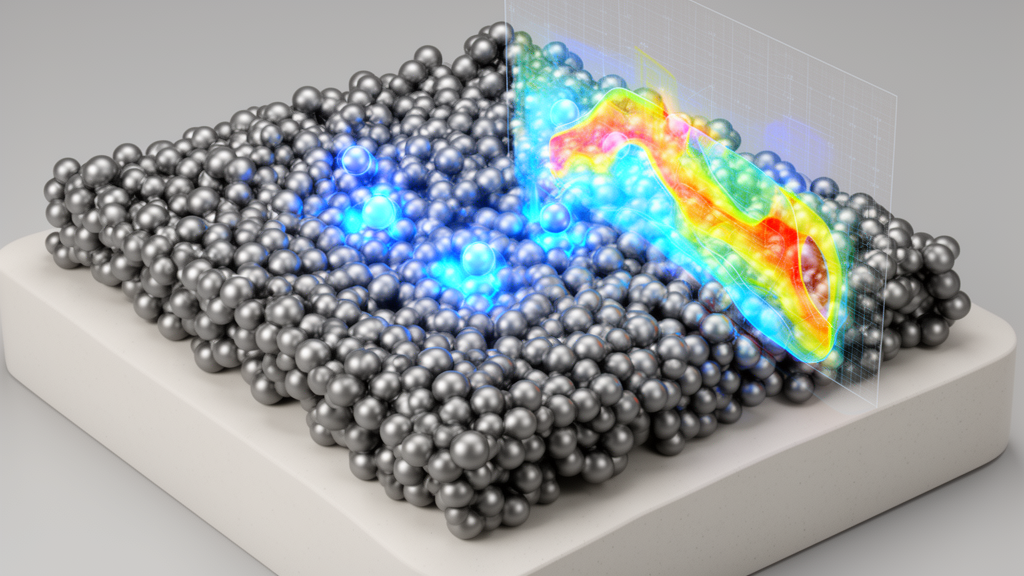
Heterogeneous catalysis drives major industrial transformations, operating at solid surfaces where chemical reactants undergo adsorption, conversion, and desorption. Because active catalytic structures frequently alter their geometry and composition under operational pressures and temperatures, predicting whether a material maintains stability or degrades represents a critical engineering obstacle. Conventional computational investigations rely on first-principles quantum-mechanical methods, particularly density functional theory, to resolve atomic-level energetics, binding configurations, and reaction pathways. While density functional theory provides dependable atomic accuracy, its high computational expense prevents large-scale structural screening campaigns or long-timescale operational simulations. To address this fundamental trade-off between accuracy and efficiency, researchers increasingly deploy machine learning surrogate models alongside molecular simulations. By combining quantum mechanics with data-driven predictive architectures, recent research reviewed in Discover Industrial Chemistry and Materials establishes an integrated framework for forecasting catalyst stability and deactivation pathways across diverse reaction environments.
A core finding highlighted in the review is that distinct machine learning model families must align with specific catalyst properties based on data availability and descriptor complexity. Catalytic activity is commonly evaluated through intermediate adsorption energies, which serve as mechanistic descriptors governed by scaling relations and the Sabatier principle. Graph neural network architectures, such as crystal graph convolutional neural networks trained on benchmarks like Open Catalyst 2020, predict these adsorption energies directly from atomic structures. Specialized frameworks such as GAME-Net achieve predictions six orders of magnitude faster than density functional theory while preserving a mean absolute error of 0.18 electronvolts for organic molecules on metallic surfaces, whereas electronic density-of-states models bypass explicit geometry. In contrast, selectivity depends on energy differences between competing reaction pathways. Consequently, predictive modeling for selective systems, such as carbon dioxide hydrogenation to methanol where regression models achieve coefficients of determination reaching 0.95, relies on interpretable tree-based ensembles where modest residual errors can reverse predicted outcomes.
Predicting catalyst longevity requires separating thermodynamic equilibrium stability from time-dependent kinetic degradation processes. Thermodynamic resilience, including oxide electrocatalyst resistance to dissolution, is typically evaluated using regression and classification algorithms trained on static density functional theory datasets and materials databases. Binary classifiers such as logistic regression, support vector machines, and random forest models categorize formulations as stable or unstable when categorical thresholds govern screening, while regularized regression techniques handle continuous dissolution metrics. Conversely, kinetic deterioration processes—encompassing surface reconstruction, cation migration, and crystallite sintering—cannot be captured by static thermodynamic descriptors alone. Simulating these time-dependent structural evolutions demands machine learning interatomic potentials that approximate complex potential energy surfaces without recurring quantum-mechanical calculations. These machine learning potentials achieve simulation accelerations exceeding ten thousand times relative to standard density functional theory, enabling nanosecond-scale molecular dynamics trajectories of realistic supported nanoparticle systems that previously remained computationally prohibitive.
Molecular dynamics simulations provide dynamic visibility into atomic-level degradation phenomena that govern supported nanoparticle catalysts, particularly sintering and particle coalescence. Nanoparticle sintering proceeds predominantly through two recognized physical mechanisms: Ostwald ripening and particle migration and coalescence. Ostwald ripening involves the detachment and diffusion of individual adatoms driven by surface free energy gradients, causing smaller crystallites to shrink while larger particles grow. This ripening mechanism dominates the earliest stages of sintering and is accelerated by hydrogen atmospheres at lower operating temperatures. In contrast, particle migration and coalescence involves the thermal translation and merging of entire crystallites, becoming dominant at elevated temperatures and larger particle dimensions. Molecular dynamics trajectories further reveal that localized surface self-diffusion can drive coalescence without requiring significant whole-particle translation, activating at temperatures below classical ripening thresholds. Furthermore, atomistic simulations confirm that coalescence mechanisms differ fundamentally between solid nanoparticles undergoing lattice rearrangements and liquid-like nanodroplets exhibiting hydrodynamic behavior.
The rate and morphological trajectory of catalyst degradation are profoundly dictated by dynamic metal-support interactions, local substrate defects, and atmospheric exposure. Advanced machine-learning-accelerated molecular dynamics investigations show that metal-support interactions exhibit pronounced crystallographic facet dependencies that control nanoparticle mobility. In copper nanoparticles supported on alumina surfaces, for example, diffusion on alpha-alumina (0001) surfaces is accelerated by dynamic metal-support interactions wherein aluminum surface atoms continuously adjust their coordinates to maximize contact, thereby promoting coalescence even across widened inter-particle spacings. In sharp contrast, stable copper-oxygen bonds on gamma-alumina substrates effectively immobilize metal clusters, inhibiting diffusion and suppressing sintering. Beyond thermal movement, chemical atmospheres alter sintering pathways through metal restructuring and compound formation, such as the generation of surface aluminates in oxygen or steam environments. Similarly, water vapor promotes metal agglomeration in automotive exhaust systems by altering the structural interconversion of supported palladium and copper species on zeolites, demonstrating how operating environments dictate durability.
Beyond thermal sintering, catalytic systems suffer from diverse chemical and physical deactivation pathways, including surface oxidation, corrosion, active-site poisoning, metal leaching, and crystallographic phase transformations. Strong chemical poisoning occurs when impurities such as sulfur, phosphorus, or foreign metal species bind tenaciously to surface sites, suppressing catalytic turnover even while the underlying bulk crystallite remains intact. In liquid-phase reaction media, leaching causes irreversible loss of active transition metals into solution, permanently reducing active catalyst loading. Structural phase transformations, including the conversion of metallic phases into oxides or alloy segregation, alter coordination environments and eliminate active catalytic ensembles under operating conditions. Machine-learning-assisted atomic simulations have successfully resolved these intricate deactivation mechanisms, clarifying oxygen-vacancy formation and cation migration in nonstoichiometric zinc-chromium oxide catalysts and capturing in-situ surface reconstruction in transition-metal oxides. Static density functional theory descriptors effectively screen thermodynamic vulnerabilities such as oxidation, segregation, and poison adsorption, whereas kinetic phenomena like leaching, coking, and sintering require time-series data or dynamic atomistic simulations.
Underlying data-driven stability models are extensive first-principles quantum calculations that characterize catalyst surfaces and elementary reaction thermodynamics. Density functional theory systematically relaxes surface slabs, establishing the relative thermodynamic stability of low-index facets such as (111), (110), and (100) across face-centered cubic transition metals like platinum and gold. By calculating surface free energies across variable chemical potentials, researchers determine which facets dominate under specific gas pressures and temperatures. Furthermore, density functional calculations quantify local coordination environments across hollow, bridge, and atop sites, linking geometric parameters and work functions to adsorption energies and activation barriers. High-throughput computational databases provide the critical training data required to construct generalized machine learning models. A benchmark study by Mamun and colleagues, for instance, compiled over 90,000 density functional theory calculations on Catalysis-Hub.org, reporting chemisorption energies for thirteen monoatomic and hydrogenated adsorbates across 2,035 bimetallic surfaces using Quantum ESPRESSO with the BEEF-vdW functional, establishing the chemical foundation needed to train robust surrogate models.
To navigate the combinatorial complexity of catalyst design spaces, researchers integrate advanced algorithmic architectures such as deep reinforcement learning and equivariant graph neural networks. Deep reinforcement learning algorithms explore complex surface reconstructions by iteratively proposing atomic reconfigurations across potential energy surfaces. An energy and force calculator, driven by machine learning potentials or density functional theory, assigns reward signals based on structural stability, catalytic activity, or kinetic feasibility, allowing the learning agent to identify thermally accessible metastable states that dominate under realistic operating conditions. Concurrently, graph neural networks have evolved to capture complex surface interactions, periodic boundary conditions, and directional bonding. Architectures such as DimeNet, GemNet-OC, and local-environment pooling frameworks incorporate interaction distances and directional vectors, achieving high accuracy in predicting adsorption energies across single-atom alloys and periodic surfaces. For example, graph neural models predict carbon monoxide adsorption on copper-based single-atom alloys with a mean absolute error of 0.087 electronvolts, enabling the rapid pre-screening of stable, sinter-resistant configurations.
The review emphasizes that practical catalyst lifetime cannot be captured by a single static stability metric because industrial viability depends intrinsically on regeneration and structural reusability. A catalyst subject to rapid deactivation via reversible carbon deposition may exhibit a longer cumulative service lifetime than a formulation deactivating slowly via irreversible metal leaching or severe sintering. Comprehensive lifetime prediction frameworks must therefore quantify three distinct operational factors: the deactivation rate during production, the fraction of activity restored during regeneration, and the cumulative structural damage caused by repeated regeneration cycles. While carbonaceous coke can typically be removed via controlled oxidative burn-off or gasification with steam, hydrogen, or carbon dioxide, coke combustion is strongly exothermic; uncontrolled local overheating can induce catastrophic sintering of metal nanoparticles or damage supporting frameworks. In heavy-oil hydroprocessing, coke burn-off successfully restores performance, but accumulated vanadium and nickel poisons permanently degrade the bed, necessitating complete replacement. Applying machine learning potentials to simulate structural integrity during oxidative or thermal rejuvenation offers a crucial pathway toward realistic multi-cycle durability forecasts.
Despite significant computational advances, the deployment of machine learning in predicting catalyst stability remains constrained by dataset biases, extrapolation limits, and uncertainty quantification deficits. Current training repositories such as Open Catalyst 2020 primarily capture electronic and adsorption energies on idealized single-crystal facets rather than measured operational lifespans under complex industrial streams. Consequently, graph neural networks and interatomic potentials frequently display elevated out-of-distribution errors when evaluated on novel elemental combinations, complex supports, or extreme reaction conditions. Furthermore, computational reference data inherit intrinsic systematic approximations from density functional exchange-correlation functionals, limiting absolute model fidelity. To address these vulnerabilities, researchers recommend a rigorous multi-tier validation protocol: candidate catalysts identified by machine learning screening must first be benchmarked against held-out density functional calculations chosen specifically to probe chemical extrapolation; promising materials should then be evaluated using explicit ab initio molecular dynamics; and theoretical predictions must ultimately undergo rigorous experimental validation through electrochemical accelerated stress testing and quantitative metal dissolution measurements.
Subject of Research: Predictive modeling of catalyst stability and degradation using machine learning and molecular simulations
Article Title: Predicting catalyst stability and degradation using machine learning and molecular simulations
Article References: Ibekwe, F. A., Samuel, H. S., Undie, D. A., Oluwakemi, A. O., Onotu, O. P., & Etim, E. E. (2026). Predicting catalyst stability and degradation using machine learning and molecular simulations. Discover Industrial Chemistry and Materials, 1(1), Article 30. https://doi.org/10.1007/s44508-026-00031-w
Image Credits: AI Generated
DOI: 10.1007/s44508-026-00031-w
Keywords: catalyst stability, heterogeneous catalysis, molecular simulations, density functional theory, machine learning interatomic potentials, graph neural networks, Ostwald ripening, particle coalescence, accelerated stress testing, catalyst degradation, metal support interactions, adsorption energy, reaction energetics, deep reinforcement learning, catalyst regeneration, high throughput screening, computational chemistry
News Source: Bethany Barker. (November 23, 2026). Molecular Simulations And Machine Learning Predict Industrial Catalyst Stability And Degradation Pathways. Scienmag.