In a comprehensive clinical investigation examining critical care nursing practices across seven hospitals in Nablus, Palestine, researchers have revealed a significant divergence between nurses’ conceptual knowledge of intensive care unit-acquired weakness and their observable bedside evaluation procedures. The descriptive cross-sectional study, paired with a prospective direct-observation component and published in Discover Health Systems, evaluated 140 intensive care unit nurses across governmental and private facilities. Overall, participating nurses achieved a mean score of 14.14 out of 25 possible points on a standardized knowledge assessment, representing a moderate overall comprehension rate of 56.6 percent. However, clinical proficiency was markedly uneven across practice domains, with the lowest performance documented in diagnostic recognition and formal muscle assessment. Crucially, none of the surveyed professionals reported ever receiving specialized training dedicated to intensive care unit-acquired weakness, and during 47 bedside observation sessions, standardized strength assessment instruments and systematic monitoring for weakness were completely absent from routine care.
Intensive care unit-acquired weakness represents a frequent neuromuscular complication arising during critical illness, characterized by newly developing, diffuse, and symmetrical flaccid limb weakness that cannot be attributed to pre-existing neurological disorders. As documented in the critical care literature synthesized by the investigators, the condition encompasses critical illness polyneuropathy, critical illness myopathy, or a concurrent presentation of both pathologies. The syndrome is strongly linked to adverse clinical trajectories, including prolonged mechanical ventilation, delayed extubation weaning, extended hospital stays, heightened resource utilization, and persistent physical impairment after discharge. Pathophysiological contributors involve disease-related factors such as severe sepsis, systemic inflammatory cascades, multiple organ dysfunction, high acute illness acuity, advanced age, and prolonged ventilatory support. Concurrently, practice-sensitive clinical variables encompass prolonged patient immobility, uncontrolled hyperglycemia, deep continuous sedation, neuromuscular blockade exposure, systemic corticosteroids, inadequate nutritional therapy, and postponed functional physical rehabilitation.
To investigate how critical care nurses identify and mitigate this debilitating syndrome within the Palestinian healthcare infrastructure, the research team designed a multi-center protocol encompassing seven medical centers across Nablus. The participating facilities incorporated diverse operational environments, spanning varying institutional organizational structures, nurse-to-patient staffing ratios, technological resources, and ward workflows across both public and private sectors. The target population comprised licensed registered nurses with at least six months of continuous professional experience providing bedside care to critically ill adult patients. Administrative personnel, volunteers, nursing students, rotating interns, and specialized pediatric or neonatal nurses were deliberately excluded. The investigative team deployed a total-population census sampling strategy, inviting all 150 eligible intensive care nurses within the municipality. A total of 140 nurses completed questionnaires, yielding a response rate of 93.3 percent. For the prospective clinical phase, researchers selected a systematic random subsample of 47 nurses to undergo direct observation during scheduled clinical shifts.
The data collection architecture relied on two researcher-developed evaluation instruments structured around the Knowledge-to-Action Framework, established intensive care guidelines, and published epidemiological literature. The primary self-administered survey incorporated five designated modules: demographic and clinical career metrics, a 25-item knowledge questionnaire, a five-item self-reported recognition and assessment scale, a six-item self-reported preventive intervention scale, and an eight-item organizational barrier checklist. The knowledge assessment was divided into three core categories: general knowledge and risk factors across eight items, diagnostic recognition across nine items, and nursing preventive interventions across eight items, scored dichotomously with one point for correct answers. Face and content validity were qualitatively established through multidisciplinary panel review comprising an intensive care medicine specialist, a critical care head nurse, and two internal medicine consultants. Pilot testing involving ten external intensive care nurses verified instrument feasibility, while the direct observation protocol utilized a standardized twelve-item checklist tracking specific bedside care activities.
Granular analysis of the 25-item knowledge inventory demonstrated marked variability across subject areas, with general knowledge and clinical risk factors scoring highest at 5.25 out of 8 points, or 65.6 percent. Preventive nursing interventions achieved a mean score of 4.58 out of 8 points, or 57.3 percent, while diagnostic recognition registered the lowest domain proficiency at 4.31 out of 9 points, or 47.9 percent. Regarding specific clinical items, 86.4 percent of nurses correctly recognized the formal definition of intensive care unit-acquired weakness, and 80.0 percent recognized risks associated with prolonged pharmacological exposure. Additionally, 74.3 percent identified clinical circumstances prompting suspicion, and 70.7 percent acknowledged sepsis as a primary contributor. In contrast, only 34.3 percent correctly identified the Medical Research Council Sum Score as the standard bedside assessment tool, and merely 12.9 percent identified its diagnostic threshold below 48 out of 60. Knowledge regarding protein intake was limited to 43.6 percent, while functional electrical stimulation utility was recognized by 45.0 percent.
Self-reported questionnaire data portrayed a nursing cohort that perceived its daily clinical engagement in weakness prevention and patient evaluation as proactive and frequent. On a five-point frequency scale ranging from one for never to five for always, the overall cohort recorded a mean self-reported recognition and assessment score of 3.32 with a standard deviation of 0.86. Notably, 65.8 percent of participants asserted that they often or always evaluated peripheral muscle strength in cooperative patients, yet only 18.6 percent stated that they consistently used standardized scoring tools, while 67.1 percent admitted to rarely or never utilizing formal scales. On the six-item preventive care subscale, evaluating agreement from one to five, nurses achieved an elevated mean score of 4.24 with a standard deviation of 0.62. High proportions agreed or strongly agreed that they routinely performed patient repositioning (90.7 percent), ensured nutritional support (92.2 percent), monitored blood glucose levels (85.7 percent), supported scheduled sedation interruption protocols (88.6 percent), and facilitated early mobilization when feasible (67.8 percent).
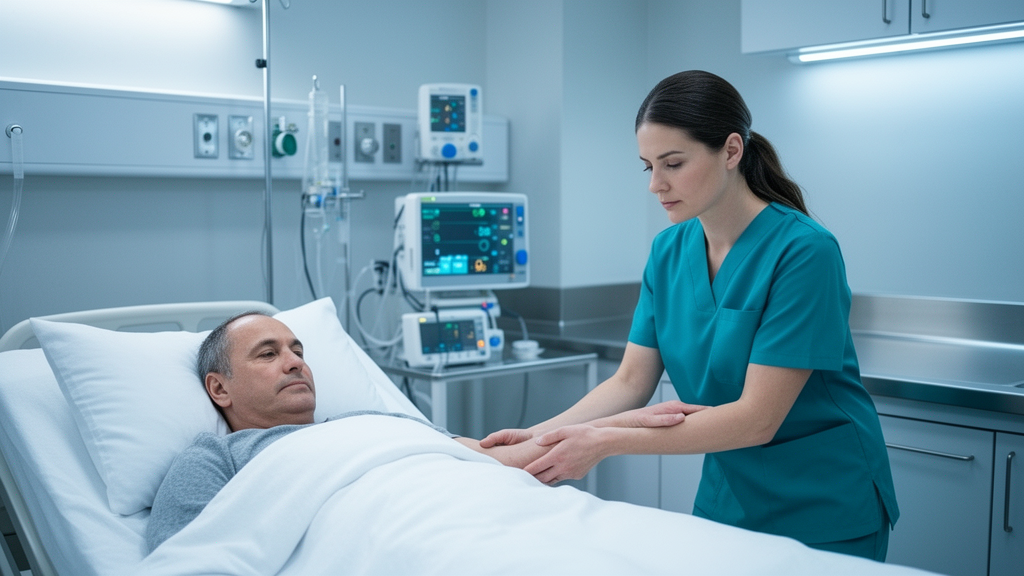
Direct observational assessments conducted across 47 single-shift sessions lasting at least four hours each yielded an average performance score of only 4.66 out of 12 possible checklist items, representing 38.8 percent execution. The observer noted high compliance with basic nursing routines, including blood glucose surveillance in 97.9 percent of sessions, scheduled patient repositioning in 93.6 percent, and nutritional maintenance in 93.6 percent. Physical mobilization occurred in 55.3 percent of observed sessions, while weakness-related nursing documentation was recorded in 44.7 percent. However, assessment practices specifically targeting intensive care unit-acquired weakness were virtually non-existent during routine workflow. Formal muscle strength testing was witnessed in only 6.4 percent of clinical observations, corresponding to three sessions. Furthermore, standardized assessment instrument implementation, systematic physical examination for signs of weakness, and sedation-related preventive weaning procedures were not observed in a single session across all 47 observations. Multidisciplinary involvement remained modest, with physical therapy recorded in 36.2 percent, dietitian consultations in 23.4 percent, and medical reviews in 44.7 percent of cases.
A comparative synthesis of the 47-nurse subsample highlighted an unmistakable disparity between self-reported care behaviors and real-world clinical execution. Within this matched subgroup, nurses had reported a combined 11-item self-report average score of 3.21 out of 5, or 64.3 percent, in contrast to their observed 12-item checklist execution rate of 38.8 percent. The authors cautioned that because the self-report and observational metrics used differing item constructions and response formats, this disparity represents a descriptive divergence rather than a statistically paired effect size. Observational performance also varied by work shift, recording an average score of 7 out of 12 checklist items during morning shifts, declining to 4 out of 12 during evening shifts, and reaching 3 out of 12 during night shifts. The investigators emphasized that these shift differences remain hypothesis-generating descriptive observations, likely reflecting daytime concentrations of multidisciplinary rounds, greater visibility, access to allied health professionals, differing patient activity levels, and variable observer reactivity.
Inferential statistical testing confirmed significant associations between nurses’ demonstrated knowledge and their formal academic credentials and clinical tenure. One-way analysis of variance demonstrated that educational attainment significantly correlated with performance across all three knowledge domains, yielding medium effect sizes with eta-squared values ranging between 0.091 and 0.123. Post-hoc Tukey-Kramer comparisons indicated that nurses holding master’s degrees or higher achieved significantly higher scores than those holding bachelor’s degrees or nursing diplomas, whereas bachelor’s and diploma cohorts showed no statistically significant difference. Similarly, years of intensive care experience produced significant associations across knowledge domains, with eta-squared effect sizes between 0.073 and 0.103. When reporting institutional impediments on the barrier checklist, 80.0 percent of nurses cited heavy clinical workloads and time restrictions, and 68.6 percent identified acute nursing staff shortages. Additional structural barriers included inadequate continuing education (45.0 percent), lack of diagnostic testing equipment (40.0 percent), restricted access to physical therapists (30.0 percent), absence of standardized protocols (20.7 percent), acute patient instability (20.0 percent), and poor interprofessional communication (14.3 percent).
Interpreting these findings, the study authors outlined several contextual limitations while situating their results within wider healthcare systems research. Methodological constraints included restricting the sampling frame to hospitals within Nablus, relying on a single observer which precluded inter-rater reliability calculations, and adopting a binary observational coding scheme that did not differentiate clinical non-performance from situations where an intervention lacked clinical indication. Moreover, broader occupational stressors documented across regional critical care personnel—including psychological distress, conflict-related trauma, and physical exhaustion—undoubtedly shape workplace capacities and resilience. The researchers concluded that addressing intensive care unit-acquired weakness cannot rely solely on isolated educational lectures. Instead, sustainable clinical improvement necessitates institutional integration of standardized screening protocols, competency-oriented bedside training incorporating supervised Medical Research Council scoring, expanded collaboration with physical therapy, adequate staffing allocations, and continuous implementation auditing. Future prospective research utilizing psychometrically validated instruments across diverse geographical regions is essential to evaluate the direct impact of these clinical pathways on long-term patient recovery.
Subject of Research: ICU nurses' knowledge, clinical practices, and institutional barriers regarding intensive care unit-acquired weakness in Palestine
Article Title: Knowledge and clinical practices for recognizing and preventing intensive care unit acquired weakness among intensive care nurses in Palestine
Article References: Eshtaya, A., Abdallatif, A. B., Shaheen, R., Alhendi, T. A., Al-Ghabeesh, S. H., & Qaddumi, J. A. S. (2026). Knowledge and clinical practices for recognizing and preventing intensive care unit acquired weakness among intensive care nurses in Palestine. Discover Health Systems, 5(1), Article 104. https://doi.org/10.1007/s44250-026-00452-6
Image Credits: AI Generated
DOI: 10.1007/s44250-026-00452-6
Keywords: intensive care unit-acquired weakness, critical care nursing, Medical Research Council sum score, bedside muscle strength assessment, critical illness polyneuropathy, critical illness myopathy, Nablus hospitals, routine clinical observation, sedation interruption, early patient mobilization, nursing workload barriers, staffing shortages, cross-sectional study, Knowledge-to-Action framework, multidisciplinary ICU care, blood glucose monitoring, clinical practice discrepancy
News Source: Ophelia Keating. (November 23, 2026). Palestinian ICU Nurses Show Weakness Assessment Gaps Despite Moderate Theoretical Knowledge. Scienmag.