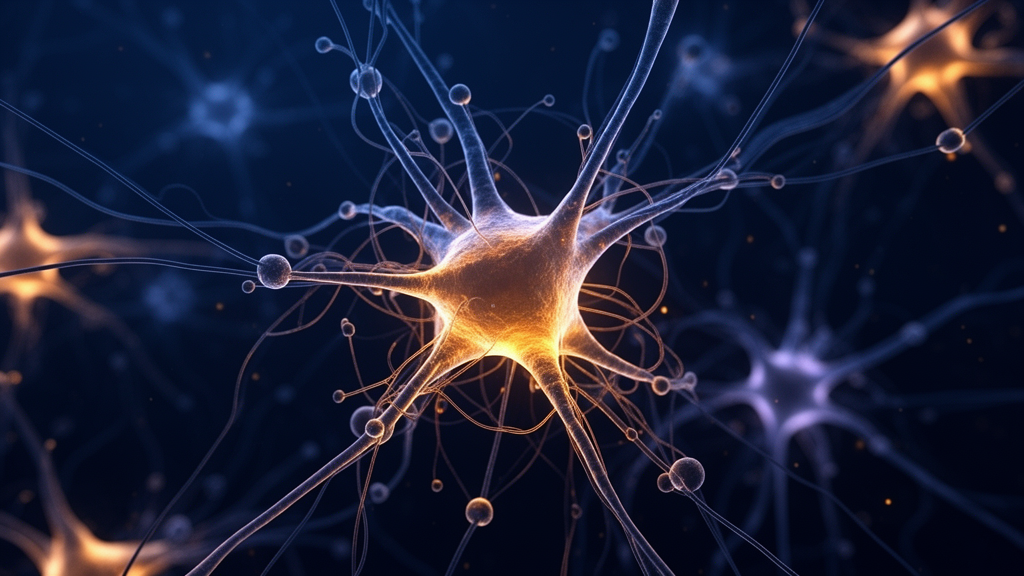
A comprehensive review of primate neurophysiology indicates that working memory is sustained through a hybrid attractor mechanism, reconciling decades of debate between classical persistent spiking models and dynamic population frameworks. Publishing in Frontiers in Systems Neuroscience, neuroscientists synthesize converging evidence from contemporary high-density multielectrode recordings, biophysical modeling, and cell-type-specific circuit dissections. In the primate brain, persistent delay activity across the lateral prefrontal cortex and connected posterior parietal areas constitutes the core neural correlate of working memory, retaining information across intervals of seconds to guide behavior. Rather than requiring individual cortical neurons to fire continuously at elevated rates, recent data show that working memory representations persist reliably across neuronal populations even while individual single units exhibit asynchronous, intermittent, and dynamic discharges. The authors define this synthesis as a hybrid attractor, wherein recurrent synaptic dynamics supply an intrinsically stable landscape of states, while stochastic spike generation, synaptic plasticity, and shifting neuronal recruitment across time dictate how that state landscape is occupied, updated, and retrieved.
Understanding how the brain maintains internal representations after external stimuli disappear began with classical lesion and single-unit electrophysiology. Historic primate lesion studies first demonstrated that structural damage to frontal association areas selectively impaired delayed-response behavior. Subsequent microelectrode recordings in awake behaving macaques identified individual cortical neurons whose discharge persisted during memory delays following visual cue removal. In macaque dorsolateral prefrontal cortex, many units exhibited spatially selective delay firing across several seconds, and their firing rates directly predicted subsequent memory-guided saccades. These classical findings established the prefrontal cortex as a critical representational hub operating through reciprocal interactions with parietal, motor, and subcortical structures. To explain how prefrontal networks sustain persistent representations after sensory inputs vanish, theoretical neurobiologists formulated the canonical bump-attractor model of spatial working memory. In this network architecture, excitatory pyramidal neurons with similar spatial tuning excite one another through recurrent collaterals, while broadly distributed feedback inhibition suppresses competing representations, generating a localized firing peak whose location encodes the remembered spatial target.
The canonical bump-attractor framework made decisive, testable predictions regarding recurrent synaptic transmission, population-level activity, and behavioral precision. Biophysical implementations highlighted that slow recurrent excitation, particularly mediated by N-methyl-D-aspartate glutamate receptors alongside alpha-amino-3-hydroxy-5-methyl-4-isoxazolepropionic acid receptors, is necessary to prevent rapid signal decay and maintain persistent firing. Pharmacological blockade in macaque prefrontal cortex verified that selectively blocking N-methyl-D-aspartate receptors diminished cue-associated delay responses, while blocking alpha-amino-3-hydroxy-5-methyl-4-isoxazolepropionic acid receptors caused general response suppression. Furthermore, the bump attractor predicted that continuous internal noise and structural heterogeneity cause the localized population activity profile to undergo stochastic diffusion along the network landscape. Empirical studies confirmed that trial-to-trial fluctuations in prefrontal delay firing predicted both the direction and magnitude of saccadic memory errors. Parallel investigations in primate dorsolateral prefrontal cortex and posterior parietal cortex confirmed that firing deviations on error trials shifted the decoded population vector toward incorrect locations, directly linking internal network state drift to behavioral inaccuracy.
Despite its theoretical success, the classical fixed-bump attractor model faced substantial empirical challenges as physiological recording techniques evolved beyond single-electrode sampling. Early single-unit recordings necessarily averaged spikes across trials and time, potentially creating an illusion of uninterrupted firing by masking underlying temporal sparsity. Subsequent investigations demonstrated that prefrontal activity changes dynamically across task delays while the underlying representational geometry remains stable. In distraction paradigms, intervening distractors caused the full neural population code to morph, yet low-dimensional subspaces preserved invariant mnemonic information about original targets. Additionally, non-spatial tasks frequently failed to detect sustained persistent spiking, prompting activity-silent theories proposing that short-term synaptic facilitation preserves information in altered connectivity matrices without sustained metabolic expenditure. Rhythmic-burst models similarly proposed that brief gamma episodes reflect transient attractor states separated by intervals where synaptic traces maintain information. These findings prompted researchers to investigate whether single-trial delay continuity is maintained by asynchronous population firing or whether networks repeatedly fall silent.
Recent experiments utilizing high-density Neuropixels probes and 128-contact microelectrode arrays in behaving macaques directly resolved these competing hypotheses at the single-trial population level. Recordings in lateral prefrontal and posterior parietal cortex demonstrated that population-averaged delay activity remains continuously elevated above baseline throughout individual trials, even though persistence is barely discernible within individual isolated units. Because individual neurons fire irregularly with weak pairwise correlations and take turns carrying mnemonic representations, the collective population never becomes silent as a whole. Complementary bilateral recordings in area 8Ar showed that both cortical hemispheres maintain tuned delay activity covering the entire visual field, with neural decoder errors progressively aligning with behavioral errors over the delay. Neural trajectories also exhibited delay-dependent serial effects, displaying early repulsion and late attraction relative to previous cues. These serial dependencies emerged naturally from spiking bump-attractor networks incorporating short-term synaptic plasticity, illustrating that activity-silent synaptic traces cooperate with active spiking attractors rather than replacing them.
Large-scale population analyses also delineated critical distinctions between spike timing asynchrony and informational fluctuations termed Off states. When researchers examined simultaneously recorded prefrontal neurons sharing spatial preferences using inter-spike-interval metrics, they found no evidence of coordinated population-wide silence beyond chance expectations, contradicting models that attribute continuity solely to trial-averaged bursts. Instead, transient Off states were identified where stimulus-specific rate coding dropped toward spontaneous levels without physical neuronal silence. During these informational Off states, neurons exhibited elevated firing to non-preferred locations and reduced firing to preferred targets, flattening tuning curves and degrading classifier accuracy. These transient events occurred more frequently during behavioral error trials and were only weakly coordinated across distant prefrontal and parietal regions, suggesting that shared local input within cortical columns modulates tuning depth without imposing global spiking silence. Moreover, causal perturbation studies using patterned microstimulation in macaques confirmed that stable mnemonic population dimensions remain robust against local activity disruptions, whereas optogenetic perturbations in rodent motor cortex demonstrated characteristic attractor recovery trajectories.
To explain how cortical circuits sustain stable asynchronous firing while resisting runaway excitation, the review examines the biophysical division of labor among cortical interneurons. Classical attractor models relied on a single, uniform inhibitory pool, but cortical inhibition is executed by molecularly and morphologically distinct classes. In primate neocortex, parvalbumin-expressing, somatostatin-expressing, and vasoactive intestinal peptide-expressing interneurons account for more than 90 percent of all GABAergic cells. Fast perisomatic parvalbumin inhibition, dendritic somatostatin inhibition, and vasoactive intestinal peptide-mediated disinhibition occupy specialized spatial compartments within the recurrent microcircuit. The early division-of-labor model proposed by Wang and colleagues incorporated these distinct populations into a unified prefrontal architecture, demonstrating that structured interactions among diverse interneurons stabilize recurrent activity. While parvalbumin cells supply broad perisomatic feedback to constrain overall excitation, somatostatin and vasoactive intestinal peptide populations interact to generate localized dendritic disinhibition, establishing the selective Mexican-hat input profile required to maintain spatial memory representations and protect them from distracting external inputs.
Cellular and physiological properties dictate how each interneuron subclass executes its dedicated computational role during cognitive processing. Parvalbumin-positive interneurons, comprising fast-spiking basket and chandelier cells, possess narrow action potentials, short membrane time constants, and rapid potassium channel kinetics that permit high-frequency discharge with minimal spike-frequency adaptation. These biophysical adaptations position parvalbumin neurons to deliver rapid feedback gain control, tracking excitatory currents on millisecond timescales to enforce irregular, weakly correlated firing. In contrast, somatostatin-positive interneurons, including Martinotti cells, target distal pyramidal dendrites where long-range and contextual inputs converge. By regulating dendritic electrogenesis and calcium signaling, somatostatin neurons filter incoming dendritic inputs, attenuate competing distractors, and prevent non-selected ensembles from disrupting stored representations. Vasoactive intestinal peptide-positive interneurons preferentially innervate somatostatin interneurons in superficial layers, forming a canonical disinhibitory motif. When activated by contextual, attentional, or neuromodulatory signals, vasoactive intestinal peptide cells suppress somatostatin-mediated dendritic inhibition, creating transient, spatially circumscribed windows that permit selected pyramidal ensembles to update their representations.
Empirical evidence across distinct task epochs supports this specialized inhibitory framework, although findings reveal that interneuron recruitment is dynamic rather than rigid. During cue presentation, parvalbumin synchrony in the gamma band predicts successful target detection in rodent prefrontal cortex, while specialized cholinergic vasoactive intestinal peptide neurons regulate sustained attention. During delay maintenance, optogenetic silencing in rodents demonstrated that parvalbumin disruption degrades performance specifically under long delays and high proactive interference, whereas 30-hertz parvalbumin stimulation enhances working memory precision. Somatostatin inhibition regulates task-relevant information encoding, and excessive somatostatin activation impairs delayed choices, whereas vasoactive intestinal peptide activation rescues performance. When behavioral rules change, parvalbumin interneurons coordinate cross-hemispheric gamma synchrony following error feedback, facilitating the reorganization of population codes necessary for cognitive flexibility. Similarly, outcome evaluations differentially modulate interneuron classes, with reward selectively suppressing parvalbumin activity while vasoactive intestinal peptide cells signal salient reinforcers to open potential plasticity windows for synaptic updating.
Synthesizing these findings, the authors propose four explicit inhibitory requirements that an asynchronous attractor must satisfy: maintaining network stability without causing population silence, generating irregular weakly correlated firing, permitting intermittent participation of individual neurons, and preserving stimulus selectivity while allowing flexible updates. Fast perisomatic parvalbumin inhibition satisfies stability and decorrelation by balancing recurrent excitation on rapid timescales. Dendritic somatostatin inhibition regulates intermittent ensemble participation and distractor resistance by gating dendritic input. Vasoactive intestinal peptide disinhibition routes updating signals by transiently relieving dendritic suppression. Significant methodological challenges remain, as extracellular waveform metrics cannot definitively identify molecular interneuron subtypes in primates, and interneuron laminar distributions differ between rodent sensory areas and primate association cortex. The authors conclude that downstream brain structures read out working memory by integrating activity along stable low-dimensional population subspaces rather than tracking individual neurons, emphasizing the need for future studies combining high-density electrophysiology, optotagging, and closed-loop circuit perturbations.
Subject of Research: Prefrontal microcircuit mechanisms and hybrid attractor dynamics underlying primate working memory
Article Title: Working memory as a hybrid attractor: dynamic population representations by cell-type-specific circuit mechanisms
Article References: Mozumder, R., Mao, C., Dhillon, K. K., & Constantinidis, C. (2026). Working memory as a hybrid attractor: dynamic population representations by cell-type-specific circuit mechanisms. Frontiers in Systems Neuroscience, 20, Article 1997606. https://doi.org/10.3389/fnsys.2026.1997606
Image Credits: AI Generated
DOI: 10.3389/fnsys.2026.1997606
Keywords: working memory, prefrontal cortex, bump attractor, hybrid attractor, neural dynamics, neuropixels, parvalbumin interneurons, somatostatin interneurons, vasoactive intestinal peptide, recurrent excitation, nmda receptors, posterior parietal cortex, asynchronous firing, population coding, disinhibition, dorsolateral prefrontal cortex, spatial working memory, rule updating
News Source: Ophelia Keating. (November 23, 2026). Primate Working Memory Operates as Hybrid Attractor Through Specialized Inhibitory Circuits. Scienmag.