• HOME
  • NEWS
  • EXPLORE
    • CAREER
      • Companies
      • Jobs
    • EVENTS
    • iGEM
      • News
      • Team
    • PHOTOS
    • VIDEO
    • WIKI
  • BLOG
  • COMMUNITY
    • FACEBOOK
    • INSTAGRAM
    • TWITTER
Monday, November 23, 2026
BIOENGINEER.ORG
No Result
View All Result
  • Login
  • HOME
  • NEWS
  • EXPLORE
    • CAREER
      • Companies
      • Jobs
        • Lecturer
        • PhD Studentship
        • Postdoc
        • Research Assistant
    • EVENTS
    • iGEM
      • News
      • Team
    • PHOTOS
    • VIDEO
    • WIKI
  • BLOG
  • COMMUNITY
    • FACEBOOK
    • INSTAGRAM
    • TWITTER
No Result
View All Result
Bioengineer.org
No Result
View All Result
Home NEWS Science News Technology

Flame-Retardant Additive Reduces Carbonate Electrolyte Flammability While Preserving Ionic Conductivity

by
November 23, 2026
in Technology
Reading Time: 2 mins read
0
Flame-Retardant Additive Reduces Carbonate Electrolyte Flammability While Preserving Ionic Conductivity

Flame-Retardant Additive Reduces Carbonate Electrolyte Flammability While Preserving Ionic Conductivity

Share on FacebookShare on TwitterShare on LinkedinShare on RedditShare on Telegram

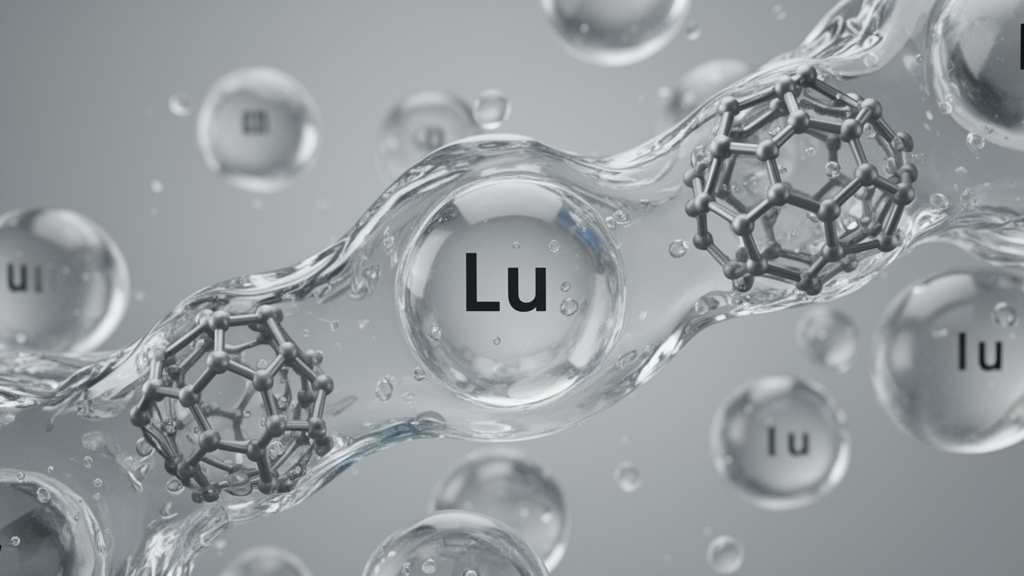
A phosphorus- and sulfur-containing flame-retardant additive can significantly suppress the flammability of carbonate-based electrolytes used in lithium-ion batteries while maintaining acceptable room-temperature ionic conductivity, according to a systematic laboratory study published in Ionics.

The flammability of traditional carbonate-based electrolytes remains a major technical obstacle that hinders the broader adoption of lithium-ion batteries. In response to this challenge, researchers evaluated the effects of O,O′-diethyl dithiophosphate, known as DDTP, on the thermal and electrochemical behavior of a standard liquid electrolyte system.

To test these properties, the investigators formulated a baseline electrolyte comprising 1 M lithium hexafluorophosphate dissolved in a ternary solvent mixture of ethylene carbonate, diethyl carbonate, and dimethyl carbonate at a molar ratio of 0.7 to 0.2 to 0.1. They systematically introduced DDTP at various concentrations spanning from 0 wt% up to 20 wt%.

Thermal and flammability characteristics were evaluated by measuring flash points alongside self-extinguishing time, while electrochemical performance was tracked through room-temperature ionic conductivity assessments across each formulation.

Testing showed that the flash point remained within a narrow window of 55.5 °C to 56.5 °C across all tested concentrations of DDTP. This consistent range indicated that the additive produced little measurable change in ignition behavior under the specific test conditions utilized in the experiment.

In contrast, the self-extinguishing time decreased markedly as the concentration of DDTP was raised. Specifically, the self-extinguishing time reached 5.0 s·g⁻¹ at 10 wt% DDTP and 0 s·g⁻¹ at 20 wt%.

The researchers noted that the observed improvement in self-extinguishing behavior may be associated with phosphorus- and sulfur-containing decomposition species formed during combustion, although the specific flame-suppression mechanism was not directly investigated within the study.

Ionic conductivity gradually decreased from 9.0 to 7.2 mS·cm⁻¹ as DDTP content increased.

Evaluating the trade-offs across all formulations, the authors determined that the electrolyte containing 10 wt% DDTP offered a favorable practical balance, retaining an ionic conductivity of 8.0 mS·cm⁻¹ while achieving a substantially shortened self-extinguishing time of 5.0 seconds per gram.

Subject of Research: Electrolyte flammability reduction and ionic conductivity using DDTP additives

Article Title: Concentration-dependent effects of O,O′-diethyl dithiophosphate on the self-extinguishing behavior and ionic conductivity of carbonate-based electrolytes

Article References: Gu, B., & Kang, C. (2026). Concentration-dependent effects of O,O′-diethyl dithiophosphate on the self-extinguishing behavior and ionic conductivity of carbonate-based electrolytes. Ionics. https://doi.org/10.1007/s11581-026-07653-2

Image Credits: AI Generated

DOI: 10.1007/s11581-026-07653-2

Keywords: lithium-ion batteries, carbonate-based electrolytes, flame retardants, O,O′-diethyl dithiophosphate, DDTP, self-extinguishing time, ionic conductivity, flash point, ethylene carbonate, diethyl carbonate, dimethyl carbonate, LiPF6, battery safety, electrolyte formulations, phosphorus-sulfur additives, battery chemistry

News Source: Denise Maddox. (November 23, 2026). Flame-Retardant Additive Reduces Carbonate Electrolyte Flammability While Preserving Ionic Conductivity. Scienmag.


Tags: battery chemistrybattery safetycarbonate-based electrolytesDDTPdiethyl carbonatedimethyl carbonateelectrolyte formulationsethylene carbonateflame retardantsflash pointIonic ConductivityLiPF6lithium-ion batteriesO,O′-diethyl dithiophosphatephosphorus-sulfur additivesself-extinguishing time
Share12Tweet7Share2ShareShareShare1

Related Posts

Satellite Imagery Reveals Monsoon-Driven Seasonal Coastline Shifts Across Maldivian Coral Islands

Satellite Imagery Reveals Monsoon-Driven Seasonal Coastline Shifts Across Maldivian Coral Islands

November 23, 2026
Perfusable Microfluidic Device Establishes and Maintains Hypoxia Under Continuous Fluid Perfusion

Perfusable Microfluidic Device Establishes and Maintains Hypoxia Under Continuous Fluid Perfusion

November 23, 2026

Segmented Thrust Fault Slip and Strata Clamping Trigger Underground Coalburst Disasters

November 23, 2026

Applied Magnetic Fields Can Suppress or Enhance Damaging Laser Electromagnetic Pulses

November 23, 2026

POPULAR NEWS

  • Endoscopic Submucosal Dissection Successfully Excises Rare Solitary Gastric MALT Lymphoma

    Endoscopic Submucosal Dissection Successfully Excises Rare Solitary Gastric MALT Lymphoma

    29 shares
    Share 12 Tweet 7
  • Study Links Online Infodemics to Public Resistance Across Six European Countries

    29 shares
    Share 12 Tweet 7
  • Satellite Imagery Reveals Monsoon-Driven Seasonal Coastline Shifts Across Maldivian Coral Islands

    29 shares
    Share 12 Tweet 7
  • Vascular Compression Drives Refractory Shock Following Liver Transplantation in Clinical Case

    29 shares
    Share 12 Tweet 7

About

We bring you the latest biotechnology news from best research centers and universities around the world. Check our website.

Follow us

Recent News

Unsupervised Brain Metabolic Connectivity Clustering Maps Individual Primary Progressive Aphasia Profiles

Machine Learning Classifies Post-Stroke Dysfunction Severity Across Multicenter Cohorts

Cold Storage Extends Adult Ladybird Survival but Drastically Diminishes Immature Viability

Subscribe to Blog via Email

Enter your email address to subscribe to this blog and receive notifications of new posts by email.

Join 88 other subscribers
  • Contact Us

Bioengineer.org © Copyright 2023 All Rights Reserved.

Welcome Back!

Login to your account below

Forgotten Password?

Retrieve your password

Please enter your username or email address to reset your password.

Log In
No Result
View All Result
  • Homepages
    • Home Page 1
    • Home Page 2
  • News
  • National
  • Business
  • Health
  • Lifestyle
  • Science

Bioengineer.org © Copyright 2023 All Rights Reserved.