A new analysis published in Nexus by marine scientist Richard K.F. Unsworth and colleagues warns that global marine ecosystems face an escalating operational crisis, requiring a fundamental structural redefinition of ocean conservation as non-negotiable societal infrastructure. The study identifies the contemporary global marine landscape as an ocean polycrisis, defined as an uncontrolled state of disequilibrium in which rapid ecological collapse, extreme economic volatility, and intensifying geopolitical antagonism interact to generate emergent harms that exceed the sum of their individual components. In evaluating this widening divergence between biophysical reality and multilateral political capacity, the authors identify a self-reinforcing feedback loop wherein climate-induced resource scarcity accelerates geopolitical competition, which subsequently paralyzes the cooperative diplomatic mechanisms required to mitigate environmental degradation. Because the marine environment operates as the primary theater for these compounding pressures, the authors emphasize that marine life cannot be treated as a discretionary environmental extra, but must be embedded structurally as an essential foundation for global climate regulation, food security, and coastal defense.
Quantifying the scale of physical urgency, the research synthesizes evidence showing that nearly forty percent of the upper one thousand meters of the global ocean has undergone compound state changes over the past sixty years. Rather than confronting single environmental stressors in isolation, marine organisms are experiencing simultaneous shifts in water temperature, salinity, dissolved oxygen concentrations, and ocean pH that fundamentally alter baseline survival conditions. These compound alterations create formidable physical barriers to natural recovery, most notably warming-induced stratification that prevents atmospheric oxygen from circulating into deeper oceanic layers. Concurrently, unchecked ocean acidification steadily increases the metabolic cost of survival for diverse marine organisms, imposing severe physiological stress across marine taxa. This systemic biophysical breakdown reached a critical turning point in 2025, when cumulative greenhouse gas emissions drove ocean acidification past a recognized planetary boundary, confirming that physical oceanic changes are compounding rapidly and cannot be resolved by isolated or single-factor environmental management approaches.
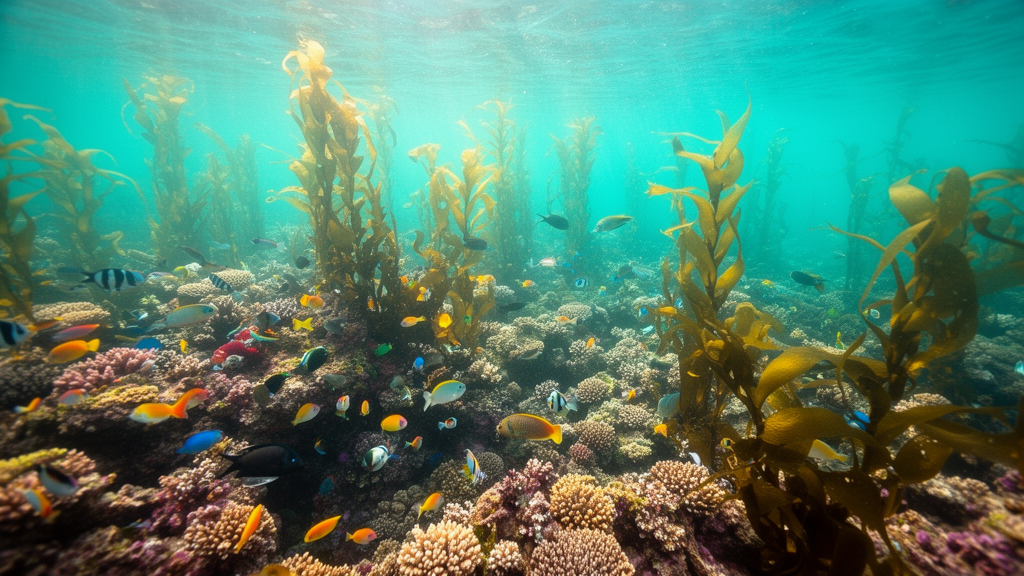
The physical disruption of ocean systems has triggered severe biological collapse across critical marine habitats globally. By late 2025, the ongoing fourth global coral bleaching event had impacted eighty-four percent of the world’s coral reefs, officially pushing these foundational biogenic ecosystems past a critical planetary tipping point. Concurrently, intensifying marine heatwaves are fundamentally rewiring marine food webs, while coastal seagrass meadows continue to diminish under cumulative localized and systemic anthropogenic pressures. These accelerating ecological impacts increasingly constrain habitat restoration projects, while chronic overexploitation continues to diminish the underlying resilience of global commercial fisheries. Crucially, these degrading marine habitats do not suffer in isolation; their decline directly amplifies broader global climate change. The widespread degradation of vegetative marine ecosystems impairs vital blue carbon sinks, indirectly accelerating atmospheric warming, while simultaneous changes in ocean circulation patterns and thermal dynamics alter global weather patterns and compromise coastal protection against extreme meteorological events.
This worsening ecological baseline coincides with a widening structural gap between international environmental legal frameworks and the domestic conditions necessary to enforce them. While a landmark 2024 advisory opinion from the International Tribunal for the Law of the Sea formally categorized anthropogenic greenhouse gas emissions as a recognized form of marine pollution under the United Nations Convention on the Law of the Sea, international enforcement remains hindered by widespread governmental retreat. Many nations are actively shifting toward strategic realism, a governance posture that prioritizes immediate domestic energy supplies, sovereign supply chain security, and national economic stability over multilateral environmental commitments. This profound legal and political disjuncture prevents cohesive global action, leaving international environmental rulings unenforced as states increasingly abandon precautionary governance in favor of short-term industrial priorities, directly paralyzing the unified collective intervention necessary to halt accelerating oceanic degradation.
The fractures within multilateral ocean governance are further demonstrated by the contested implementation of the Agreement on Marine Biological Diversity of Areas Beyond National Jurisdiction, which entered into force on January 17, 2026. Despite achieving formal international legal status, the treaty’s practical effectiveness is severely constrained because multiple major maritime powers remain outside its jurisdiction. India has adopted a hesitant ratification posture to reconcile the agreement with existing domestic biodiversity laws, whereas the United States signed the treaty but has not ratified it. Instead, the United States has pivoted toward unilateral actions, conducting unsanctioned military operations within third-party exclusive economic zones without United Nations authorization. Furthermore, United States policy increasingly frames seabed mineral extraction as a vital national security imperative to secure domestic supplies of cobalt, nickel, and copper independent of foreign competitors, directly conflicting with the conservation mandates of the International Seabed Authority.
Concurrently, political discourse across the Global North has increasingly cast environmental protections and net-zero targets as unacceptable economic burdens during ongoing cost-of-living and inflationary crises. In late 2025, the United Kingdom Prime Minister announced formal plans to roll back environmental regulations, illustrating a broader political departure from precautionary governance despite domestic intelligence warnings that global biodiversity loss threatens national security. In northern Europe, public and political opposition frequently stalls offshore wind energy expansion over consumer cost concerns, while France frames nuclear energy and continued fossil fuel reliance as measures to shield domestic consumers from economic disruption. These domestic political pressures have driven regional authorities to postpone vital environmental rules, such as inshore marine protections, under intense lobbying from commercial interests. Consequently, vital safeguards against systemic climate and food security risks are dismissed as unaffordable expenses, despite evidence that climate damages cost billions of euros annually.
Compounding these geopolitical and economic frictions, modern technological development presents a profound paradox within marine conservation. While artificial intelligence tools now provide unprecedented capabilities for ecological monitoring and oceanographic observation, the extensive computational energy consumption and water use of artificial intelligence infrastructure constitute a rapidly growing global environmental problem, creating a counterproductive feedback loop where significant carbon is emitted simply to monitor carbon-driven ecological damage. Furthermore, commercial enterprises increasingly deploy artificial intelligence algorithms for precision resource extraction across dwindling fisheries. For instance, commercial platforms such as GreenFish currently achieve prediction accuracies exceeding seventy-five percent in identifying optimal fishing locations, allowing industrial fishing fleets to locate and exploit depleted fish populations with unprecedented speed and efficiency. In the absence of robust governance, technological innovation accelerates marine resource depletion rather than bolstering conservation efficacy.
To withstand these overlapping governance and ecological failures, the authors argue that marine conservation models must abandon their historical focus on spatial targets, such as total protected area coverage or raw hectares restored. Amid accelerating compound environmental shifts, spatial coverage alone fails to guarantee meaningful ecological resilience. Conservation management must instead be evaluated against verified social-ecological functions and observable recovery trajectories. Management protocols should specifically track coastal defense capabilities, support for sustainable food provision, verified carbon sequestration rates, nutrient cycling capacities, and established biodiversity indices, including the biodiversity intactness index, supported by open-access data reporting. Scientifically grounded, well-designed, and rigorously monitored marine protections confer far greater ecological and societal benefits than sprawling, poorly enforced reserves. Shifting from arbitrary spatial targets to functional ecological outcomes ensures that protected areas actively deliver critical ecosystem services rather than merely fulfilling administrative acreage quotas.
Achieving operational effectiveness is fundamentally linked to establishing long-term financial durability, moving beyond complete dependence on volatile public budgets or philanthropic grants. Philanthropic funding remains structurally insufficient to meet global ocean recovery requirements. Although private conservation capital has expanded fivefold over the past decade, these investments have been channeled almost entirely into terrestrial forestry and agriculture rather than marine environments. Enduring marine conservation models must instead develop blended finance mechanisms that combine public funds with private capital, leveraging verified ecological returns such as stabilized commercial fisheries, measurable storm protection, and certified blue carbon credits to finance continuous operations. However, the authors emphasize that financial capital must serve strictly as an operational mechanism rather than an ultimate goal. Treating marine ecosystems solely as commercial assets risks distorting conservation objectives, as intact marine habitats are living ecological systems essential to human survival.
Finally, long-term conservation success requires cultivating deep social legitimacy and establishing governance structures designed around ecological timescales rather than short-term political cycles. Marine initiatives that exclude local communities frequently encounter strong political and civic resistance, particularly during periods of economic hardship. Co-produced programs that engage coastal residents and provide clear local benefits, exemplified by the Seagrass Ocean Rescue project in West Wales, foster lasting community integration and ecological recovery. Moreover, the post-2030 ocean conservation framework must be initiated immediately, creating standardized institutional mechanisms that safeguard monitoring data against electoral volatility. Initiatives such as the Global Mangrove Alliance illustrate how international collaboration and methodological standardization can secure net ecological gains despite broader global crises. By focusing investments on biophysically viable areas and climate refugia, marine conservation can endure the ocean polycrisis as an essential, outcome-driven, and economically defensible pillar of planetary stability.
Subject of Research: Structural reframing of marine conservation amid compound ocean degradation and multilateral governance collapse
Article Title: Marine ecosystems are essential infrastructure in an era of ocean polycrisis
Article References: Unsworth, R. K. F., Cullen-Unsworth, L., Jones, B. L. H., & Duarte, C. M. (2026). Marine ecosystems are essential infrastructure in an era of ocean polycrisis. Nexus, 3(4), Article 100178. https://doi.org/10.1016/j.ynexs.2026.100178
Image Credits: AI Generated
DOI: 10.1016/j.ynexs.2026.100178
Keywords: ocean polycrisis, compound state changes, marine conservation, ocean acidification, coral reef bleaching, BBNJ agreement, strategic realism, marine protected areas, blue carbon, ocean stratification, International Tribunal for the Law of the Sea, deep-sea mineral extraction, fisheries resilience, biodiversity intactness index, Seagrass Ocean Rescue, Global Mangrove Alliance, Ocean Decade
News Source: Violet Maxwell. (November 23, 2026). Compound ocean changes require reframing marine life as essential infrastructure. Scienmag.