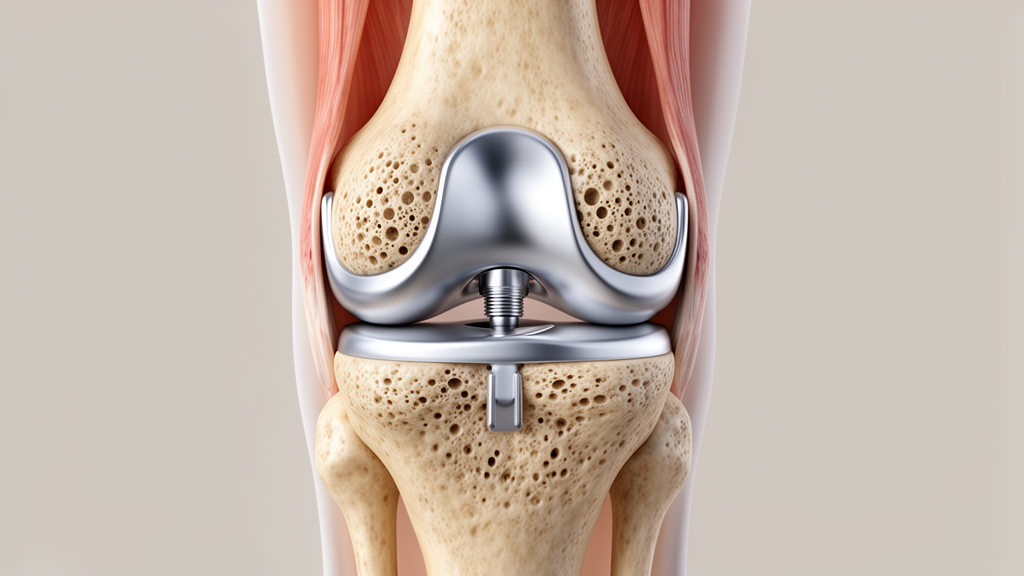
Reduced preoperative bone mineral density is an independent predictor of postoperative complications and reoperation in patients undergoing unicompartmental knee arthroplasty, according to a retrospective cohort study published in the Journal of Orthopaedic Surgery and Research.
Conducted by researchers including Jichao Bian, Yongqi Xia, and Guodong Wang, the investigation examined clinical records from 1,945 patients diagnosed with knee osteoarthritis who underwent primary unicompartmental knee arthroplasty at the Affiliated Hospital of Jining Medical University between November 2018 and November 2025.
Preoperative bone mineral density of the lumbar spine was quantified using quantitative computed tomography. Based on these volumetric measurements, the clinical cohort was stratified into a reduced bone mineral density group with values below 80 mg/cm³ and a normal bone mineral density group with values of 80 mg/cm³ or greater.
Among the 1,945 enrolled individuals, 234 patients (12.03 percent) presented with reduced bone mineral density, whereas 1,711 patients (87.97 percent) fell into the normal bone density category. Patients in the reduced density cohort demonstrated a significantly higher age and a higher proportion of women compared with the normal group (P < 0.001). To adjust for confounding baseline variables, investigators performed one-to-one propensity score matching, yielding 233 matched patients in each analytical group.
Following propensity score matching, the reoperation rate was significantly higher in the reduced bone mineral density cohort than in the normal group, recording 3.00 percent versus 0.43 percent (P = 0.032). In addition, patients who developed postoperative complications exhibited a significantly lower median lumbar spine bone mineral density of 93.3 mg/cm³ compared with 103.2 mg/cm³ among patients without complications (P = 0.026).
Multivariate logistic regression analysis confirmed that lumbar spine bone mineral density remained an independent negative predictor of postoperative complications after unicompartmental knee arthroplasty (odds ratio = 0.700, P = 0.007), with lower values correlating with heightened complication risks. The authors concluded that routine preoperative bone density screening and optimized perioperative bone health management should be implemented to reduce complications and improve surgical outcomes.
The primary research objective was to investigate the predictive value of preoperative bone mineral density measurements for postoperative complications and reoperation risk in patients undergoing unicompartmental knee arthroplasty.
To identify independent risk factors for postoperative complications, the researchers conducted both univariate and multivariate logistic regression analyses of the patient cohort. In addition to regression modeling, the authors plotted receiver operating characteristic curves to evaluate the predictive efficacy of preoperative bone mineral density measured at the lumbar spine.
Subject of Research: Preoperative bone mineral density and unicompartmental knee arthroplasty outcomes
Article Title: Predictive value of bone mineral density assessment methods for postoperative complications after unicompartmental knee arthroplasty
Article References: Bian, J., Xia, Y., Meng, W., Liang, J., Liu, H., Yuan, L., Yue, S., Zhao, X., Zhang, Y., & Wang, G. (2026). Predictive value of bone mineral density assessment methods for postoperative complications after unicompartmental knee arthroplasty. Journal of Orthopaedic Surgery and Research. https://doi.org/10.1186/s13018-026-07398-8
Image Credits: AI Generated
DOI: 10.1186/s13018-026-07398-8
Keywords: bone mineral density, unicompartmental knee arthroplasty, knee osteoarthritis, postoperative complications, reoperation risk, quantitative computed tomography, lumbar spine, propensity score matching, orthopedic surgery, surgical outcomes, preoperative screening, bone health management, knee arthroplasty, retrospective cohort study, logistic regression analysis, Affiliated Hospital of Jining Medical University
News Source: Ophelia Keating. (November 23, 2026). Lower Preoperative Bone Density Predicts Complications Following Partial Knee Replacement. Scienmag.