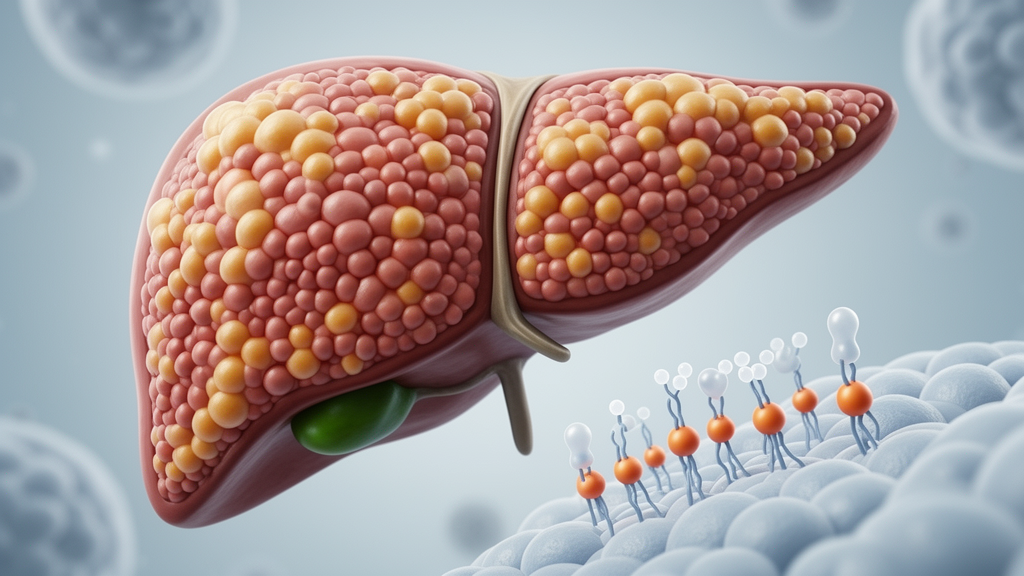
Low thyroid function is independently associated with an increased risk of prevalent metabolic dysfunction-associated steatotic liver disease, according to a retrospective cross-sectional study. Researchers evaluated clinical records and determined that individuals with thyroid-stimulating hormone levels at or above 2.5 milli-international units per liter faced significantly higher odds of the condition, yielding an adjusted odds ratio of 1.73 with a 95 percent confidence interval spanning 1.47 to 2.04. The observed association demonstrated a clear dose-response relationship across categorized thyroid function tiers.
Metabolic dysfunction-associated steatotic liver disease represents an expanding global health concern whose progression is closely tied to overall systemic metabolic balance. Thyroid hormones serve an essential regulatory function in whole-body metabolism, exerting direct influences on how peripheral tissues handle lipid storage and how effectively cells respond to insulin signaling. Because the precise relationship between circulating thyroid hormone activity and individual liver disease risk had remained uncertain, investigators designed a clinical investigation to characterize this association and develop a predictive risk tool.
The retrospective evaluation enrolled a primary training cohort of 3,734 subjects alongside an independent external validation cohort comprising 865 individuals. Diagnostic criteria defined metabolic dysfunction-associated steatotic liver disease by the confirmed presence of hepatic steatosis on ultrasound imaging in combination with at least one established cardiometabolic risk factor. This structured cross-sectional framework allowed investigators to systematically compare clinical and laboratory parameters across separate participant populations.
To analyze hormonal exposure, the researchers stratified baseline thyroid function into three distinct clinical tiers based on circulating thyroid-stimulating hormone measurements. Concentrations between 0.4 and less than 2.5 milli-international units per liter were categorized as strict-normal function, while levels from 2.5 to 4.2 milli-international units per liter were classified as low-normal. Measurements exceeding 4.2 milli-international units per liter were identified as clinical or subclinical hypothyroidism, providing defined boundaries to examine varying degrees of functional thyroid impairment.
Using multivariable logistic regression analysis, the authors isolated independent predictors of steatotic liver disease from routine clinical and biochemical assessments. The resulting multivariable model was synthesized into a clinical nomogram that incorporated five specific parameters: body mass index, alanine aminotransferase, blood uric acid, high-density lipoprotein cholesterol, and thyroid-stimulating hormone levels. By integrating endocrine status with established cardiometabolic indicators, the nomogram was constructed to calculate individualized probability scores for prevalent liver disease.
Assessment of model discrimination revealed robust diagnostic accuracy across both participant groups, achieving an area under the receiver operating characteristic curve of 0.846 with a 95 percent confidence interval of 0.834 to 0.859 in the training cohort. In the external validation cohort of 865 subjects, the model sustained an area under the curve of 0.848 with a 95 percent confidence interval of 0.820 to 0.877. This predictive performance proved superior to the triglyceride-glucose index, while calibration testing confirmed strong agreement between predicted and observed outcomes, and decision curve analysis indicated positive net clinical benefit across relevant decision thresholds.
The study authors concluded that low thyroid function maintains an independent association with prevalent metabolic dysfunction-associated steatotic liver disease, validating their nomogram as a practical scoring instrument for individualized risk profiling. While the nomogram offers an accessible framework combining routine biochemical measures with thyroid-stimulating hormone to assist potential early clinical intervention, the investigators noted the cross-sectional and retrospective nature of the observational data as key boundaries when evaluating long-term predictive utility.
Subject of Research: Nomogram combining thyroid-stimulating hormone and metabolic parameters for predicting prevalent MASLD
Article Title: Development and validation of a nomogram combining TSH and metabolic parameters for predicting the probability of prevalent MASLD: a cross-sectional study
Article References: Lu, S., Yang, T., Wang, Q., Gong, Y., Zhu, J., Zhao, W., Han, Y., Qu, L., & Liu, J. (2026). Development and validation of a nomogram combining TSH and metabolic parameters for predicting the probability of prevalent MASLD: a cross-sectional study. BMC Gastroenterology. https://doi.org/10.1186/s12876-026-05539-1
Image Credits: AI Generated
DOI: 10.1186/s12876-026-05539-1
Keywords: metabolic dysfunction-associated steatotic liver disease, MASLD, thyroid-stimulating hormone, TSH, nomogram, hepatic steatosis, cardiometabolic risk factor, subclinical hypothyroidism, alanine aminotransferase, body mass index, blood uric acid, high-density lipoprotein, TyG index, decision curve analysis, retrospective cohort study, discrimination AUC
News Source: Ophelia Keating. (November 23, 2026). Low Thyroid Function Linked to Prevalent Steatotic Liver Disease in Retrospective Study. Scienmag.