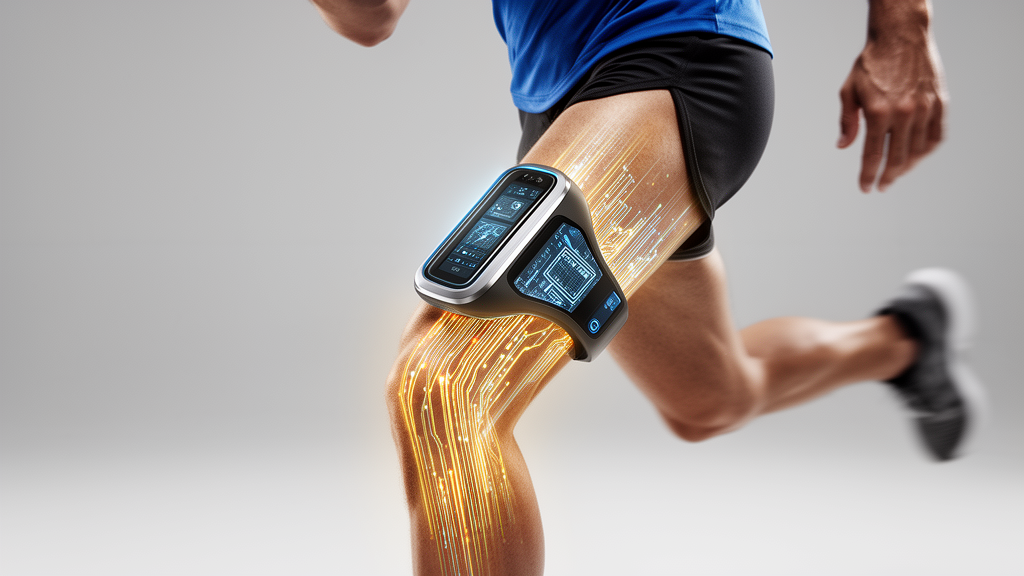
Researchers have developed a streamlined deep learning architecture termed AeroGait that brings accurate running posture analysis to low-power edge devices through collaborative knowledge distillation and structural model compression. Deploying computer vision models on mobile hardware such as smartwatches, fitness bands, and smartphones has historically faced steep engineering hurdles because high-performing spatiotemporal graph convolutional networks typically demand millions of parameters and substantial computational capacity. Simply shrinking network depth or width often strips away critical high-frequency temporal and spatial cues present in rapid athletic movements, leading to severe recognition degradation. To resolve this imbalance between excessive computational overhead and insufficient classification precision, the new investigation pairs an aerodynamically streamlined backbone network with a dual-path distillation mechanism that systematically transfers structural and semantic motion representations from a heavy, high-capacity teacher network to an ultra-compact student model.
The engineering challenge addressed by the study arises directly from the mechanical demands of running biomechanics and wearable athletic coaching. In practical fitness scenarios, suboptimal running form frequently contributes to repetitive-strain injuries, including knee joint damage and plantar fasciitis, giving accurate motion tracking considerable value in sports rehabilitation and competitive training. However, conventional high-accuracy architectures rely on extensive graph convolutions that model complex skeletal point trajectories across continuous frames, generating large parameter counts and redundant floating-point operations that exceed the thermal and memory budgets of wrist-worn or battery-operated devices. While prior lightweight models such as MobileNetV3, ShuffleNetV2, and GhostNet offer accelerated execution by trimming parameters, their standard image-oriented operations often fail to capture the phase-level consistency and fine-grained spatial relationships between human joints during high-speed gait cycles.
To overcome these limitations, the AeroGait framework introduces an aerodynamically streamlined backbone built around depthwise separable convolutions, dynamic feature reconstruction, and an adaptive bottleneck-residual unit. The architectural design deliberately strips redundant spatial channels and excessive temporal calculations while preserving essential joint topologies. In this system, human skeleton sequences are normalized according to hip centers and torso dimensions before being processed through dynamic decoupling stages that isolate local joint movements from global temporal cadence. To maintain sensitivity toward subtle knee, ankle, and hip angles, the network applies a specialized spatial joint attention mechanism that dynamically reweights feature representations across skeletal nodes, allowing the lightweight operator to emphasize biomechanically critical points without bloating computational memory.
To capture the cyclical cadence characteristic of human running, the model incorporates an integrated time-sliding window module governed by periodic trigonometric functions. This synchronizing temporal mechanism explicitly models rhythmic fluctuations across consecutive movement intervals, enhancing the network’s ability to interpret gait phases without requiring deep, computationally heavy recurrent structures. By replacing conventional multidimensional convolutions with depthwise separable operations, the theoretical inference complexity per layer drops markedly from quadratic channel scaling to an efficient linear relationship with respect to input and output widths. Consequently, the streamlined student architecture contains only about 1.2 million parameters, representing a substantial reduction in model footprint compared with standard graph convolutional benchmarks and conventional convolutional vision baselines.
To prevent the accuracy loss typically caused by drastic parameter reduction, the researchers implemented a collaborative multi-level knowledge distillation scheme. This training procedure utilizes a pre-trained, high-capacity hybrid teacher network combining a Spatiotemporal Graph Convolutional Network backbone with a four-layer temporal Transformer boasting eight attention heads and an internal hidden dimension of 256. Containing approximately 8.7 million parameters and achieving an initial validation accuracy of 98.1 percent, this teacher model provides rich structural and motion semantics. Because the compact AeroGait student network operates with significantly fewer feature channels than the teacher, direct intermediate matching is impossible; the team resolved this dimensional mismatch by introducing a linear projection alignment layer that maps student features into a compatible high-dimensional latent space.
The collaborative distillation framework optimizes the student network along two simultaneous pathways: intermediate feature representation alignment and output decision smoothing. For intermediate motion representation, an improved cosine similarity loss function flattens and aligns the teacher’s attention-weighted global features with the projected student features, penalizing discrepancies in spatiotemporal latent distributions. At the output decision boundary, the system uses logit-layer distillation adjusted by a temperature hyperparameter that softens probability distributions, transferring nuanced class-relationship information. The complete training objective balances primary classification cross-entropy, Kullback-Leibler divergence distillation loss, and structural regularization constraints through dynamically calibrated weighting factors, ensuring the student absorbs the teacher’s motion perception capabilities while retaining an agile computational structure.
The empirical evaluation of AeroGait was conducted using a benchmark protocol combining the public CASIA-B gait sequence library with a newly constructed running dataset known as Aero-Run. The Aero-Run corpus contains video sequences from 50 human participants recorded across varied speeds, perspectives, and ambient lighting conditions, yielding 120,000 processed skeletal frames. The experimental classification task evaluated thirty-frame sequence windows categorized into five clinically relevant posture classes: normal running, overstriding, knee collapse, heel strike, and toe-off running. The experimental split strictly separated participants into training, validation, and test sets according to a seventy-fifteen-fifteen ratio across 35, 7, and 8 unique subjects, guaranteeing that no individual participant appeared across multiple evaluation partitions and preventing identity-based data leakage.
Tracking training trajectories across the combined dataset revealed rapid and stable convergence under the multi-objective loss function. The cross-entropy loss dropped steadily from approximately 1.8 to below 0.2 within one hundred epochs, while the validation loss stabilized around 0.3. AeroGait attained a training accuracy of 98 percent and established a consistent validation accuracy of approximately 95 percent within forty training epochs. Hyperparameter ablation confirmed that setting the distillation temperature parameter to four achieved an optimal recognition accuracy of 94.5 percent, whereas increasing the temperature to twenty softened categorical distributions excessively and reduced recognition accuracy to 89.2 percent. Similarly, adjusting the distillation loss weight demonstrated that assigning a balanced weighting factor of 0.6 provided optimal guidance from the teacher network.
When subjected to structured channel pruning and deployment graph optimization, AeroGait exhibited remarkable robustness across steep parameter-compression ratios. In experimental evaluations, a zero-percent compression ratio represented the baseline student model, whereas a ninety-percent compression ratio retained only ten percent of the original student parameters for deployment. While uncompressed validation accuracy stood at 95 percent, the model retained 95 percent accuracy at a fifty-percent compression ratio and maintained 88.6 percent accuracy under extreme ninety-percent compression. In sharp contrast, mainstream benchmark models experienced steep performance drops under equivalent compression constraints, plunging from initial accuracies near 89 percent down to approximately 65 percent, demonstrating that the collaborative distillation scheme preserves essential movement semantics even under severe parameter pruning.
Cross-architecture comparisons against MobileNetV3, ShuffleNetV2, GhostNet, and Tiny-STGCN underscored AeroGait’s computational advantages under standardized hardware testing conditions. Across ten independent random seed trials evaluated via Friedman and post-hoc statistical tests, AeroGait achieved a network-only inference latency of 12.5 milliseconds with its 1.2-million-parameter structure, outperforming both MobileNetV3 and Tiny-STGCN. Visualizations of teacher and student biomechanical angle estimates further validated this fidelity: the student network measured average knee flexion at 141.6 degrees compared to the teacher’s 141.8 degrees, reflecting a discrepancy of only 0.2 degrees, while ankle angle predictions differed by just 0.3 degrees between models, confirming that feature alignment successfully preserved fine-grained joint kinematics.
Edge hardware deployment tests across four distinct hardware tiers demonstrated practical real-time execution speeds. On an entry-level Raspberry Pi 4B single-board computer running FP32 CPU operations, AeroGait lowered network-only inference latency from an 85-millisecond baseline to approximately 22 milliseconds. On the Jetson Nano embedded platform using TensorRT FP16 acceleration, inference latency averaged 15 milliseconds. When deployed to modern mobile system-on-chip architectures, including the Qualcomm Snapdragon 8 Gen 2 using MNN FP16 acceleration and the Apple A16 Bionic using Core ML FP16 execution, network inference latency was compressed to under 5 milliseconds per thirty-frame skeleton sequence, easily satisfying the throughput requirements needed for real-time biomechanical feedback within a single human stride cycle.
Despite these encouraging performance metrics, the authors highlighted several explicit technical limitations inherent to the current pipeline. The system’s operational accuracy depends directly on the fidelity of upstream skeletal coordinate extraction; severe visual noise caused by poor lighting, high-speed motion blur, or limb occlusion can degrade spatiotemporal modeling accuracy. Furthermore, because the architectural operators and temporal sliding windows were specifically tuned to the periodic cadence of human running, their feature extraction capabilities may not generalize directly to athletic disciplines involving non-periodic movements or rapid directional cutting. Finally, while forward inference is exceptionally lightweight on mobile hardware, the collaborative distillation training phase still requires powerful server-grade GPU clusters, precluding on-device online adaptation or incremental training directly on consumer wearables.
Subject of Research: Lightweight deep learning and knowledge distillation for edge-based running posture analysis
Article Title: Application research of knowledge distillation and model compression technology in lightweight end-side running posture analysis
Article References: Hao, J. (2026). Application research of knowledge distillation and model compression technology in lightweight end-side running posture analysis. Systems and Soft Computing, 9, Article 200656. https://doi.org/10.1016/j.sasc.2026.200656
Image Credits: AI Generated
DOI: 10.1016/j.sasc.2026.200656
Keywords: AeroGait, knowledge distillation, running posture analysis, spatiotemporal graph convolution, model compression, edge computing, skeleton sequence, gait analysis, mobile inference, sports biomechanics, depthwise separable convolution, feature alignment, Tiny-STGCN, MobileNetV3, Snapdragon 8 Gen 2, Jetson Nano, Raspberry Pi 4B
News Source: Denise Maddox. (November 23, 2026). Distilled AeroGait Network Achieves Fast Edge-Side Running Posture Recognition. Scienmag.