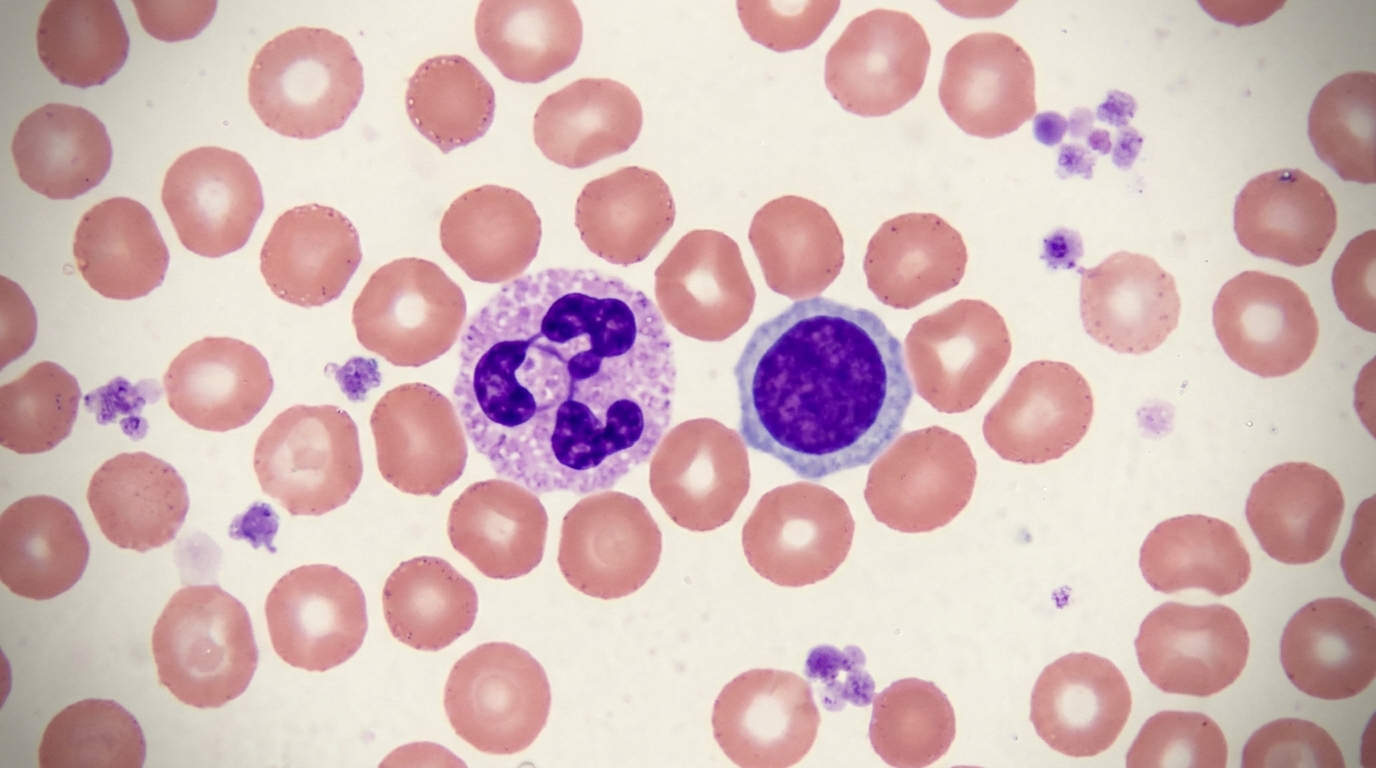
Hospitalized individuals experiencing acute exacerbations of chronic obstructive pulmonary disease frequently present with respiratory infections that trigger life-threatening respiratory deterioration, yet clinicians often face substantial diagnostic uncertainty when determining whether a flare-up stems from a bacterial or viral pathogen. In an exploratory post hoc investigation, researchers evaluated whether extended parameters derived from standard hemocytometric blood measurements could be analyzed using machine learning models to classify the presence of bacterial and viral triggers. Analyzing data from a cohort of sixty-four hospitalized patients, the investigators observed that supervised random forest algorithms trained on routine automated blood analyzer outputs successfully discriminated between infectious etiologies, substantially outperforming the standard clinical biomarker C-reactive protein.
Chronic obstructive pulmonary disease represents a heterogeneous, progressive respiratory disorder characterized by persistent airflow limitation resulting from chronic airway wall inflammation, tissue thickening, mucus hypersecretion, and parenchymal alveolar destruction. In individuals affected by this condition, acute exacerbations mark acute episodes of symptom worsening across several days, including pronounced dyspnea, increased cough frequency, and elevated sputum volume. These episodes contribute to permanent lung function decline, worsen extrapulmonary manifestations such as peripheral muscle weakness, and impose significant mortality burdens, carrying an in-hospital death rate of approximately 6.2 percent that climbs to 12.2 percent within twelve months following hospital admission. Furthermore, recurrent hospitalizations occur frequently, with one-year readmission rates reaching 38.2 percent across clinical settings.
Respiratory infections account for up to 80 percent of exacerbation events, with bacterial pathogens identified in 22 to 55 percent of cases and viral agents detected in 29 to 48 percent depending on diagnostic methodology and clinical environment. Infectious exacerbations typically induce greater disease severity and protracted recovery courses relative to noninfectious exacerbations caused by factors like ambient air pollution. However, microbiological validation via sputum cultures and nasopharyngeal polymerase chain reaction testing remains expensive and requires days to produce actionable findings. Consequently, physicians regularly prescribe empirical antimicrobial therapies relying primarily on clinical indicators like sputum purulence alongside inflammatory markers like C-reactive protein or procalcitonin, despite limited evidence supporting their accuracy for differentiating bacterial from viral causes in this clinical setting.
To establish a faster and more accessible diagnostic alternative, investigators conducted a post hoc analysis drawing on participants enrolled in the multicenter prospective Drivers of Eosinophilic COPD Exacerbations study across three medical centers in the Netherlands. The parent study investigated gene expression differences across exacerbation phenotypes among individuals admitted between July 2021 and November 2024 at University Medical Center Groningen, Ommelander Ziekenhuis Groningen, and Maastricht University Medical Center+. Eligible individuals were older than 40 years, possessed spirometry-confirmed chronic obstructive pulmonary disease, and documented a smoking history of at least ten pack-years. The study protocol excluded patients with asthma, prior systemic oral corticosteroid treatment exceeding ten milligrams daily of prednisolone equivalent within four days of admission, pneumonia, active immunodeficiency, or initial intensive care requirement.
Among 103 hospitalized patients in the parent trial, hemocytometric files could be retrieved for 64 individuals, providing the basis for the present analysis. The evaluated patient population exhibited an average age of 68 years, with women comprising 61 percent of participants. Pulmonary function testing revealed a median forced expiratory volume in one second of 39 percent of predicted values and a median ratio of forced expiratory volume to forced vital capacity of 38 percent, indicating severe baseline airflow limitation consistent with Global Initiative for Chronic Obstructive Lung Disease stage III or IV in 75 percent of the cohort. Current smokers accounted for 47 percent of the cohort, with a median exposure history of 40 pack-years, and 44 percent reported two or more exacerbation episodes during the preceding twelve months.
Routine blood samples drawn in potassium ethylenediaminetetraacetate collection tubes upon hospital admission were analyzed using Sysmex XN-series automated hematology instruments operating via fluorescence flow cytometry. Researchers partnered with Sysmex Europe collaborators to extract raw data files, accessing fifty-three research parameters encompassing morphological characteristics and activation states across lymphocyte, monocyte, and neutrophil compartments. In parallel, microbiological status was established through standard clinical laboratory culture of sputum and polymerase chain reaction testing of nasopharyngeal swabs taken at hospital admission and study inclusion. Bacterial presence was documented by positive sputum culture or a cycle threshold value of 36 or less for prespecified bacteria, whereas viral presence was defined by a cycle threshold value of 40 or lower across an extensive viral respiratory panel.
Microbiological assessments identified bacterial pathogens in 51 percent of patients and viral pathogens in 40 percent of patients, while 28 percent demonstrated no identifiable pathogen and 9 percent lacked complete bilateral testing. Single bacterial pathogens appeared in 19 percent of patients, multiple bacteria in 8 percent, and viral infections alone in 17 percent, whereas concurrent bacterial and viral coinfection occurred in 19 percent of participants. Among identified bacterial organisms, Haemophilus influenzae proved most prevalent, accounting for 39 percent of bacterial detections, followed by Moraxella catarrhalis at 22 percent and Staphylococcus aureus at 15 percent. Among identified viruses, rhinovirus constituted 26 percent of viral detections, followed by respiratory syncytial virus at 15 percent.
To prepare the high-dimensional blood data for statistical modeling, the researchers handled missing values via mean imputation, eliminated redundant overlapping subsets across analyzer channels, and pruned variables exhibiting pairwise correlation coefficients exceeding 0.9. Univariate comparisons of parameter means between pathogen-positive and pathogen-negative patients retained features exhibiting difference thresholds below a significance value of 0.1, yielding twelve distinct features for bacterial classification and six features for viral classification. The researchers subsequently constructed independent binary random forest machine learning models utilizing repeated stratified train-test splits across ten iterations with 500 decision trees per ensemble, comparing their out-of-sample discriminatory accuracy against standalone C-reactive protein models as well as combined models incorporating both hemocytometry and C-reactive protein.
In classifying bacterial presence, the twelve-feature hemocytometric random forest model attained a pooled area under the receiver operating characteristic curve of 0.783 with a 95 percent confidence interval spanning 0.713 to 0.853. The model demonstrated an overall classification accuracy of 72 percent, alongside a sensitivity of 73 percent and a specificity of 70 percent. By comparison, a classification model relying exclusively on C-reactive protein performed significantly worse, generating an area under the curve of 0.585 with an accuracy of 53 percent, a sensitivity of 51 percent, and a specificity of 55 percent. Combining C-reactive protein with the hemocytometric parameters did not significantly improve predictive performance, yielding an area under the curve of 0.775 with 71 percent accuracy, 74 percent sensitivity, and 66 percent specificity.
Feature importance evaluations indicated that bacterial classification was governed predominantly by alterations in monocyte dimensions and counts alongside structural neutrophil and lymphocyte indices. The most influential features included monocyte size measures and counts, lymphocyte count and nuclear content heterogeneity, and neutrophil reactive intensity and structural complexity. Biologically, elevations in monocyte cell size and abundance reflect cellular mobilization and activation necessary for phagocytosis and cytokine synthesis, while increased neutrophil nuclear density corresponds to heightened activation and degranulation during acute bacterial challenge. Concurrently, bacterial infections exhibited reduced lymphocyte counts and diminished nuclear content, indicating potential peripheral redistribution and subset-specific activation within target respiratory tissues.
For viral classification, the six-feature hemocytometric model achieved a pooled area under the curve of 0.717 with a 95 percent confidence interval ranging from 0.636 to 0.798, yielding an overall accuracy of 72 percent, a sensitivity of 59 percent, and a specificity of 80 percent. This model likewise outperformed standalone C-reactive protein, which achieved an area under the curve of 0.567, an accuracy of 58 percent, a sensitivity of 43 percent, and a specificity of 68 percent. The addition of C-reactive protein to the hemocytometric features produced an area under the curve of 0.729 without providing a statistically significant enhancement in discrimination. Viral discrimination was driven overwhelmingly by lymphocyte granularity, reflecting activation of cytotoxic T cells and natural killer cell subsets responding to intracellular viral replication.
The authors observed that model discrimination was weaker for viral presence than for bacterial infections, a difference that aligns with physiological evidence showing that viral respiratory exacerbations frequently induce a more compartmentalized airway reaction with less pronounced systemic inflammation. The investigators noted important limitations inherent to their exploratory design, particularly the modest sample size of sixty-four individuals, which restricted external validation, heightened overfitting risks, and prevented simultaneous multiclass modeling of dual coinfections. Furthermore, procalcitonin levels were unavailable for comparison, and preadmission antimicrobial and corticosteroid exposures were not systematically cataloged. Consequently, while automated analyzer metrics provide standardized, rapid immune profiling without additional blood draws, the authors emphasize that larger prospective cohorts are required before routine clinical implementation can be supported.
Subject of Research: Diagnostic classification of bacterial and viral exacerbation etiology in chronic obstructive pulmonary disease using routine hemocytometry and machine learning
Article Title: Hemocytometric Parameters Associated with Bacterial and Viral Etiology in COPD Exacerbations: An Exploratory Analysis
Article References: van Krimpen, S. J., Koenen, H. J. P. M., van Cranenbroek, B., van Rijssen, E., van Smoorenburg, L. H., Staats-Niemeijer, A., de Wit, N. C. J., Verweij, J. J., Franssen, F. M. E., Gosker, H. R., Langen, R. C. J., Schols, A. M. W. J., Kerstjens, H. A. M., van den Berge, M., de Jonge, M. I., & Simons, S. O. (2026). Hemocytometric Parameters Associated with Bacterial and Viral Etiology in COPD Exacerbations: An Exploratory Analysis. COPD: Journal of Chronic Obstructive Pulmonary Disease, 23(1), Article 2733469. https://doi.org/10.1080/15412555.2026.2733469
Image Credits: AI Generated
DOI: 10.1080/15412555.2026.2733469
Keywords: chronic obstructive pulmonary disease, COPD exacerbations, hemocytometry, machine learning, random forest, bacterial infection, viral infection, Sysmex analyzers, C-reactive protein, biomarkers, respiratory medicine, differential leukocyte count, clinical diagnostics, Haemophilus influenzae, rhinovirus, pulmonology
News Source: Kristina Jarvis. (November 23, 2026). Machine Learning Analyzes Routine Blood Parameters to Identify Respiratory Infection Causes. Scienmag.