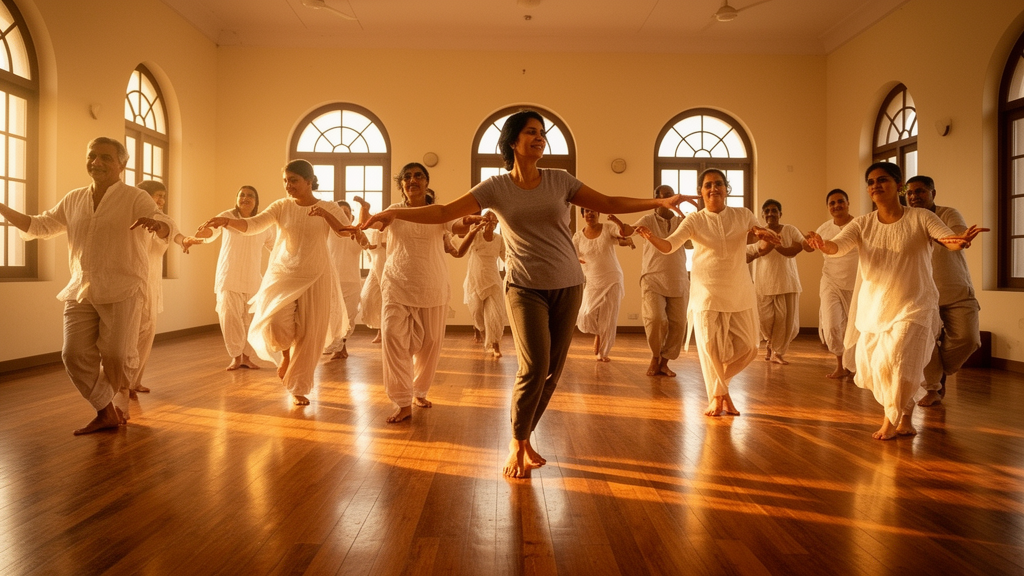
The inaugural symposium of the Indian Association of Dance Movement Therapy convened in New Delhi to examine the integration of body-based interventions within Indias evolving mental healthcare architecture and to address ongoing systemic challenges faced by practitioners and service recipients. Documented in the American Journal of Dance Therapy, the proceedings synthesize national and international discourses presented by clinicians, educators, researchers, and government liaisons seeking to establish formal recognition, standardized curricula, and robust regulatory protections for creative arts therapies. Despite major legal milestones, including the enactment of the Mental Healthcare Act of 2017 and the passage of the National Commission for Allied and Healthcare Professions Act of 2021, professional dance and movement therapy providers continue to navigate practical, infrastructural, and statutory barriers that impede seamless incorporation into general health systems across the country.
A critical foundational issue highlighted throughout the symposium is the persistent operational gap within statutory mental health legislation that complicates outpatient delivery and service accessibility. While the Mental Healthcare Act of 2017 was formulated to protect and fulfill patient rights regarding confidentiality, community living, and protection from degrading treatment, alongside mandating integration with general medical care at all institutional levels, its operational effectiveness is constrained by procedural and diagnostic challenges. Practitioners noted that statutory provisions for nominated representatives and advance directives present substantial friction when applied within Indias diverse socio-cultural realities. Furthermore, observers emphasized that the statutory definition of mental illness concentrates predominantly on severe disturbance and immediate danger, which inadvertently marginalizes individuals who experience less acute psychological distress yet still require accessible, structured, outpatient therapeutic support.
Statutory classification and credential safeguarding within the allied healthcare sector represent another significant structural challenge examined during the assembly. Following the initial release of the National Commission for Allied and Healthcare Professions Act, movement therapists were initially cataloged under occupational therapy, creating operational and pedagogical difficulties because the two fields represent distinct professional disciplines. Sustained advocacy and formal petitions coordinated over a two-year period by the Indian Association of Dance Movement Therapy alongside The Art Therapy Association of India ultimately led the Ministry of Health and Family Welfare to reclassify art therapy and dance movement therapy under the designation of Other Care Professionals within community care and behavioral health sciences. However, unlike clinical and rehabilitation psychologists whose titles are strictly protected under the Rehabilitation Council of India Act of 1992, the designations for counselors and broader mental health professionals remain legally unprotected in India, leaving emotionally vulnerable clients without statutory quality assurance guarantees.
Historical context and institutional development were central to discussions led by the association, which was established in 2019 under the Tamil Nadu Societies Registration Act by nine internationally trained therapists who returned to India to build structured professional safety mechanisms. Presenters emphasized that long before formal Western psychiatric systems were imported during British colonial governance through the creation of segregated lunatic asylums, Indian communities relied extensively on indigenous somatic practices, classical and folk dances, shadow puppetry, and contemplative traditions for collective healing, emotional release, and interpersonal co-regulation. Clinicians observed that contemporary Indian practitioners must continually navigate the dichotomy between organically participating in traditional movement practices and establishing structured clinical standards that safeguard clients, underscoring that decolonization in mental health care cannot merely mirror Western methodologies but must actively synthesize indigenous knowledge systems with rigorous ethical frameworks.
Clinical and educational integration pathways were detailed through established initiatives that connect movement therapies directly with educational institutions and hospital environments. Presentations reviewed collaborative initiatives such as the Therapeutic Dance in Education Program coordinated by the Creative Movement Therapy Association of India, post-graduate credentials hosted in conjunction with psychiatric facilities like the Vidyasagar Institute of Mental Health, Neuro and Allied Sciences, and specialized university-level master programs. Keynote speaker Tripura Kashyap categorized somatic resources into traditional physical practices that offer intergenerational strength and contemporary movement rituals designed for resilience and psychological regulation. To solidify these educational pathways, presenters advocated for formal clinical trials, standardized national curricula, clear professional licensure systems, and dedicated government grant allocations to secure stable professional employment across educational and healthcare networks.
Pedagogical reform and the establishment of culturally grounded master-level training frameworks were examined through findings from international participatory action research. Dr. Oihika Chakrabarti presented outcomes from the British Council-supported Going Global Partnership project involving Adamas University, the Manahkshetra Foundation, and the University of Derby, which generated a decolonized university curriculum informed by doctoral arts-based research and pan-Indian consensus. This curriculum directly addresses intersecting social dimensions, including caste hierarchies, social class, gender dynamics, and religious diversity, while incorporating collectivist family systems and community arts traditions. By aligning university training with Indias National Education Policy directives to dismantle colonial instructional hierarchies, the model provides an evidence-based foundation to harmonize Indian professional qualifications with international standards and advance sustainable human resource capacity.
International public health perspectives presented by Professor Nisha Sajnani explored the continuum of arts for wellbeing, ranging from community-based creative participation to targeted clinical interventions designed to prevent non-communicable diseases. Evidence highlighted from global syntheses encompassing ninety-five studies across twenty-seven countries demonstrated that creative health engagements operate effectively through targeted public health messaging programs and active physical participation protocols. Neuroscientific and cognitive research reviewed during the sessions revealed that creative physical engagement confers neuroprotective benefits, with dance modalities such as tango exhibiting measurable positive effects. Presenters further discussed health economics research demonstrating tangible financial returns from integrating expressive arts therapies into clinical and community care models, emphasizing that creative modalities represent vital, cost-effective infrastructure capable of mitigating structural drivers of chronic disease.
Comparative analyses of international regulatory structures illustrated diverse models of professional accreditation that could inform domestic Indian workforce development. Evan Hastings highlighted contrasting international regulatory systems, noting that practitioners in the United States operate under a complex, fragmented patchwork of state-level licensure, whereas organizations such as the Australia New Zealand Asia Creative Arts Therapy Association maintain unified multi-country credentials that facilitate access to state-funded support schemes. Additionally, European examples from Belgium and the Netherlands demonstrate the utility of bachelor-level technical qualifications that provide scalable, accessible vocational entry points. In response, presenters proposed a tiered domestic structure that pairs bachelor-level technical roles with advanced master-level clinical specializations aligned with national education guidelines, transforming fragmented local initiatives into sustainable, regulated career pathways.
Governmental and regulatory perspectives delivered by Dr. Kavita Narayan underscored the role of the National Commission for Allied and Healthcare Professions Act in bridging Indias acute mental healthcare burden with its growing working-age demographic dividend. Citing projections from the World Health Organization identifying a looming deficit of twenty million healthcare workers globally by 2030, discussions focused on the capacity of Indias allied health network to address both domestic shortages and international demands through accredited, skill-based instruction. The commission structure establishes state-level allied healthcare councils modeled after state medical councils to serve as statutory registration and oversight bodies. Practitioners were urged to utilize official enrollment portals, affiliate actively with recognized professional associations, and participate collaboratively with administrative bodies to draft binding professional standards and curriculum benchmarks across all fifty-seven recognized allied professions.
The biological mechanisms connecting somatic movement to therapeutic efficacy were detailed through contemporary neuroscience research presented by Dr. Neha Christopher, focusing on the enteric nervous system and the multidirectional brain-body nexus. Moving beyond reductionist central and peripheral divisions, presentations demonstrated how the activation of sensory epithelia connects directly with the autonomic nervous system, underscoring the clinical value of integrating vocalization with movement in addressing developmental trauma. Furthermore, neurobiological data illustrated how movement interventions stimulate neurogenesis within the subgranular zone of the hippocampus, a brain region intrinsically linked to emotional regulation and memory consolidation. Presenters highlighted that dance movement therapy can positively counter the chronic overactivation of the hypothalamic-pituitary-adrenal axis observed in persistent depressive and stress-related disorders, offering an objective neurobiological basis for embodied interventions.
To consolidate clinical credibility and inform future public policy, the symposium concluded with a definitive call for rigorous, locally grounded research centered specifically on Indian demographic cohorts. While international systematic reviews demonstrate that dance movement therapy alleviates symptoms of depression and anxiety, enhances social interaction in autistic children, and mitigates cognitive decline, empirical studies conducted within Indian clinical settings remain limited. Delegates emphasized the urgent necessity of overcoming infrastructural obstacles, including restricted access to institutional review boards for independent clinicians and scarce institutional funding. By advocating for mixed-methods research designs, unified state council representation, and inter-institutional curricular consensus, the assembly outlined actionable steps to transition creative arts therapies from the institutional periphery into an essential, scientifically validated pillar of Indias national healthcare framework.
Subject of Research: Regulatory, educational, and neuroscientific developments in Indian dance movement therapy
Article Title: Body and Mental Health; A Reflection and Report of the Indian Association of Dance Movement Therapy’s Inaugural Symposium
Article References: Christopher, N., Ramasubramanian, P., Chakrabarti, O., More, S., Kshetrapal, A., Anchan, T., & Hastings, E. (2026). Body and Mental Health; A Reflection and Report of the Indian Association of Dance Movement Therapy’s Inaugural Symposium. American Journal of Dance Therapy, 48(2), 101-121. https://doi.org/10.1007/s10465-026-09437-7
Image Credits: AI Generated
DOI: 10.1007/s10465-026-09437-7
Keywords: dance movement therapy, Indian Association of Dance Movement Therapy, Mental Healthcare Act 2017, NCAHP Act 2021, allied healthcare, neurobiology, enteric nervous system, hippocampal neurogenesis, embodied health, somatic psychotherapy, public health policy, creative arts therapies, curriculum standardization, clinical trials, healthcare workforce
News Source: Ophelia Keating. (November 22, 2026). Indian Symposium Reports Progress and Structural Gaps in Dance Movement Therapy. Scienmag.