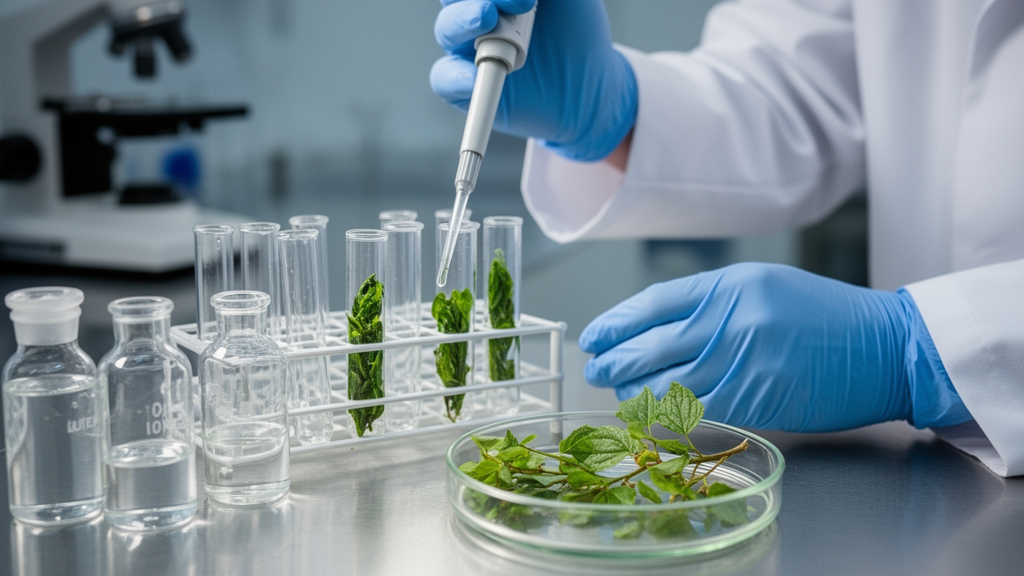
A newly formulated double-buffer extraction protocol has resolved a major molecular bottleneck in botanical conservation by isolating high-purity genomic deoxyribonucleic acid from Indopiptadenia oudhensis, an endangered tree species native to the Himalayan foothills. Plant geneticists demonstrated that modifying cetyltrimethylammonium bromide extraction chemistry produces exceptional nucleic acid recovery, attaining a median deoxyribonucleic acid concentration of 906.0 nanograms per microlitre alongside optimal optical purity ratios. Molecular investigations of woody legumes frequently encounter persistent obstacles because leaf tissues contain dense secondary metabolites that co-precipitate with nucleic acids and deactivate enzymatic assays. By combining an initial cold chemical pre-wash with calibrated concentrations of polyvinylpyrrolidone, reducing agents, and sodium chloride, the investigation established a dependable procedure that eliminates contamination issues that long hindered genomic exploration. The resulting extraction framework provides a verified foundation for microsatellite marker screening, population genetic surveys, and high-throughput sequencing efforts dedicated to safeguarding this vulnerable forest species.
Belonging to the mimosoid clade of the legume family Fabaceae, Indopiptadenia oudhensis occupies a pivotal position in systematic botany as an evolutionary link between subfamilies Mimosoideae and Caesalpinoideae. Despite its exceptional evolutionary value, the monotypic tree remains an ecological enigma, poorly evaluated throughout its restricted geographic distribution. Concurrently, intensifying anthropogenic activities, such as unmanaged livestock grazing and branch lopping for cattle fodder, have severely degraded wild regeneration capacity and reduced population counts. In addition to its ecological role, the species provides regional populations with essential timber, firewood, and forage, emphasizing the urgent necessity for robust genetic resources to support conservation and resource management programs.
The technical barrier hindering molecular research on Indopiptadenia oudhensis stems directly from secondary metabolites within fabaceous foliage. Tissues synthesize substantial quantities of polyphenols, tannins, and structural polysaccharides that interfere with standard chemical extraction.
To overcome these extraction hurdles, botanical researchers conducted field sampling in November 2025 across native populations located in the Champawat Forest Division within Uttarakhand, India. Leaf material was harvested from ten wild accessions in the Tuligad and Sukhidang forest beats under formal permits issued by the Uttarakhand Forest Department. Taxonomic integrity was verified by depositing an authoritative herbarium voucher specimen under accession DD S-1010 within the DD Herbarium at the ICFRE-Forest Research Institute in Dehradun. The research team deliberately collected juvenile leaf tissues based on evidence demonstrating that young expanding foliage contains lower baseline concentrations of starch, polyphenols, and secondary defense compounds than mature foliage. Immediately following excision, leaf samples were desiccated using silica gel beads to arrest metabolic decay and subsequently transferred to laboratory freezers at minus 80 degrees Celsius. This deep-freeze storage suppressed residual nuclease activity, inhibited potential microbial proliferation, and preserved the structural integrity of high-molecular-weight genomic deoxyribonucleic acid prior to downstream extraction.
The experimental framework compared three published plant isolation protocols alongside the newly optimized procedure under identical laboratory conditions. For every protocol tested, 0.5 grams of leaf material from each of the ten biological accessions was pulverized into fine powder under liquid nitrogen, providing an exact basis for comparative analysis. The tested methods encompassed the classical cetyltrimethylammonium bromide protocol of Doyle and Doyle, the activated-charcoal method developed by Križman and associates, and the procedure described by Sahu and colleagues. Because none of these established protocols produced deoxyribonucleic acid of sufficient yield, purity, and integrity for polymerase chain reaction amplification, the team developed Protocol 4 as an advanced double-buffer system based on the Sahu method. The optimized strategy uses two distinct extraction buffers sharing identical baseline components, with cetyltrimethylammonium bromide omitted from Buffer I and incorporated into Buffer II. Furthermore, Protocol 4 introduced higher concentrations of polyvinylpyrrolidone at 3 percent, beta-mercaptoethanol at 0.3 percent, and sodium chloride at 1.5 molar to enhance contaminant removal.
In executing the optimized procedure, one millilitre of detergent-free Buffer I at pH 8.0 was pre-dispensed and chilled at 4 degrees Celsius for 30 minutes before receiving pulverized tissue. The mixture was inverted five times and maintained at 4 degrees Celsius for exactly 30 minutes, an incubation duration strictly controlled to prevent degradation and inhibit contaminant co-extraction. Centrifugation at 7000 revolutions per minute for 5 minutes at 4 degrees Celsius pelleted the tissue, after which the supernatant carrying soluble phenolics was discarded. The pellet was resuspended in one millilitre of preheated Buffer II containing cetyltrimethylammonium bromide and incubated in a 65-degree Celsius water bath for 60 minutes with intermittent inversion for cell lysis. After cooling 10 minutes, the mixture received 500 microlitres of chloroform:isoamyl alcohol (24:1) and was inverted for 30 minutes to facilitate phase separation. Centrifugation at 13,000 revolutions per minute for 15 minutes allowed the aqueous phase to be recovered using wide-bore pipette tips to avoid mechanical shearing.
Nucleic acid precipitation was initiated by adding an equal volume of chilled isopropanol at minus 20 degrees Celsius, followed by gentle inversion and overnight incubation at minus 20 degrees Celsius. After centrifugation at 13,000 revolutions per minute for 15 minutes at 4 degrees Celsius, the supernatant was decanted and the pellet received 998 microlitres of 96 percent ethanol and 2 microlitres of 5 molar sodium acetate. Sodium acetate provides sodium ions that neutralize negative charges on the phosphate backbone, reducing electrostatic repulsion between molecules while ethanol reduces solubility to promote aggregation. The mixture was agitated on a gel rocker for 60 minutes, centrifuged at 13,000 revolutions per minute for 5 minutes, washed with 500 microlitres of 70 percent ethanol, and centrifuged again before discarding the wash. The isolated pellet was dried on a 37-degree heating block for 15 minutes, avoiding over-drying that impedes resuspension, and dissolved in 100 microlitres of TE buffer containing 10 millimolar Tris-base and 1 millimolar EDTA.
Statistical evaluations utilizing non-parametric Friedman tests identified significant differences among the four extraction protocols across concentration and purity parameters, with chi-square values of 25.56 for DNA concentration, 21.72 for the A260/A280 ratio, and 26.45 for the A260/A230 ratio, all yielding p-values under 0.001. Protocols 1, 2, and 3 produced low median DNA concentrations of 69.5 nanograms per microlitre, 41.5 nanograms per microlitre, and 104.5 nanograms per microlitre. Their A260/A280 ratios were 2.13, 2.28, and 2.31, exceeding accepted limits and reflecting co-extracted impurities, while their A260/A230 ratios were depressed at 0.60, 0.46, and 0.97, demonstrating carry-over of salts, phenolics, and polysaccharides. These older protocols yielded brownish pellets and smeared gel profiles. Conversely, Protocol 4 produced a markedly higher median DNA concentration of 906.0 nanograms per microlitre with an interquartile range of 155.3, alongside optimal A260/A280 and A260/A230 ratios of 1.85 and 2.10, forming colorless pellets and distinct electrophoretic bands across all ten samples.
Pairwise two-sided Wilcoxon signed-rank tests with Bonferroni correction confirmed that Protocol 4 differed significantly from Protocols 1, 2, and 3 in DNA concentration, with adjusted p-values of 0.030. Protocol 4 also showed statistically significant differences against all three methods for A260/A280 ratios at adjusted p-values of 0.030, while comparisons among Protocols 1 through 3 showed no significant differences with adjusted p-values between 0.168 and 1.000. In A260/A230 ratios, Protocol 4 differed significantly from Protocols 1, 2, and 3 with adjusted p-values of 0.030. The superior performance of Protocol 4 reflects the chemistry of its modified extraction matrix. Furthermore, the 1.5 molar sodium chloride concentration, intermediate between Protocols 1 and 3 (1.4 molar) and Protocol 2 (2.0 molar), maintained polysaccharide-detergent complexes in the aqueous phase, enabling their exclusion during precipitation without reducing nucleic acid recovery.
Validation of downstream utility verified that the extracted genomic deoxyribonucleic acid is fully amenable to enzymatic amplification and sequencing. Polymerase chain reaction tests utilizing species-specific simple sequence repeat primer SSR16532 yielded no amplicons for Protocols 1 and 2 and only faint amplification in a minority of Protocol 3 extracts on 3 percent agarose gels. In contrast, Protocol 4 produced sharp amplicons at the expected 237 base pair size. To confirm reproducibility across broader cohorts, genomic material from twenty individual accessions was screened across four additional microsatellite primers—SSR7470, SSR39824, SSR17443, and SSR23103—which all generated distinct, reproducible bands. Furthermore, genomic DNA from one representative specimen was quantified using a Qubit 4.0 fluorometer and prepared into a paired-end sequencing library, displaying an average fragment size of 438 base pairs on an Agilent TapeStation 4150. Passing all quality control metrics, this library verified that the improved extraction protocol supplies high-grade template material suitable for next-generation sequencing, population genetics, and conservation of this endangered monotypic tree.
Subject of Research: Genomic DNA extraction protocol optimization for Indopiptadenia oudhensis
Article Title: An improved protocol for extracting high-quality genomic DNA from Indopiptadenia oudhensis (Brandis) Brenan
Article References: Sukirti, Chandola, S., Meena, R. K., Bhandari, M. S., Barthwal, S., & Thapliyal, M. (2026). An improved protocol for extracting high-quality genomic DNA from Indopiptadenia oudhensis (Brandis) Brenan. Discover Plants. https://doi.org/10.1007/s44372-026-01056-3
Image Credits: AI Generated
DOI: 10.1007/s44372-026-01056-3
Keywords: Indopiptadenia oudhensis, genomic DNA extraction, CTAB protocol, plant molecular genetics, secondary metabolites, polyphenols, polysaccharides, polyvinylpyrrolidone, beta-mercaptoethanol, microsatellite markers, SSR genotyping, next-generation sequencing, Fabaceae, endangered plant conservation, spectrophotometry, agarose gel electrophoresis, Himalayan flora, Champawat Forest Division
News Source: Juliet Wilcox. (November 22, 2026). Improved Double-Buffer Extraction Yields High-Purity Genomic DNA from Rare Himalayan Tree. Scienmag.