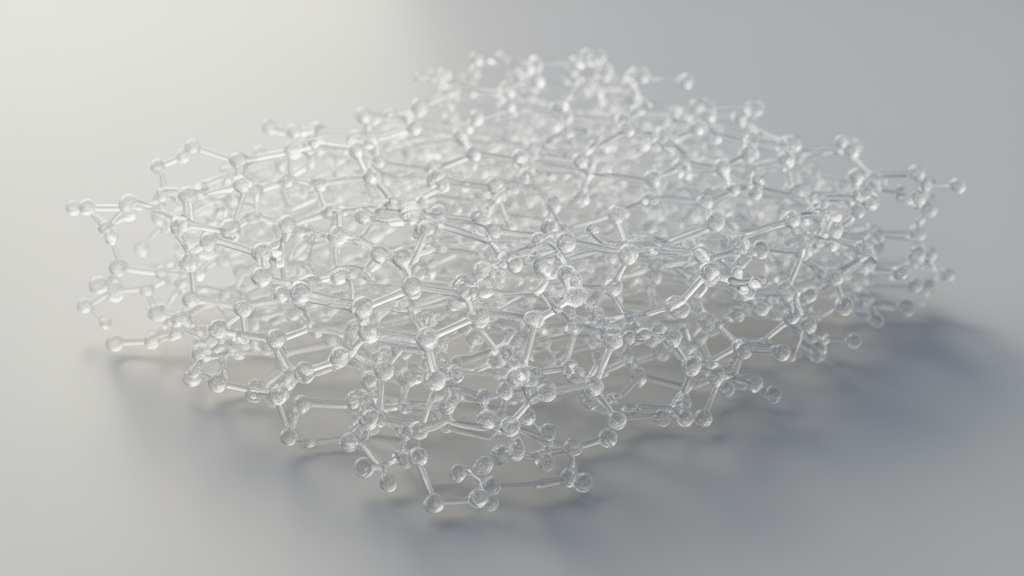
The synthesis of CGO-g-PEG composite phase change materials was achieved through covalent grafting of polyethylene glycol onto carboxylated graphene oxide. Researchers first synthesized carboxylated graphene oxide using a two-step condensation reflux method. Following this step, polyethylene glycol was covalently attached to the carboxylated graphene oxide surface via ester bonds. The grafting reaction was catalyzed using N, N’-dicyclohexylcarbodiimide and 4-dimethylaminopyridine, yielding a series of CGO-g-PEG composite phase change materials.
Characterization tests confirmed the structural changes resulting from the chemical reactions. Analysis revealed a significant increase in carboxyl functional groups present on the carboxylated graphene oxide surface. Furthermore, the characterization results demonstrated successful ester bond grafting of polyethylene glycol onto the carboxylated graphene oxide. Following the attachment of the polymer chains, the interlayer spacing of the carboxylated graphene oxide expanded to 1.1 nm.
Evaluation of thermal performance demonstrated that the synthesized composites retained high phase change enthalpy while preventing leakage of the active material. The composites exhibited a melting enthalpy of 158.5 J/g and a crystallization enthalpy of 157.0 J/g. In addition to preserving these energy storage values, the covalent composite materials effectively suppressed polyethylene glycol leakage and demonstrated superior cyclic stability.
The composite materials also demonstrated enhanced photothermal conversion capabilities compared to the base polymer. The photothermal conversion efficiency of the CGO-g-PEG materials reached 83.8 percent. According to the reported experimental findings, this measured value constitutes a significant improvement in photothermal performance when compared directly with pure polyethylene glycol.
Mechanical testing and rheological analysis confirmed improvements in structural robustness and elasticity. Incorporating carboxylated graphene oxide enhanced the flexural stress of the composites by 81 percent and increased tensile stress by 360 percent. Rheological measurements further confirmed that the CGO-g-PEG composites exhibit enhanced elasticity and structural stability, maintaining these mechanical attributes both before and after undergoing phase transition.
The investigation shows that covalent grafting provides a pathway to synthesize composite phase change materials. Through condensation reflux and catalytic ester bond formation, polyethylene glycol was attached to carboxylated graphene oxide, expanding the interlayer spacing. These structural modifications allowed the synthesized composites to suppress polymer leakage effectively while retaining high phase change enthalpy and superior cyclic stability. In addition, the materials demonstrated significant photothermal conversion improvements compared to pure polyethylene glycol, alongside increases in both flexural and tensile stress. Finally, rheological analysis confirmed that the composites exhibit enhanced elasticity and structural stability both before and after phase transition.
Subject of Research: Covalent synthesis and performance of CGO-g-PEG composite phase change materials
Article Title: Covalent grafting-driven CGO-g-PEG composite phase change materials: enhanced thermal, photothermal, and rheological performances
Article References: Cai, L., Cai, C., Li, L., Li, H., & Li, T. (2026). Covalent grafting-driven CGO-g-PEG composite phase change materials: enhanced thermal, photothermal, and rheological performances. Journal of Materials Science. https://doi.org/10.1007/s10853-026-13869-4
Image Credits: AI Generated
DOI: 10.1007/s10853-026-13869-4
Keywords: carboxylated graphene oxide, polyethylene glycol, CGO-g-PEG, composite phase change materials, covalent grafting, ester bond grafting, photothermal conversion efficiency, phase change enthalpy, melting enthalpy, crystallization enthalpy, leakage suppression, cyclic stability, flexural stress, tensile stress, rheological analysis, interlayer spacing, condensation reflux
News Source: Neil Sanderson. (November 21, 2026). Covalently Grafted Graphene Oxide Composites Enhance Phase Change Material Performance. Scienmag.