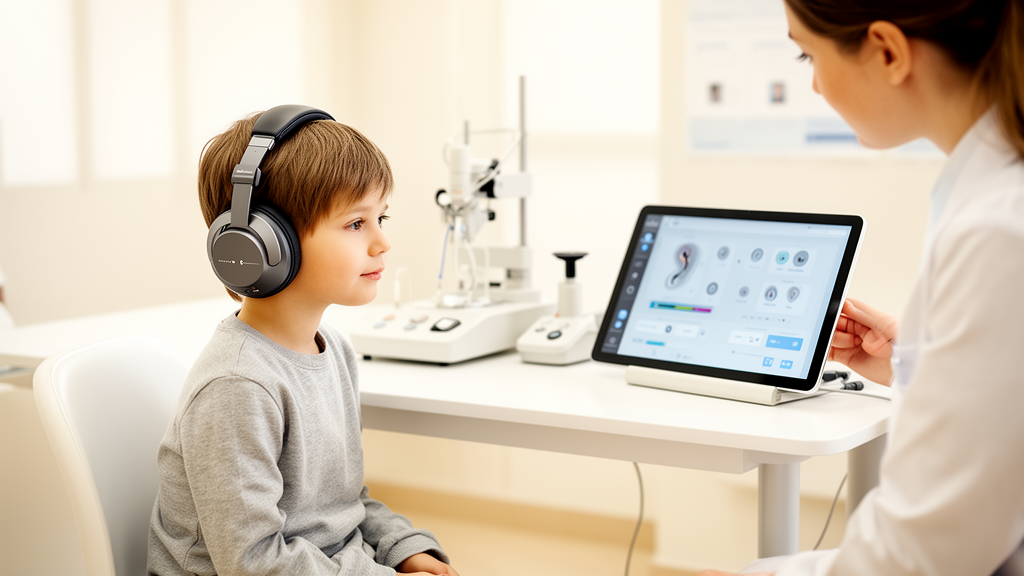
A systematic scoping review of pediatric hearing screening programs across thirty countries has identified substantial global heterogeneity in screening protocols, equipment, and subsequent diagnostic follow-up. Published in Frontiers in Public Health, the synthesis assessed sixty-five original research investigations across all six World Health Organization regions to document how healthcare systems identify hearing loss among preschool- and school-aged children. Hearing loss among children represents a persistent global health challenge that can exert negative impacts across an individual’s entire life course, disproportionately affecting young populations residing in low- and middle-income countries where systematic screening remains an essential strategy for early detection and intervention.
To evaluate contemporary screening methodologies, researchers systematically searched the PubMed, Ovid MEDLINE, and Scopus databases for studies examining hearing detection in pediatric populations. All review procedures were conducted independently by two reviewers who gathered and qualitatively synthesized data covering screening protocols, testing equipment, identified etiologies of hearing loss, and diagnostic follow-up pathways. The resulting evidence base reflected data from thirty countries out of 194 member states, revealing both common clinical findings and wide disparities in how screening initiatives operate in diverse economic and geographic settings.
The review established that pure-tone audiometry remains the dominant screening modality worldwide, employed in 92.3 percent of the reviewed studies. Alongside pure-tone audiometry, clinicians and screening personnel frequently relied on otoscopy and otoacoustic emissions testing to identify auditory deficits. When hearing impairments were detected, the most commonly reported causes were addressable conditions, specifically cerumen impaction, otitis media, and other forms of middle ear disease that can often be managed once accurately recognized.
Across the sixty-five evaluated studies, eighteen investigations utilized mobile phone or tablet applications to administer hearing screenings, and two studies implemented telehealth-based screening models. These digital approaches highlight a shift toward the use of low-cost technology in resource-limited settings.
Despite the proliferation of screening tools, the review documented extreme variability in programmatic outcomes and referral success. Screening failure rates across the evaluated studies varied widely, ranging from 1.2 percent to 49.2 percent. Even more pronounced were the inconsistencies observed in diagnostic confirmation following a failed initial screen: diagnostic follow-up rates ranged from 10 percent to 100 percent across the analyzed programs, indicating that in many settings the vast majority of children who failed an initial test never received formal diagnostic verification.
The synthesis noted that follow-up compliance was frequently undermined by parental perceptions regarding hearing difficulties and systemic barriers to accessing secondary healthcare services. Because diagnostic follow-up was highly inconsistent across programs, researchers were unable to determine true underlying prevalence estimates of pediatric hearing loss from the literature.
The review also revealed a marked deficiency in formal guidance governing pediatric screening, identifying few established guidelines for systematic screening programs among preschool- and school-aged cohorts. Furthermore, compliance with the limited recommendations that do exist remains constrained. The study authors concluded that significant heterogeneity persists globally in screening implementation, programmatic adaptation, and protocol standardization, emphasizing the ongoing challenge of establishing equitable and reliable screening services for young children worldwide.
The research reflects a collaborative effort between academic medical centers and the World Health Organization Noncommunicable Diseases Department in Geneva, Switzerland, represented by co-authors Carolina Der, Shelly Chadha, and Lauren Dillard. The investigative team also included Mahmoud Bassiony from the Alexandria University Faculty of Medicine in Egypt, alongside Dillard from the Medical University of South Carolina's Department of Otolaryngology – Head and Neck Surgery and corresponding author Anna Grace Chang from the Medical University of South Carolina in Charleston.
By coordinating this multi-institutional synthesis, the authors sought to provide a contemporary overview of global pediatric screening practices, establishing a centralized evidentiary record of the equipment, protocols, and referral patterns currently utilized to identify childhood hearing loss across diverse international jurisdictions.
Subject of Research: Global pediatric hearing screening programs and follow-up outcomes
Article Title: Global approaches to identifying pediatric hearing loss: a systematic scoping review of screening programs for preschool- and school-aged children
Article References: Chang, A. G., Bassiony, M., Der, C., Chadha, S., & Dillard, L. K. (2026). Global approaches to identifying pediatric hearing loss: a systematic scoping review of screening programs for preschool- and school-aged children. Frontiers in Public Health, 14, Article 1983404. https://doi.org/10.3389/fpubh.2026.1983404
Image Credits: AI Generated
DOI: 10.3389/fpubh.2026.1983404
Keywords: pediatric hearing loss, hearing screening, preschool screening, school-aged children, pure-tone audiometry, otoacoustic emissions, otoscopy, tympanometry, cerumen impaction, otitis media, middle ear disease, telehealth screening, mobile health applications, screening failure rates, diagnostic follow-up, global child health, public health review
News Source: Ophelia Keating. (November 21, 2026). Pediatric Hearing Screening Programs Show Inconsistent Diagnostic Follow-Up Across 30 Countries. Scienmag.