Human positively selected residues preferentially localize to extracellular regions, solvent-exposed protein surfaces, coil structures, and protein-protein interaction interfaces, according to a comprehensive structural analysis. Researchers evaluated adaptive evolution in human proteins to determine how positive selection shapes protein function by favoring amino acid substitutions that increase fitness. The findings demonstrate that positively selected residues are significantly enriched in secreted and cell membrane proteins, revealing that adaptive amino acid substitutions concentrate preferentially within accessible cellular locations rather than distributing uniformly across the human proteome.
The investigation addresses long-standing questions regarding the structural principles underlying residue-level positive selection in human proteins. Although numerous previous studies successfully identified positively selected genes, earlier research produced conflicting conclusions regarding where positively selected residues preferentially reside, especially concerning their potential enrichment within intrinsically disordered regions. To resolve these conflicting findings, the researchers analyzed both a manually curated, high-quality collection of positively selected genes and residues and a large-scale dataset of positively selected residues restricted strictly to proteins with experimental structures.
Structural mapping across the evaluated datasets revealed clear physical boundaries for adaptive changes. Human positively selected residues were enriched on solvent-exposed protein surfaces, coil structures, and protein-protein interaction interfaces, whereas neither structural domains nor intrinsically disordered regions exhibited an enrichment. In addition, spatial clustering analysis reinforced that positively selected residues accumulate within localized surface patches. This clustered arrangement demonstrates that adaptive residue-level modifications tend to form distinct physical clusters across solvent-exposed molecular surfaces rather than dispersing randomly through protein structures.
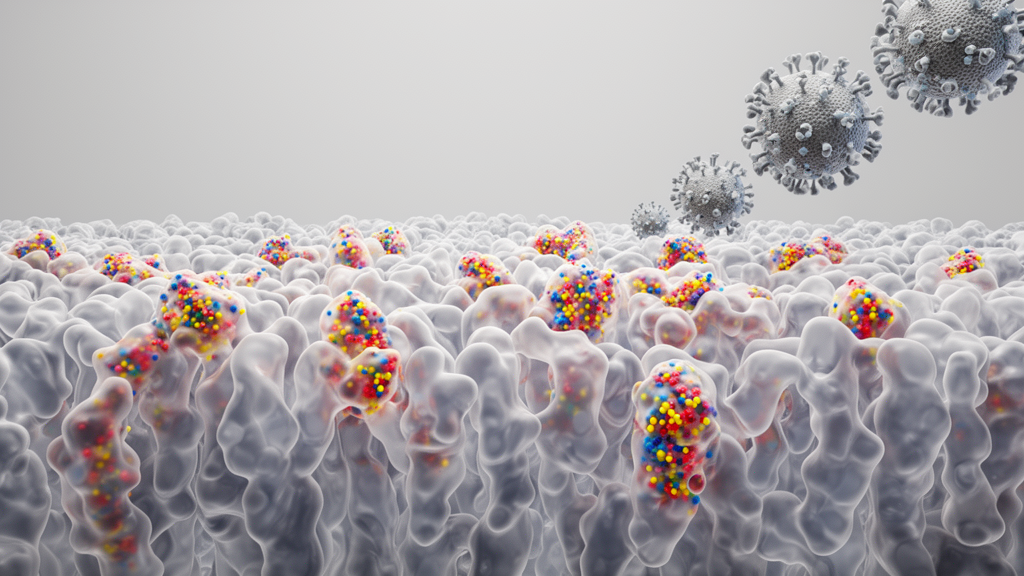
Integrating host-pathogen interaction data highlighted that adaptive evolutionary changes preferentially affect extracellular molecular recognition surfaces. These modifications appear recurrently across certain pathogen-interacting membrane protein families as well as particular domain types. Furthermore, positively selected residues demonstrated a significant enrichment directly within the residues of human-pathogen interaction interfaces that maintain direct contact with pathogenic proteins. This interface-specific localization strongly implies that neutralizing pathogen attacks has acted as one of the primary driving forces behind the adaptive evolution of human proteins.
An examination of human genetic variation data provided additional insights into the evolutionary properties of these adaptive sites. The analysis revealed that positively selected residues are significantly enriched in benign substitutions while being depleted in pathogenic substitutions. This finding extends previous scientific observations that positively selected genes contain elevated levels of missense variation by demonstrating that the specific residue positions subject to positive selection preferentially harbor benign amino acid substitutions across human populations rather than damaging, disease-causing alterations.
The study also identified an important correspondence between evolutionary selection and therapeutic discovery. Positively selected genes evaluated in the large-scale dataset restricted to proteins with experimental structures were significantly enriched among clinical-stage drug targets. This finding suggests a potential link between positive selection and pharmacological relevance, indicating that evolutionary pressure identifies functionally critical protein surfaces that coincide with validated pharmaceutical targets.
Together, these findings establish a refined structural model of adaptive evolution in human proteins, identifying exposed extracellular molecular recognition surfaces and human-pathogen interaction interfaces as recurrent hotspots of positive selection. The authors conclude that precise identification of human positively selected residues can delineate important host-pathogen interfaces that exert evolutionary selection pressure on humans. Furthermore, mapping these adaptive recognition surfaces provides a structural framework capable of appointing novel protein targets with prospective therapeutic potential.
Subject of Research: Structural localization of positive selection in human proteins and host-pathogen interfaces
Article Title: Positive selection tends to act on exposed extracellular regions and delineate interaction modules targeted by pathogens
Article References: Dobson, L., Schád, É., Fichó, E., Tantos, Á., Szabó, A., Tusnády, G. E., & Pancsa, R. (2026). Positive selection tends to act on exposed extracellular regions and delineate interaction modules targeted by pathogens. Biology Direct. https://doi.org/10.1186/s13062-026-01068-9
Image Credits: AI Generated
DOI: 10.1186/s13062-026-01068-9
Keywords: Positive selection, Positively selected residues, Positively selected genes, Host-pathogen interactions, Extracellular regions, Solvent-exposed surfaces, Cell membrane proteins, Secreted proteins, Protein-protein interaction interfaces, Coil structures, Spatial clustering, Molecular recognition surfaces, Human genetic variation, Benign substitutions, Pathogenic substitutions, Drug targets, Adaptive evolution
News Source: Juliet Wilcox. (November 21, 2026). Positive Selection in Human Proteins Targets Exposed Extracellular Surfaces Facing Pathogens. Scienmag.