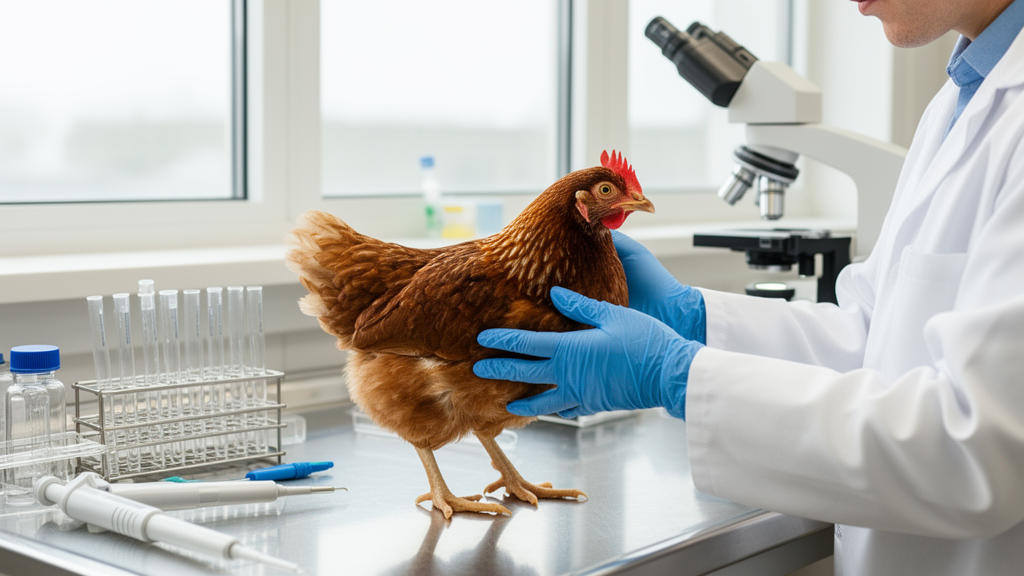
A systematic review published in BMC Veterinary Research has evaluated the evidence linking host genetic variants and experimental manipulation of specific host genes to Newcastle disease virus (NDV) outcomes in chickens. The study, led by Nsiyapnze Katte Yato Katte and colleagues, aimed to determine how genetic differences in chickens influence their susceptibility to and response to NDV, a major constraint on poultry production caused by avian orthoavulavirus 1.
The researchers followed the PRISMA 2020 guidelines for systematic reviews, searching Scopus, Web of Science, and PubMed for records published between January 2000 and October 2026. They also included records from preliminary searches. The eligibility criteria required that studies genotype host variation or knock out, substitute, or overexpress a named host gene in chickens or chicken cells, while measuring an NDV-specific outcome. From 1,315 screened database records and 139 other records, the team included 56 reports representing 49 distinct studies in their analysis.
The included studies were categorized into several groups based on their focus. Fourteen reports examined major histocompatibility complex (MHC)-linked markers, while three focused on Mx association. Eight reports investigated other candidate genes, 14 were genome-wide or quantitative trait locus studies, and 17 were functional studies. The exposure protocols varied, with 23 reports using vaccination only, 13 using in vivo challenge or natural exposure, and 17 using in vitro infection. Methodological quality was appraised across ten domains, with robustness rated as high in eight reports, moderate in 21, and low in 27.
Regarding MHC-linked variation, the review found associations with vaccine-induced antibody or T-cell responses in 11 reports. However, the favorable alleles differed between populations, indicating that the genetic impact is population-specific. The only variance-component estimate provided attributed 2.3% of phenotypic variance to the MHC. Notably, no association was found between MHC variation and embryo survival or viral load.
Evidence for natural Mx variation was found to be limited and inconsistent. In contrast, functional studies showed that Mx knockout increased NDV replication in chicken cells. The review also noted that heritabilities for NDV-related traits were generally low to moderate, and most loci identified in genome-wide studies were suggestive rather than definitive. A chromosome 24 region was associated with viral load in two independent challenged populations, providing some consistency in the genomic architecture of NDV susceptibility.
Functional studies further demonstrated that interferon pathway genes, including IFIT5, IFNAR1, and TRIM25, restrict NDV in chicken cells. The review concludes that while host genetic variation influences NDV-related responses, no single marker is currently ready for selection in breeding programs. MHC-linked associations are repeatable mainly for vaccine-induced immune responses but are population-specific, and evidence for Mx polymorphisms remains weak.
The review suggests that genomic selection in phenotyped reference populations under standardised challenge protocols is the most promising route for improving NDV resistance in chickens.
The study has several limitations, including the low methodological quality of some included reports and the inconsistency of evidence for certain genes.
Subject of Research: Systematic review of host genetic variants and gene manipulation in relation to Newcastle disease outcomes in chickens
Article Title: Candidate gene polymorphisms, MHC-linked markers, genome-wide loci and host-gene manipulation in relation to Newcastle disease outcomes in chickens: a systematic review
Article References: Yato Katte, N. K., Yoniwo, S. N., Touko, B. A. H., & Awah-Ndukum, J. (2026). Candidate gene polymorphisms, MHC-linked markers, genome-wide loci and host-gene manipulation in relation to Newcastle disease outcomes in chickens: a systematic review. BMC Veterinary Research. https://doi.org/10.1186/s12917-026-06083-6
Image Credits: AI Generated
DOI: 10.1186/s12917-026-06083-6
Keywords: Newcastle disease, avian orthoavulavirus 1, chicken genetics, MHC-linked markers, Mx gene, genome-wide loci, host-gene manipulation, PRISMA 2020, viral load, vaccine-induced immune response, polygenic architecture, genomic selection, interferon pathway, IFIT5, IFNAR1, TRIM25, BMC Veterinary Research, poultry production, host susceptibility, phenotypic variance
News Source: Juliet Wilcox. (November 21, 2026). Host genetics shape Newcastle disease outcomes in chickens. Scienmag.