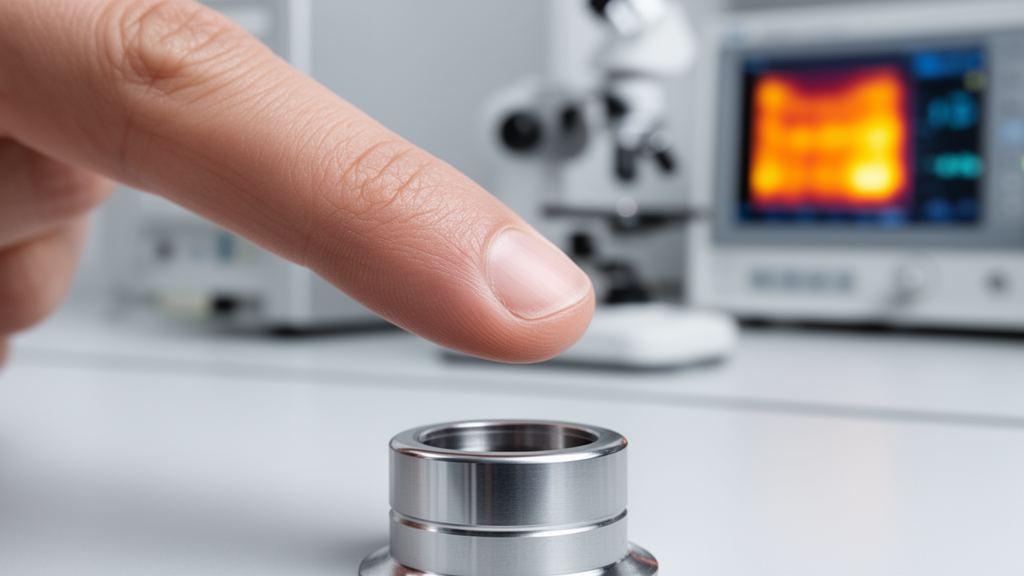
Researchers at Fujita Health University and Nagoya Institute of Technology have identified a specific skin temperature at which human fingertips begin to feel pain during exposure to millimeter waves. In a controlled experimental study involving 35 healthy adults, the team found that the average skin temperature at which pain was first perceived was 41.9 degrees Celsius. The study, published in the Journal of Neurophysiology, addresses a gap in understanding how millimeter-wave technologies, which are increasingly used for high-speed wireless communication, affect human health. While skin heating is a well-established effect of exposure at these frequencies, the precise temperature at which pain occurs has remained uncertain due to varying results from previous studies using different heat sources.
The research team, led by Professor Yohei Otaka from the Department of Rehabilitation Medicine at Fujita Health University School of Medicine, collaborated with Professor Akimasa Hirata from Nagoya Institute of Technology. The study included colleagues Dr. Akiko Yuasa, Dr. Shintaro Uehara, and Kazuki Ushizawa from Fujita Health University. The primary objective was to determine the temperature threshold for pain specifically during direct millimeter-wave exposure in highly sensitive areas. Previous evidence from direct exposure in such areas was limited, making it difficult to establish clear safety guidelines. Understanding the progression of sensations from warmth to pain is crucial for informing safer exposure limits for the public as these technologies become more widespread.
To address this challenge, the researchers exposed 35 healthy adults to 28 gigahertz millimeter waves directed at their left middle fingertips. The exposure was noncontact and carefully controlled to ensure consistent conditions for all participants. The team continuously monitored skin temperature while the participants reported the onset of specific sensations. These sensations included warmth, heat, tingling, and pain. The experimental protocol included strict safety measures, with the exposure session stopped immediately when pain was reported or when the skin temperature exceeded 44 degrees Celsius.
The study revealed a clear and consistent sequence of sensory responses as the skin temperature increased. Participants first experienced a sensation of warmth, which was followed by a feeling of heat. As the temperature continued to rise, participants reported tingling sensations, and finally, pain. The average skin temperature at which pain was first perceived across the participants was 41.9 degrees Celsius. This specific numerical value provides a concrete benchmark for researchers and regulatory bodies looking to define safe exposure levels for millimeter-wave technologies.
Not all participants experienced pain during the exposure sessions. Eighteen of the 35 participants reported feeling pain at some point during the experiment. In contrast, seven participants tolerated the full 10-minute exposure without reporting any pain. The variation in pain perception among individuals highlights the importance of considering interindividual differences when establishing safety standards.
A notable finding from the study was the significant difference in pain sensitivity between sexes. Females were more likely than males to perceive pain during the millimeter-wave exposure. The researchers calculated an odds ratio of 4.80, indicating that females had nearly five times the odds of reporting pain compared to males. Further analysis suggested that this association may be partly explained by differences in total body water and finger circumference between the sexes. This finding underscores the need for safety guidelines that account for biological variability rather than relying on a single average value for the entire population.
The observed pain threshold of 41.9 degrees Celsius is closely aligned with existing international exposure guidelines. These guidelines identify a local skin temperature of 41.9 degrees Celsius as potentially harmful. The experimental evidence from this human exposure study supports the rationale for this specific temperature limit recommended by international bodies. By confirming that pain is perceived at this temperature, the study provides a physiological basis for the regulatory limits. This alignment between experimental findings and existing guidelines strengthens the confidence in the current safety standards for millimeter-wave exposure.
The study also suggests that tingling sensations may serve as an early warning sign of impending pain.
The study was made available online on September 8, 2026, and was published in Volume 136, Issue 3, of the Journal of Neurophysiology on September 1, 2026. The research was supported by a grant from the Ministry of Internal Affairs and Communications. The authors declared no conflicts of interest, financial or otherwise. The study contributes to the growing body of evidence on the health effects of millimeter-wave exposure. As wireless communication systems continue to expand, the need for robust safety data becomes increasingly important. This study provides a foundational piece of evidence that can inform future research and policy decisions regarding the safe use of millimeter-wave technologies.
The findings highlight the importance of considering interindividual variability when establishing safety factors for millimeter-wave exposure. The fact that females were more sensitive to pain than males suggests that a one-size-fits-all approach to safety limits may not be optimal. This study provides a step forward in understanding the physiological responses to millimeter-wave exposure. It offers concrete data on pain thresholds and sensory progression that can be used to refine safety standards. As millimeter-wave technologies become more integrated into everyday life, ensuring the safety of diverse populations remains a critical priority.
The research demonstrates that millimeter-wave exposure can produce pain when fingertip skin temperature reaches approximately 42 degrees Celsius. The clear sequence of sensations and the specific temperature threshold provide valuable insights for the development of evidence-based approaches to exposure safety. The study’s focus on the fingertip, a highly sensitive area, makes the findings particularly relevant for potential exposure scenarios. It supports the existing regulatory framework while identifying areas for further refinement, such as accounting for sex differences in sensitivity.
As millimeter-wave technologies continue to expand, the findings from this study may help strengthen the evidence base for protecting people.
The specific temperature threshold of 41.9 degrees Celsius provides a precise metric for safety assessments. The observation that tingling precedes pain offers a practical tool for monitoring exposure.
Subject of Research: Pain threshold and sensory progression during millimeter-wave exposure on human fingertips
Article Title: Fingertip study reveals pain threshold during millimeter-wave exposure
Article References: Fingertip study reveals pain threshold during millimeter-wave exposure. Original publication (Bibliographic details unavailable.)
Image Credits: AI Generated
DOI: Not provided
Keywords: millimeter-wave exposure, pain threshold, skin temperature, fingertip sensation, 28 GHz frequency, sexual dimorphism, thermal comfort, wireless communication safety, Journal of Neurophysiology, Fujita Health University, Nagoya Institute of Technology, human health effects, exposure guidelines, sensory progression, radio frequency radiation, thermal limits, interindividual variability, noncontact exposure, neurophysiology, safety factors
News Source: Denise Maddox. (November 21, 2026). Fingertip pain threshold from millimeter waves reaches 41.9 degrees Celsius. Scienmag.