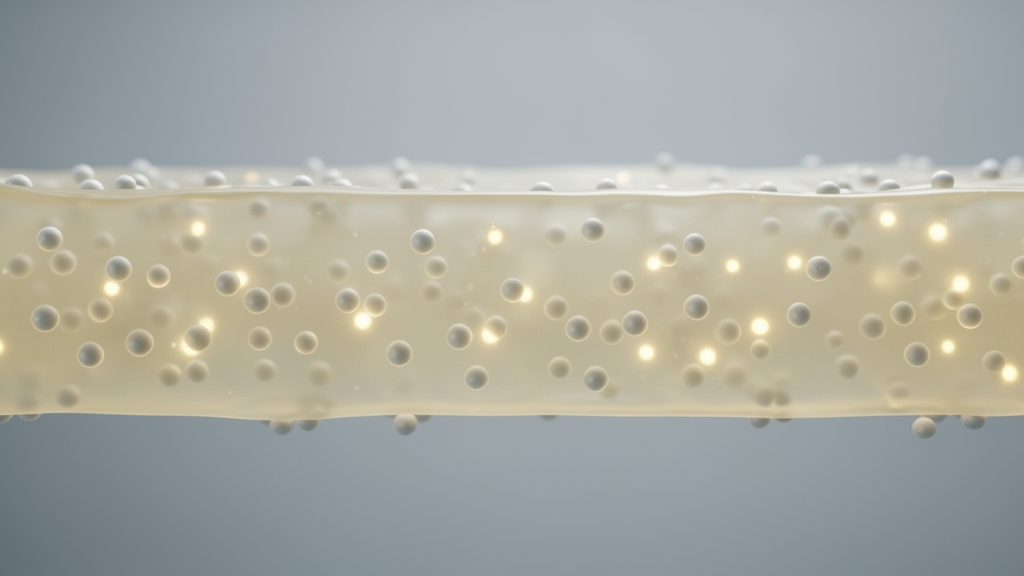
The study, published in Materials for Renewable and Sustainable Energy, details the fabrication and characterization of nanocomposite membranes based on chitosan, sulfonated polystyrene, and sulfonated nanosilica. The primary objective was to address the limitations of commercial membranes, such as Nafion, which, despite their excellent proton conductivity, suffer from high costs, limited thermal stability, and significant methanol crossover. By leveraging renewable feedstocks and specific chemical modifications, the team aimed to create a cost-effective alternative that balances high proton transport with robust resistance to methanol permeation.
The research focused on the strategic design of acid–base pair systems within the polymer matrix. Chitosan, a naturally abundant polysaccharide, was selected as the base polymer due to its inherent hydrophilicity, excellent film-forming characteristics, and low intrinsic methanol permeability. However, pristine chitosan exhibits suboptimal proton conductivity largely because of its high degree of crystallinity and the absence of readily mobile proton carriers. To overcome this, the researchers blended chitosan with sulfonated polystyrene (SPS), an aromatic polymer that provides abundant sulfonic acid groups. These groups facilitate Grotthuss-type proton hopping and establish low-energy proton transport pathways through strong electrostatic interactions with the amino groups of chitosan.
The experimental process began with the sulfonation of polystyrene using acetyl sulfate, a reagent chosen for its lower reactivity, which minimizes polymer degradation and crosslinking. The team determined that an optimal degree of sulfonation of 18.26% was necessary to balance proton conductivity with mechanical stability and hydrolytic resistance. Simultaneously, silica nanoparticles were sulfonated using sulfuric acid to create sulfonated silica (S-SiO2). This functionalization was confirmed through Fourier transform infrared spectroscopy, which revealed characteristic bands for sulfonic acid groups, and zeta potential measurements, which showed a significant shift in the point of zero charge to a more acidic range, indicating successful surface modification.
Membranes were prepared using the solution-casting method, with weight ratios of chitosan to SPS adjusted to identify the optimal blend composition. The team measured proton conductivity and methanol permeability to determine the membrane selectivity parameter, defined as the ratio of proton conductivity to methanol permeability. Among the prepared blends, the membrane containing 40 wt% SPS, designated as CSSPS40, exhibited the highest selectivity parameter of 39,908 S s cm−3. This performance was attributed to strong acid–base interactions between the amino groups of chitosan and the sulfonic acid groups of SPS, which enhanced proton conductivity while simultaneously reducing methanol crossover.
To further improve performance, the researchers incorporated 2 wt% of either pristine silica or sulfonated silica nanoparticles into the optimal CSSPS40 blend. The resulting nanocomposite membranes were systematically evaluated for thermal and chemical stability, proton conductivity, and methanol permeability. The incorporation of SPS into the chitosan matrix was found to increase the glass transition temperature and decrease the crystallinity of the polymer. This reduction in crystallinity, driven by electrostatic interactions, increases the fraction of amorphous regions, which enhances polymer chain mobility and facilitates the formation of interconnected proton-transport pathways.
Thermal analysis via thermogravimetric analysis (TGA) demonstrated that the nanocomposite membranes exhibited improved thermal stability compared to pristine chitosan. The onset temperature of the main degradation stage shifted from approximately 202 °C for pure chitosan to 222 °C for the CSSPS40/S-SiO2 nanocomposite. This enhancement is likely due to strong interfacial interactions, including hydrogen bonding and electrostatic attractions, between the functional groups of the polymer chains and the surface of the sulfonated silica nanoparticles. These interactions restrict polymer chain mobility and delay decomposition, thereby improving the membrane’s durability under fuel cell operating conditions.
Electrochemical measurements revealed that the CSSPS40/S-SiO2 membrane achieved the highest proton conductivity among all samples, reaching 0.0101 S cm−1 at 25 °C. This enhanced performance is attributed to the additional sulfonic acid groups grafted onto the surface of the S-SiO2 nanoparticles, which provide extra proton-conducting sites. These sites promote stronger hydrogen-bond networks within the membrane, shortening the proton hopping distance and enhancing proton migration primarily through the Grotthuss mechanism. The activation energy for proton conduction in the CSSPS40/S-SiO2 membrane was determined to be 10.11 kJ mol−1, lower than that of the unmodified blend, validating the thermodynamic benefit of the continuous hydrogen-bonded pathways.
Methanol permeability was significantly reduced in the nanocomposite membranes compared to pristine chitosan. The pristine chitosan membrane exhibited a methanol uptake of 68%, whereas the CSSPS40/S-SiO2 membrane showed a much lower uptake of 44%. This reduction is attributed to the tortuous diffusion pathways created by the inorganic fillers, which hinder methanol permeation. Although the sulfonated silica nanoparticles slightly increased methanol uptake compared to pristine silica due to their hydrophilic nature, the overall methanol crossover was still effectively suppressed by the compact polymeric structure and the electrostatic interactions within the matrix.
The selectivity of the CSSPS40/S-SiO2 membrane reached 54,010 S s cm−3, representing a 35% improvement over the optimal blend membrane and more than a twofold improvement over the pristine chitosan membrane. When compared to commercial recast Nafion, the new membrane exhibited a lower proton conductivity but a significantly lower methanol permeability. This favorable balance of low crossover and competitive conductivity resulted in an overall selectivity higher than that of Nafion, highlighting the potential of the nanocomposite as a high-performance alternative for DMFC applications.
Mechanical testing further demonstrated the benefits of the nanocomposite design. The CSSPS40/S-SiO2 membrane achieved a tensile strength of 54.60 MPa and an elongation at break of 26.48%, surpassing the performance of the unmodified blend. The presence of sulfonic acid groups on the S-SiO2 surfaces improved interfacial compatibility and adhesion between the organic polymer phase and the inorganic fillers. This strong interfacial interaction prevents phase separation and allows for efficient transfer of mechanical stress, endowing the membrane with excellent dimensional stability and mechanical strength necessary for practical fuel cell use.
The study concludes that the combined effect of acid–base interactions between chitosan and sulfonated polystyrene, together with functionalized silica nanoparticles, forms efficient proton transport pathways and significantly suppresses methanol crossover. The use of abundant and relatively low-cost materials such as chitosan, polystyrene, and silica nanoparticles makes this membrane a potentially cost-effective option for future direct methanol fuel cell applications. The findings suggest that controlled incorporation of sulfonated inorganic fillers into biopolymer blends offers a viable strategy for developing sustainable and high-performance proton exchange membranes.
Beyond baseline electrochemical comparisons, the researchers carried out extensive physical and chemical characterizations to evaluate how the materials withstand operating stresses. To simulate the chemical degradation caused by reactive oxygen species generated in fuel cells, the team immersed membrane specimens in Fenton’s reagent containing 3 wt% hydrogen peroxide and 4 ppm iron ions at room temperature for 24 hours. The pristine chitosan membrane suffered a 20 wt% weight loss, whereas blending with sulfonated polystyrene in the CSSPS40 formulation reduced weight loss to 12.4 wt%. Incorporating sulfonated nanosilica delivered an additional protective benefit, lowering weight loss further to 11.3 wt%, which the authors attributed to strong interfacial interactions between the nanofillers and the surrounding polymer chains that impede radical penetration.
Hydration behavior and dimensional swelling also revealed distinct temperature-dependent trends that govern proton mobility. Water uptake was measured after immersing samples in deionized water across temperatures ranging from 25 °C to 100 °C. The pure chitosan membrane took up 110% water by weight at 25 °C and swelled to 135% at 100 °C, accompanied by a high swelling ratio of 87% at 25 °C that compromises dimensional integrity. In contrast, the CSSPS40 blend exhibited lower water uptake of 66% at 25 °C, rising to 78% at 100 °C, while its swelling ratio dropped to 48% at 25 °C. Introducing sulfonated nanosilica raised water uptake moderately to 71% at 25 °C and 86% at 100 °C, with the swelling ratio rising from 52% to 66% over the same temperature span, reflecting the strong water affinity introduced by sulfonic acid groups without triggering excessive dimensional expansion.
Differential scanning calorimetry was additionally employed to examine the physical state of the absorbed water molecules by cooling hydrated samples to −40 °C and recording melting behavior up to 40 °C. The analysis established that incorporating sulfonated polystyrene and sulfonated silica notably shifted the balance toward bound water rather than unconstrained free water, stabilizing hydrogen-bonded networks adjacent to ionic groups. Ion exchange capacity evaluations further corroborated these structural changes, measuring only 0.18 milliequivalents per gram for pure chitosan, rising to 0.69 milliequivalents per gram for CSSPS40, and reaching 1.54 milliequivalents per gram in CSSPS40/S-SiO2, directly reflecting the density of functional proton-exchangeable sites added by the functionalized silica surfaces.
Microscopic investigations documented how these chemical constituents arranged across the membrane architecture. Energy-dispersive X-ray spectroscopy confirmed the silica functionalization by detecting approximately 3.6 wt% sulfur on the modified nanoparticles, corresponding to roughly 9.1 wt% grafted sulfonic acid groups. Cross-sectional scanning electron microscopy and elemental mapping of the CSSPS40/S-SiO2 membrane showed a dense, crack-free morphology with uniform spatial distributions of silicon, nitrogen, and sulfur signals, demonstrating that the nanoparticles dispersed without forming visible agglomerates. Surface topography evaluated through atomic force microscopy showed that surface roughness rose from 16.5 nanometers in pristine chitosan to 28.1 nanometers in CSSPS40, while contact angle measurements dropped from 82.1 degrees in the blend to 78.2 degrees in the nanocomposite, validating enhanced surface hydrophilicity.
Subject of Research: Development of chitosan–sulfonated polystyrene–sulfonated nanosilica nanocomposite proton exchange membranes for direct methanol fuel cells
Article Title: Development of chitosan–sulfonated polystyrene–sulfonated nanosilica nanocomposite proton exchange membranes for direct methanol fuel cells
Article References: Navabi, S., & Tohidian, M. (2026). Development of chitosan–sulfonated polystyrene–sulfonated nanosilica nanocomposite proton exchange membranes for direct methanol fuel cells. Materials for Renewable and Sustainable Energy, 15(3), Article 46. https://doi.org/10.1007/s40243-026-00388-0
Image Credits: AI Generated
DOI: 10.1007/s40243-026-00388-0
Keywords: Development, chitosan, sulfonated, polystyrene, nanosilica, nanocomposite, proton, exchange, membranes, direct, methanol, fuel, cells
News Source: Victoria Harrison. (November 20, 2026). Sulfonated Nanosilica Boosts Chitosan Membrane Selectivity for Fuel Cells. Scienmag.