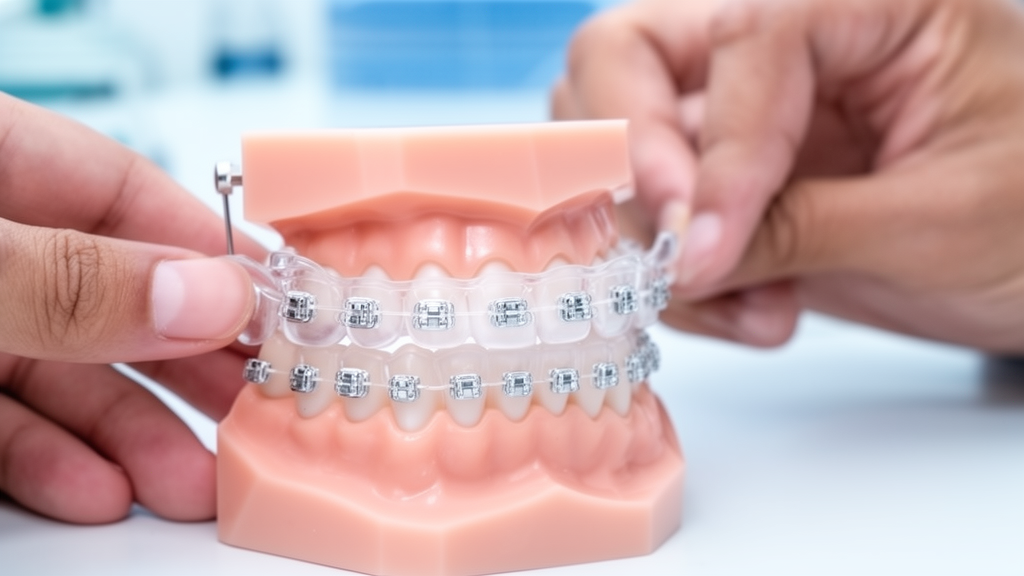
Orthodontic researchers evaluating indirect bonding transfer trays found that semi-digital trays demonstrated significantly lower angular deviation than fully digital alternatives when transferring virtually planned bracket positions to patient dentition. Both methods achieved comparable linear accuracy in clinical testing involving thirty-two orthodontic patients with mild dental crowding.
The clinical investigation, conducted at Selcuk University within the Department of Orthodontics, sought to assess the transfer accuracy and clinical suitability of both indirect bonding systems. Thirty-two individuals with fully erupted permanent dentition and mild crowding were enrolled and randomly assigned to two equal treatment groups.
Participants in the first experimental cohort received indirect bracket bonding executed with semi-digital transfer trays, whereas the comparative group underwent bracket placement using fully digital transfer trays. The procedural workflow evaluated how accurately virtual bracket placements translated to intraoral positions under clinical conditions.
Following bracket bonding, clinicians captured post-placement intraoral scan images from each participant. Investigators subsequently superimposed these scans using GOM Inspect software to measure linear and angular discrepancies between the planned virtual bracket positions and the realized clinical placements.
Statistical analysis revealed no significant differences in linear deviation between the two transfer tray groups, confirming that both semi-digital and fully digital workflows delivered comparable linear precision during bracket placement.
In contrast, angular deviations, specifically rotational and torque discrepancies, were significantly lower among patients treated with semi-digital trays. This angular accuracy advantage persisted even after statistical adjustments accounted for within-patient clustering across measured teeth.
Researchers observed a shared spatial tendency across both cohorts, as vertical positioning deviations skewed consistently toward the gingival direction regardless of the specific tray workflow utilized.
The study authors concluded that while both transfer tray protocols provide adequate linear accuracy for clinical use, the observed reduction in torque and rotational deviations suggests a potential advantage for semi-digital trays that warrants further confirmation in larger clinical trials.
The clinical trial, cataloged in the ClinicalTrials.gov registry under NCT07318857, followed a structured timeline spanning nearly a year of active clinical implementation. The formal investigation officially commenced on 15 June 2023, and the researchers completed their primary evaluations on 21 May 2024. Although patient enrollment and primary data collection concluded in the middle of 2024, retrospective trial registration was formally documented on 6 January 2026. The accepted findings were subsequently released as open access research in BMC Oral Health on 13 November 2026, providing early dissemination of the peer reviewed dataset prior to the appearance of the final Version of Record.
Conducted by investigators Ramazan Emre Karakoc and Zehra Ileri, the research centered on resolving whether virtual bracket placement plans translate reliably into real dental positions during indirect bonding procedures. The comparative setup split the thirty two qualifying patients into balanced arms of sixteen participants each, allowing the clinical performance of semi-digital transfer trays to be measured directly alongside fully digital trays within the orthodontic department setting.
In analyzing the superimposed intraoral scan datasets, the authors emphasized the specific distinction between linear precision and angular orientation. Both transfer techniques showed satisfactory linear correspondence, but the semi-digital approach maintained an advantage in controlling rotation and torque deviations, even after statistical adjustments accounted for clustering within patients.
Subject of Research: Clinical accuracy of semi-digital versus fully digital indirect bonding trays
Article Title: Clinical investigation of the transfer accuracy of semi-digital and fully digital indirect bonding trays
Article References: Karakoc, R. E., & Ileri, Z. (2026). Clinical investigation of the transfer accuracy of semi-digital and fully digital indirect bonding trays. BMC Oral Health. https://doi.org/10.1186/s12903-026-10448-6
Image Credits: AI Generated
DOI: 10.1186/s12903-026-10448-6
Keywords: indirect bonding, orthodontic trays, transfer accuracy, bracket placement, semi-digital trays, fully digital trays, orthodontics, bracket positioning, angular deviation, linear accuracy, torque accuracy, rotational deviation, intraoral scanning, GOM Inspect, mild dental crowding, clinical orthodontics
News Source: Ophelia Keating. (November 20, 2026). Semi-Digital Indirect Bonding Trays Achieve Higher Angular Accuracy Than Fully Digital Trays. Scienmag.