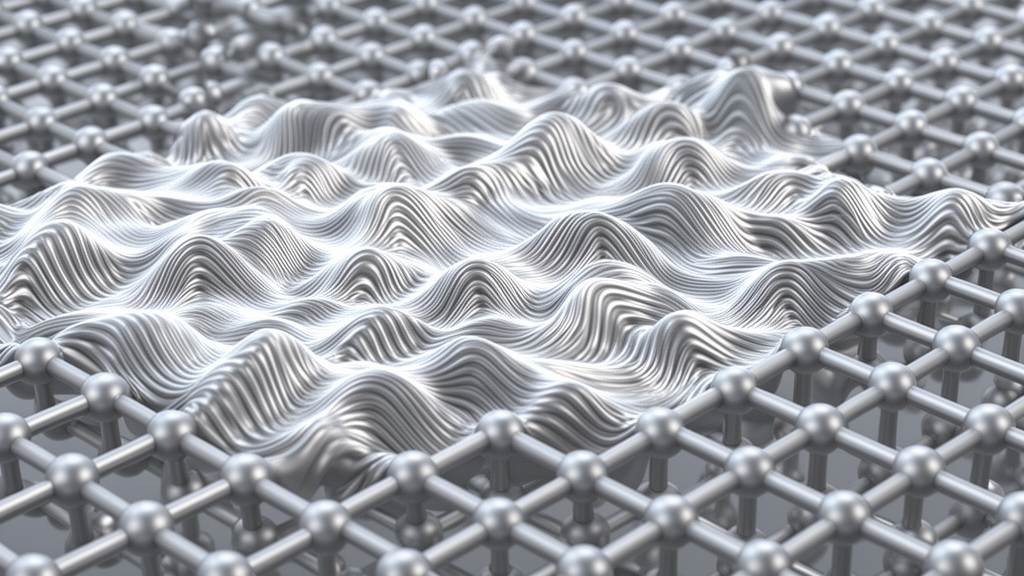
A research team led by Prof. ZHANG Tianlong at The Hong Kong University of Science and Technology has developed an alloy design strategy that uses three-dimensional compositional waves to produce highly strain-hardenable titanium alloys. Conventional titanium alloys are extensively utilized across aerospace, automotive, biomedical, and advanced structural sectors due to their favorable corrosion resistance, biocompatibility, and high specific strength. Despite these attributes, standard titanium formulations typically exhibit limited strain-hardening capacity during plastic deformation. This limitation makes them susceptible to early strain localization, which restricts their broader deployment in safety-critical structural applications.
To overcome this performance boundary, the investigators implemented an additive manufacturing technique known as laser powder bed fusion to perform in-situ alloying. Rather than seeking chemical uniformity, the process intentionally synthesizes interconnected, microscale molybdenum compositional waves throughout a baseline matrix of Ti-6Al-4V. This spatial arrangement challenges traditional metallurgical methodologies that prioritize completely homogeneous chemical compositions, demonstrating instead that controlled chemical heterogeneity can be deliberately engineered to coordinate distinct mechanical behaviors within a single printed material.
The resulting architecture divides the engineered Ti64-6Mo alloy into three spatially distinct regions, each governed by its own characteristic phase stability and deformation response under applied mechanical loading. In the low-molybdenum regions, cooling-induced alpha-prime martensite forms during processing, deforming via detwinning and retwinning processes. In contrast, the medium-molybdenum regions are defined by a metastable beta phase that undergoes progressive stress-induced martensitic transformation as external stress builds across the microstructure.
The third zone consists of high-molybdenum regions dominated by a stable beta phase that accommodates strain predominantly through conventional dislocation slip. Because these three microstructural domains are spatially interconnected, their deformation mechanisms do not operate in isolation. Instead, their mechanical interactions generate heterogeneous-deformation-induced stresses that progressively activate the individual deformation pathways in a cooperative sequence as applied stress intensifies throughout the component.
This sequential activation effectively delays strain localization and sustains plastic hardening throughout tensile deformation. Experimental evaluation demonstrated that the resulting Ti64-6Mo material attains a strain-hardening increment of approximately 557 MPa, a figure more than double the typical upper limit observed in conventional titanium alloys. Simultaneously, the alloy achieves a uniform elongation of 11.5 percent alongside an ultimate tensile strength of 1,236 MPa, combining ductility with high structural strength.
The study highlights how compositional architecting can transform manufacturing-induced variations from structural defects into functional advantages. Prof. Zhang noted that controlling the spatial distribution of alloying elements across three dimensions provides an extra degree of freedom in alloy design, removing the requirement to rely solely on uniform chemical mixtures. The researchers indicate that this compositional architecting framework provides a broader foundation for tailoring phase stabilities and deformation mechanisms, presenting principles that may potentially be extended to other advanced structural materials.
The research, published in Nature Communications, was led by HKUST in collaboration with researchers from the Harbin Institute of Technology, Guangdong Hanbang 3D Technology Co. Ltd., City University of Hong Kong, and The Ohio State University. The paper was co-first authored by MA Yaorui, a doctoral student in Prof. Zhang’s laboratory, with Prof. Zhang, Prof. LIU Chain-Tsuan of City University of Hong Kong, and Prof. WANG Yunzhi of The Ohio State University serving as corresponding authors.
Conducted as an experimental study within the Department of Mechanical and Aerospace Engineering at HKUST, the research directly bridges the gap between additive manufacturing and high-performance titanium alloy design. Assistant Professor ZHANG Tianlong and his team utilized laser powder bed fusion, operating as a metal three-dimensional printing technique, to execute in-situ alloying during fabrication. By intentionally generating three-dimensional molybdenum compositional waves within Ti-6Al-4V rather than enforcing chemical uniformity, the experimental investigation demonstrated that compositional heterogeneity can be put to good use. This processing method creates spatially distinct regions with tailored phase stabilities and deformation behaviors across the printed alloy.
The peer-reviewed publication, titled “Compositional architecting by additive manufacturing enables hardenable titanium alloys,” appeared in Nature Communications under digital object identifier 10.1038/s41467-026-76618-w on August 24, 2026. The documented experimental findings establish a new design paradigm, showing that controlling the spatial distribution of alloying elements across three dimensions coordinates multiple deformation mechanisms within a single material. According to the research team, this compositional architecting concept provides an extra degree of freedom for designing the next generation of high-performance structural alloys, presenting an adaptable metallurgical framework that may potentially be extended to other advanced structural materials.
Subject of Research: Additive manufacturing of strain-hardenable titanium alloys using compositional architecting
Article Title: HKUST pioneers a new titanium alloy design paradigm through three-dimensional compositional waves
Article References: HKUST pioneers a new titanium alloy design paradigm through three-dimensional compositional waves. Original publication (Bibliographic details unavailable.)
Image Credits: AI Generated
DOI: Not provided
Keywords: titanium alloys, additive manufacturing, laser powder bed fusion, compositional waves, strain hardening, Ti-6Al-4V, molybdenum, tensile strength, phase stability, heterogeneous deformation, martensitic transformation, dislocation slip, detwinning, structural materials, materials science, in-situ alloying
News Source: Denise Maddox. (November 20, 2026). Three-Dimensional Compositional Waves Enable High-Strength Hardenable Titanium Alloys. Scienmag.