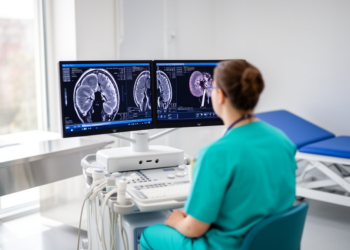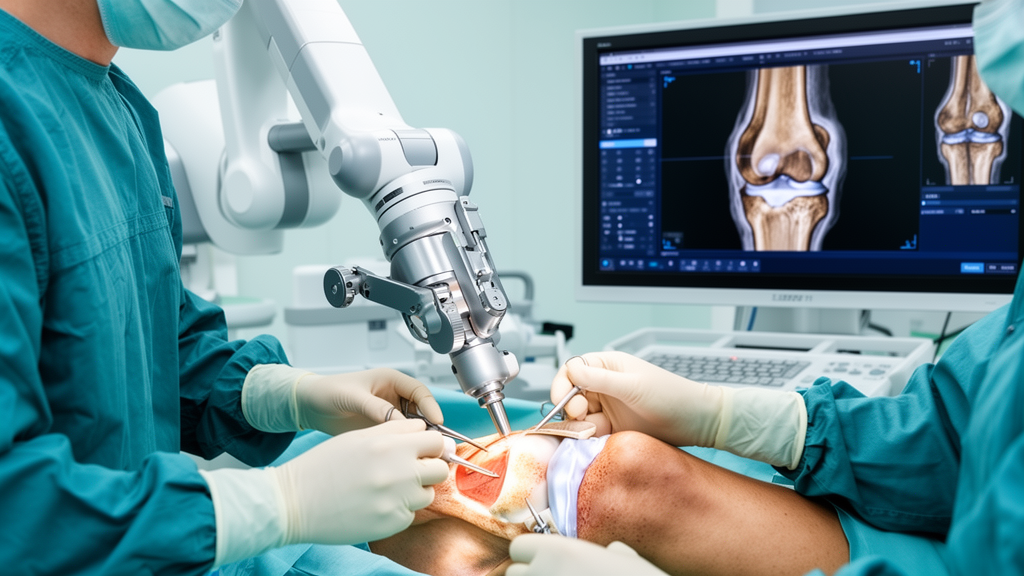
Integrating automated computed tomography segmentation with a wireless electromagnetic navigation platform significantly improves bone resection accuracy and postoperative alignment in patients undergoing total knee arthroplasty, according to a clinical validation study published in the Journal of Orthopaedic Surgery and Research. In a prospective surgical trial comparing forty-two patients, individuals operated on with the integrated navigation system achieved significantly tighter resection margins and reduced limb alignment errors relative to patients treated with conventional surgical techniques.
The investigation addressed established technical bottlenecks in computer-assisted orthopedic surgery, where achieving optimal implant alignment and functional outcomes depends heavily on precise preoperative planning and reliable intraoperative guidance. Conventional total knee arthroplasty workflows that rely on manual computed tomography segmentation require substantial time and remain vulnerable to interobserver variability. These manual constraints have historically restricted the broader scalability and routine clinical adoption of computer-assisted surgical platforms in orthopedic practice.
To overcome these segmentation challenges, the research team developed a hybrid deep learning model combining convolutional neural networks with transformer-based attention mechanisms. The architectural framework was engineered to carry out fully automated volumetric segmentation of four primary osseous structures of the knee joint: the femur, the tibia, the patella, and the fibula. The automated segmentation pipeline was subsequently interfaced directly with a wireless electromagnetic navigation platform to deliver real-time guidance during surgical procedures.
Development and evaluation of the automated segmentation pipeline utilized a diverse dataset comprising 568 lower extremity computed tomography scans. This imaging collection incorporated diverse clinical presentations to evaluate model robustness, including 248 scans from patients with osteoarthritis, 98 normal anatomical scans, and 222 scans displaying periprosthetic fractures. The investigators assessed the computational system across multiple performance metrics, focusing specifically on anatomical segmentation accuracy measured by the Dice similarity coefficient and the total required processing time per case.
Across the testing dataset, the hybrid deep learning architecture achieved consistently high segmentation precision across all targeted anatomical regions. The model recorded a mean Dice similarity coefficient of 0.984 ± 0.008 for the femur, 0.981 ± 0.011 for the tibia, 0.972 ± 0.015 for the patella, and 0.976 ± 0.012 for the fibula. In addition to high geometric boundary accuracy, the automated workflow completed the full segmentation process in a mean processing time of 54.3 ± 6.2 seconds per case.
The prospective clinical trial evaluated forty-two patients undergoing total knee arthroplasty, dividing participants into a navigation group of twenty-two patients and a conventional surgical group of twenty patients. Surgical resection accuracy measured at the medial distal femur was significantly superior in the navigation cohort, showing an error of 0.38 ± 0.21 millimeters compared to 0.82 ± 0.47 millimeters in the conventional cohort (p < 0.01). Furthermore, postoperative alignment accuracy assessed by mean absolute hip-knee-ankle angle deviation was significantly improved in the navigation group at 0.64 ± 0.35 degrees versus 1.28 ± 0.54 degrees for conventional surgery (p < 0.01), while component sizing accuracy reached 100 percent for both femoral and tibial implants under navigation.
The authors concluded that the integrated workflow provides high segmentation accuracy while directly contributing to improved bone resection precision and postoperative alignment in total knee arthroplasty. The investigators noted that these clinical and computational results demonstrate the early clinical feasibility of coupling automated deep learning segmentation with wireless electromagnetic navigation. However, the researchers emphasized that broader prospective multicenter validation is necessary to further verify the clinical utility and surgical performance of the platform.
Subject of Research: Automated deep learning CT segmentation integrated with wireless electromagnetic navigation for total knee arthroplasty
Article Title: Deep learning-based automated knee joint segmentation integrated with wireless electromagnetic navigation for total knee arthroplasty: development and clinical validation
Article References: Liu, Y., Liu, D., Jiang, R., Sun, H., Hou, W., Liu, P., & Xiong, Y. (2026). Deep learning-based automated knee joint segmentation integrated with wireless electromagnetic navigation for total knee arthroplasty: development and clinical validation. Journal of Orthopaedic Surgery and Research. https://doi.org/10.1186/s13018-026-07332-y
Image Credits: AI Generated
DOI: 10.1186/s13018-026-07332-y
Keywords: total knee arthroplasty, deep learning, automated segmentation, computed tomography, wireless electromagnetic navigation, computer-assisted orthopedic surgery, convolutional neural networks, transformer attention mechanisms, femur segmentation, tibia segmentation, patella segmentation, fibula segmentation, Dice similarity coefficient, bone resection accuracy, hip-knee-ankle angle, component sizing accuracy, periprosthetic fractures, knee osteoarthritis
News Source: Ophelia Keating. (November 20, 2026). Automated Knee Segmentation and Electromagnetic Navigation Improve Alignment in Knee Arthroplasty. Scienmag.