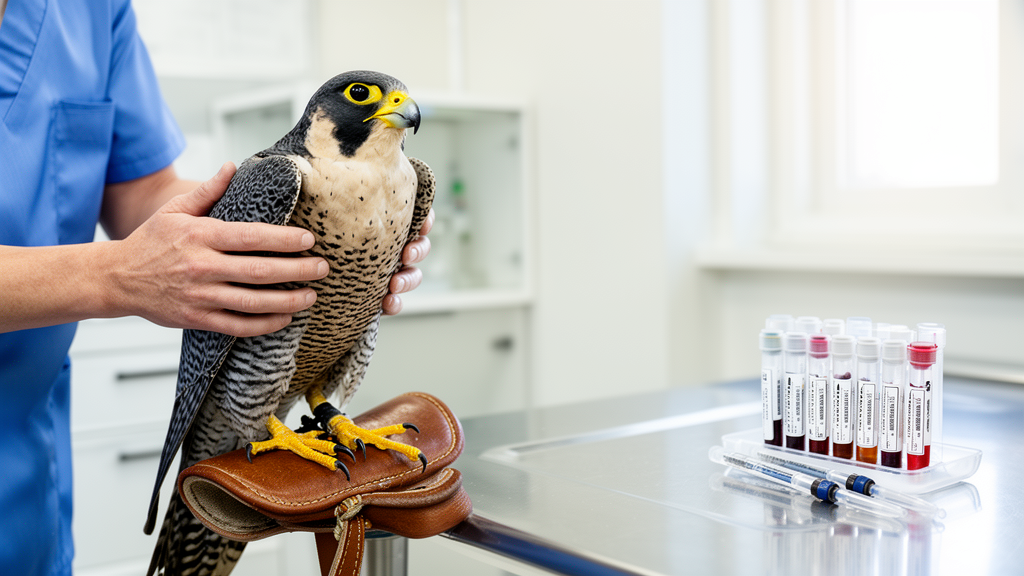
Veterinary researchers have established baseline biochemical and hematological reference intervals for captive peregrine falcons (Falco peregrinus) and saker falcons (Falco cherrug) to support clinical disease detection. The comparative study, published in Frontiers in Veterinary Science, was conducted because well-established clinical reference ranges remain unavailable for many avian species. By analyzing blood panels from captive populations of these two large falcon species, the investigative team established normal diagnostic parameters designed to assist veterinary clinicians during routine diagnostic work-ups and health assessments.
The research cohort comprised blood samples collected from 126 individual captive raptors, consisting of 69 peregrine falcons and 57 saker falcons. The investigators structured their comparative analysis to examine physiological profiles across the two species while placing specific emphasis on the potential influences of specimen age and sex.
To obtain diagnostic specimens, blood sampling was performed via either the basilar vein or the jugular vein of each bird. The clinical evaluation evaluated a panel of 20 biochemical and hematological parameters using two point-of-care diagnostic systems: the VetScan VS2 and the i-STAT analyzer.
Comparative analysis between the two falconid species revealed statistically significant interspecific differences across seven distinct analytes. These species-dependent variations occurred in anion gap, aspartate aminotransferase, creatine kinase, globulin, hematocrit, hemoglobin, and calcium concentrations.
When assessing demographic factors within the study cohort, the researchers determined that age significantly affected five of the measured analytes. Among both falcon species, globulin was the sole analyte that demonstrated an increase in older specimens. In contrast, evaluation of the biochemical and hematological panels across male and female specimens revealed no statistically significant differences associated with sex.
The authors concluded that establishing reference intervals for these 20 biochemical and hematological variables provides essential baseline metrics for monitoring raptor health and detecting clinical diseases. However, the study also identified significant variability among several analytes across the cohort. Because of this observed measurement spread, the investigators noted that future comparative research will require larger sample sizes to further refine normal reference values for captive falcon populations.
Subject of Research: Biochemical and hematological reference intervals in captive falcons
Article Title: Comparative biochemistry and hematology of captive large falcons
Article References: Pikula, J., Piacek, V., Seidlova, V., Vitula, F., Nemcova, M., Bednarikova, S., Pribyl, M., Havelkova, B., Dundarova, H., & Zukal, J. (2026). Comparative biochemistry and hematology of captive large falcons. Frontiers in Veterinary Science, 13, Article 1957481. https://doi.org/10.3389/fvets.2026.1957481
Image Credits: AI Generated
DOI: 10.3389/fvets.2026.1957481
Keywords: Falco peregrinus, Falco cherrug, peregrine falcon, saker falcon, avian biochemistry, avian hematology, reference intervals, point-of-care testing, VetScan VS2, i-STAT, aspartate aminotransferase, creatine kinase, anion gap, globulin, hematocrit, blood calcium, raptor veterinary medicine
News Source: Drew Townsend. (November 20, 2026). Reference Blood Values Established for Captive Peregrine and Saker Falcons. Scienmag.