• HOME
  • NEWS
  • EXPLORE
    • CAREER
      • Companies
      • Jobs
    • EVENTS
    • iGEM
      • News
      • Team
    • PHOTOS
    • VIDEO
    • WIKI
  • BLOG
  • COMMUNITY
    • FACEBOOK
    • INSTAGRAM
    • TWITTER
Friday, November 20, 2026
BIOENGINEER.ORG
No Result
View All Result
  • Login
  • HOME
  • NEWS
  • EXPLORE
    • CAREER
      • Companies
      • Jobs
        • Lecturer
        • PhD Studentship
        • Postdoc
        • Research Assistant
    • EVENTS
    • iGEM
      • News
      • Team
    • PHOTOS
    • VIDEO
    • WIKI
  • BLOG
  • COMMUNITY
    • FACEBOOK
    • INSTAGRAM
    • TWITTER
No Result
View All Result
Bioengineer.org
No Result
View All Result
Home NEWS Science News Technology

Hilbert Functions Explain Line Bundle Cohomology Structures on Calabi-Yau Threefolds

by
November 20, 2026
in Technology
Reading Time: 2 mins read
0
Hilbert Functions Explain Line Bundle Cohomology Structures on Calabi-Yau Threefolds

Hilbert Functions Explain Line Bundle Cohomology Structures on Calabi-Yau Threefolds

Share on FacebookShare on TwitterShare on LinkedinShare on RedditShare on Telegram

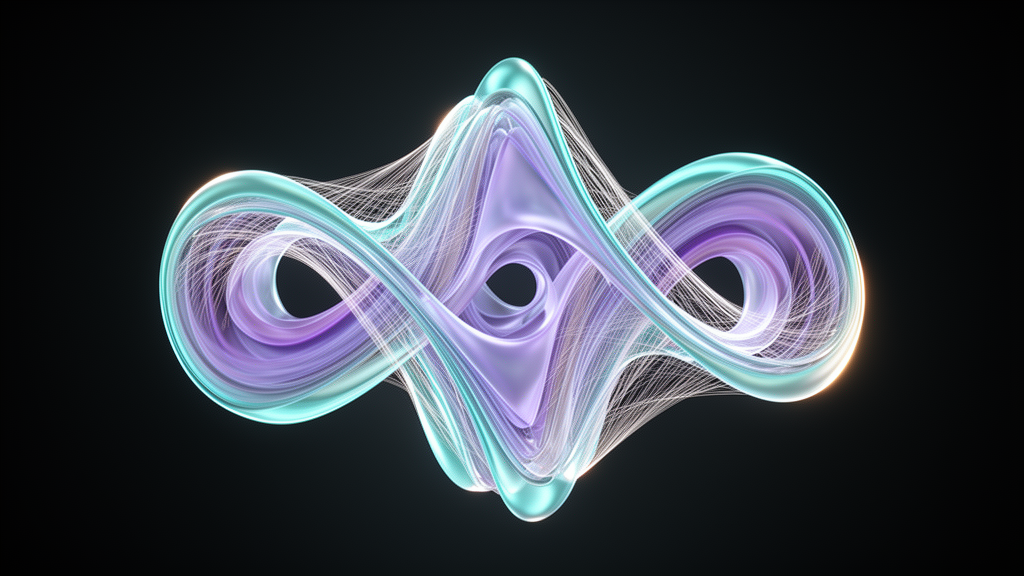
A theoretical physics study published in the Journal of High Energy Physics demonstrates that Hilbert functions explain the chamber-wise polynomial descriptions observed in line bundle cohomology on complete intersection Calabi-Yau threefolds. In the field of string phenomenology, determining line bundle cohomology dimensions on these threefolds serves as an important mathematical input. Prior research, relying upon direct extrapolation as well as machine-learning analyses of finite data sets, revealed that these cohomology dimensions frequently exhibit piecewise polynomial behavior across the Picard lattice, though the underlying mathematical basis for these observed chamber structures remained unexplained.

The new research explains this chamber structure by examining the Hilbert functions associated with non-trivial maps inside the Koszul spectral sequence. In this mathematical setting, Bott-Borel-Weil theory is first employed to determine the non-vanishing ambient cohomology groups. Once these groups are identified, the rank defects of the relevant Koszul maps are shown to be governed directly by the Hilbert functions of kernel or cokernel modules. This formulation converts previous empirical chamber formulas into explicit rank-defect statements that can be verified through rigorous mathematical analysis.

Using this Hilbert-function method, the author successfully recovers analytically almost all of the piecewise formulas that appear in the existing theoretical literature. For the remaining cases where direct analytic derivation is not achieved, the study proves finite-box certificate theorems applicable to infinite families of line bundles within specified regions. These certificate theorems demonstrate that establishing properties over defined, finite computational boxes is sufficient to guarantee the validity of the cohomology formulas across entire infinite families of bundles.

The investigation also uncovers new wall structures on certain complete intersection Calabi-Yau threefolds, refining the preliminary chamber decompositions that had been inferred from finite-range data sets. In addition, the author applies the identical theoretical framework to construct new line bundle cohomology formula libraries for two complete intersection threefolds that had not been analyzed previously in this manner. These findings indicate that Hilbert-function methods can provide promising, faster computational inputs for future string model-building scans based on line bundle constructions.

Subject of Research: Hilbert functions and line bundle cohomology on Calabi-Yau threefolds

Article Title: Hilbert functions and line bundle cohomology on CICY threefolds

Article References: Wang, J. (2026). Hilbert functions and line bundle cohomology on CICY threefolds. Journal of High Energy Physics, 2026(11), Article 182. https://doi.org/10.1007/jhep11(2026)182

Image Credits: AI Generated

DOI: 10.1007/JHEP11(2026)182

Keywords: Hilbert functions, line bundle cohomology, complete intersection Calabi-Yau, CICY threefolds, string phenomenology, Koszul spectral sequence, Bott-Borel-Weil theory, Picard lattice, rank defects, finite-box certificates, chamber decompositions, wall structures, formula libraries, string model-building, theoretical physics, cohomology dimensions

News Source: Denise Maddox. (November 20, 2026). Hilbert Functions Explain Line Bundle Cohomology Structures on Calabi-Yau Threefolds. Scienmag.

Tags: Bott-Borel-Weil theorychamber decompositionsCICY threefoldscohomology dimensionscomplete intersection Calabi-Yaufinite-box certificatesformula librariesHilbert functionsKoszul spectral sequenceline bundle cohomologyPicard latticerank defectsstring model-buildingstring phenomenologytheoretical physicswall structures
Share12Tweet7Share2ShareShareShare1

Related Posts

Cross-Attention Multimodal Framework Halves Climate Prediction Error Across Ukrainian Data

Cross-Attention Multimodal Framework Halves Climate Prediction Error Across Ukrainian Data

November 20, 2026
Nanostructured Oxide Fillers Stabilize Ionic Conductivity in Eutectic Salt Composites

Nanostructured Oxide Fillers Stabilize Ionic Conductivity in Eutectic Salt Composites

November 20, 2026

Buffalo Bone Mineral Alters PLLA and PCL Composite Printing Filament Properties

November 20, 2026

Biased Bubble Chain Navigation Helps Indoor Mobile Robots Accommodate Approaching Pedestrians

November 20, 2026

POPULAR NEWS

  • Biased Bubble Chain Navigation Helps Indoor Mobile Robots Accommodate Approaching Pedestrians

    Biased Bubble Chain Navigation Helps Indoor Mobile Robots Accommodate Approaching Pedestrians

    29 shares
    Share 12 Tweet 7
  • Thermophilic Fungus Engineered for High-Yield Bacterial Dipeptidyl Peptidase 4 Secretion

    29 shares
    Share 12 Tweet 7
  • Anterior Talar Osteotomy Corrects Equinus Deformity While Preserving Joint Congruence

    29 shares
    Share 12 Tweet 7
  • Biosensor Mouse Shows Mammary Defects Reversed by Estrogen and Genetic Crossing

    29 shares
    Share 12 Tweet 7

About

We bring you the latest biotechnology news from best research centers and universities around the world. Check our website.

Follow us

Recent News

Microelectronic Telemetry Chips Monitor Chemical Reactions Wirelessly Inside Test Tubes

Study Links METTL7B and SPP1 Signaling to Lung Squamous Cell Progression

Elastic Nanovesicle Gel Delivers Vardenafil to Relieve Peripheral Tissue Ischemia

Subscribe to Blog via Email

Enter your email address to subscribe to this blog and receive notifications of new posts by email.

Join 89 other subscribers
  • Contact Us

Bioengineer.org © Copyright 2023 All Rights Reserved.

Welcome Back!

Login to your account below

Forgotten Password?

Retrieve your password

Please enter your username or email address to reset your password.

Log In
No Result
View All Result
  • Homepages
    • Home Page 1
    • Home Page 2
  • News
  • National
  • Business
  • Health
  • Lifestyle
  • Science

Bioengineer.org © Copyright 2023 All Rights Reserved.