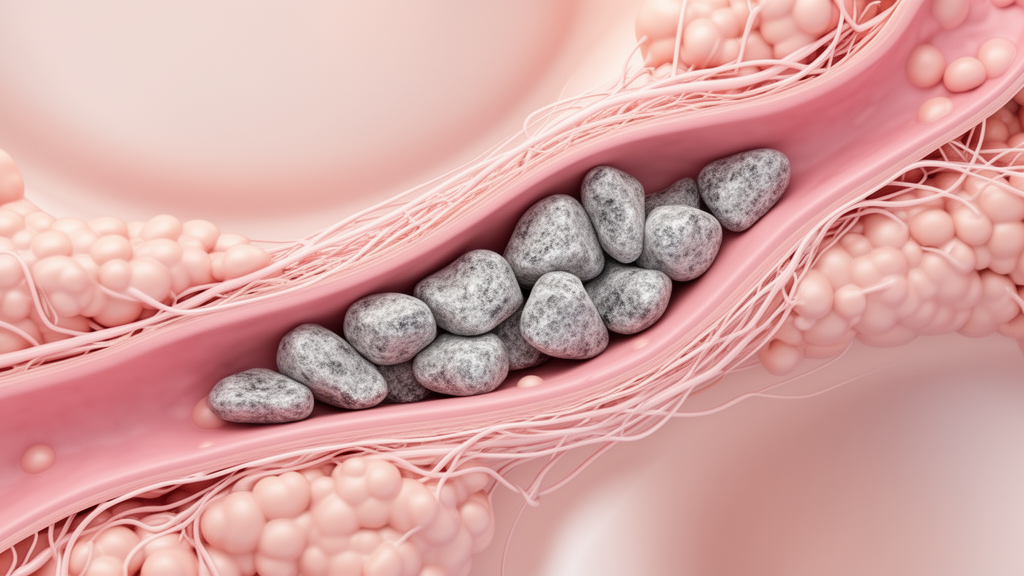
A clinical report detailing two breastfeeding patients who experienced recurrent lactational nipple duct obstruction accompanied by hard, mineralized concretions has provided the first documented elemental and macronutrient characterization of this condition in scholarly medical literature. Writing in the Journal of Mammary Gland Biology and Neoplasia, a research team led by Anna Sadovnikova, Susan Greenman, Bridget Young, and Casey Rosen-Carole examined two lactating individuals who presented with severe localized breast and nipple pain coupled with reduced milk flow. Both patients observed the formation of small, solid, stone-like objects obstructing the orifices of their nipple ducts, which, when manually removed or extruded, resulted in an immediate spontaneous release of pooled breast milk and rapid relief from acute engorgement. Although informal accounts of such obstructing particles, colloquially termed milk stones, have circulated in peer discussions and online communities, systematic investigations into their anatomical, histological, and biochemical origins had been entirely absent from peer-reviewed human clinical studies.
The first clinical case involved a 33-year-old primiparous patient who presented to a specialized breastfeeding medicine clinic at two months postpartum complaining of persistent nipple pain and what had initially been identified as a milk bleb. The patient had delivered a healthy, full-term infant who was gaining weight appropriately while receiving a combination of direct breastfeeding eight times daily and supplemental formula bottles four times daily. An earlier presentation at twenty days postpartum revealed erythema and a misshapen, lipstick-configured nipple following nursing sessions, leading to a diagnosis of infant ankyloglossia that was managed with a frenotomy procedure. Despite initial surgical improvement in parental comfort, the patient developed localized ductal complications that were managed with topical triamcinolone and saline nipple soaks, a historical practice that has since been discouraged in updated clinical guidelines from the Academy of Breastfeeding Medicine because of the risk of tissue maceration. One week after initiating topical therapy, the patient extruded a two-millimeter spheroid concretion from the ductal orifice, marking the onset of recurrent blockage episodes that resisted standard conservative interventions.
Over the subsequent weeks, the first patient experienced recurring bouts of ductal obstruction and localized breast tissue engorgement, frequently coinciding with infant nasal congestion, incomplete breast emptying, or diminished parental hydration. The individual described extracting between two and six spikey, shard-like slivers from the left nipple orifice and rounded stones from the right nipple, employing tweezers and manual compression despite medical advice cautioning against tissue manipulation. The manual extraction process was characterized as intensely painful, yet the dislodgement of the obstructing structures consistently prompted an immediate rush of sequestered milk and resolved the underlying pain. Dietary modifications undertaken by the patient, including the elimination of dairy, soy, and calcium-dense foodstuffs, as well as the concurrent intake of oral iron and escitalopram, did not alter the frequency of stone recurrences. However, the patient reported a noticeable reduction in obstructive episodes when daily water consumption was increased to at least 1.5 liters, until formal clinical follow-up concluded at fifteen months postpartum.
The second case documented a 38-year-old multiparous parent nursing a term singleton infant who presented at two months postpartum with persistent complaints of recurrent clogged milk ducts. Unlike the first individual, this patient nursed exclusively on demand without relying on regular breast pumping or aggressive breast massage, yet observed an escalating pattern of localized blockages that appeared to stem directly from the external opening of a specific nipple duct. Upon experiencing acute ductal fullness, the patient was able to gently extrude a firm, stone-like concretion from the nipple tip, an action that was not painful in itself and immediately relieved the upstream breast discomfort. An evaluation of the infant identified ankyloglossia and an inflexible upper lip contributing to a dysfunctional latch; however, because the infant demonstrated appropriate growth and milk transfer, surgical frenotomy was deferred. Similar to the first case, oral lecithin supplementation proved ineffective at curbing stone formation, whereas increased maternal fluid intake correlated with reduced occurrences. The patient observed that the recurrent obstructions ceased following the return of menses at four months postpartum, with only a single subsequent recurrence prior to weaning at eighteen months.
To elucidate the chemical nature of the retrieved foreign bodies, the researchers performed elemental analyses on the recovered stones and examined expressed milk samples provided by the patients. Mineral profiling of the stones was conducted using an inductively coupled plasma mass spectrometer following sample digestion in concentrated sixty-nine percent trace metal grade nitric acid, dilution in ultrapure eighteen-megohm water, and heat exposure to ninety-five degrees Celsius for one hour. Breast milk macronutrient composition was evaluated in duplicate using mid-infrared spectroscopy on a human milk analyzer after sonication. The compositional analysis revealed that calcium and sulfur represented the two most abundant elemental constituents within the obstructing stones of both individuals. Nevertheless, the investigators identified a statistically significant difference in the relative distribution of the ten most prevalent elements between the two stones, reflecting distinct structural profiles despite a shared clinical presentation.
Specifically, the concretion recovered from the second patient featured zinc and silicon as the third and seventh most abundant elements, whereas zinc and silicon ranked eleventh and twelfth in abundance in the stone retrieved from the first patient. When comparing the mineral composition of the breast milk samples, however, the researchers identified no statistically significant divergence in the relative abundance of the six most common elements between the two patients, yielding a p-value of 0.195. Nutritional evaluation of the milk from the second patient demonstrated elevated concentrations of fat, carbohydrate, and overall caloric density relative to normative values established for mature human milk, a pattern consistent with a higher proportion of hindmilk in the analyzed aliquot. In evaluating the calcium-to-phosphorus, magnesium-to-calcium, and sodium-to-calcium ratios of the specimens, the study authors observed marked differences from the compositional profiles documented in typical benign or malignant breast calcifications, indicating that ductal stones originate through a distinct biological mechanism.
In formulating a conceptual framework to explain the genesis of human lactational duct stones, the study synthesized insights from veterinary literature regarding teat canal obstruction in dairy cows as well as medical literature concerning salivary and lacrimal duct stones. The researchers proposed three interacting pathophysiological pathways that may foster an environment conducive to lithiasis: mechanical trauma at the nipple orifice, internal ductal inflammation leading to structural narrowing, and biochemical or microbiological alterations within the milk matrix itself. In dairy cattle, teat canal obstructions are overwhelmingly attributed to external physical insults, notably nonphysiological vacuum pressure from mechanical milking equipment, which induces hyperkeratosis, epithelial scarring, and mucosal avulsion. In lactating humans, comparable mechanical insults can stem from infant latch dysfunction, suboptimal pump flange sizing, or repetitive digital manipulation. These mechanical stresses may compromise the integrity of the epithelial lining at the ductal exit, triggering an inflammatory response that initiates concretion formation.
A critical divergence highlighted by the study centers on the differing functional anatomy between bovine and human mammary structures. While a cow’s teat features a single galactophore, the human nipple comprises multiple branching and coalescing ductules that converge into diverse external orifices at the apex. Consequently, an obstruction or inflammatory stricture affecting a single ductal terminus can exert unpredictable retrograde effects across several interrelated glandular segments, producing localized milk stasis and alveolar distension. The authors hypothesized that stone formation likely follows a multi-hit paradigm: superficial orifice trauma and microbial dysbiosis may converge with internal ductal microtrauma, such as that caused by high vacuum pumping prior to active milk ejection. Furthermore, drawing parallels to sialoliths—which frequently contain bacterial biofilms surrounded by proteins such as lactoferrin, lysozyme, and secretory immunoglobulin A—the researchers noted that microbial colonization and local protein-mineral interactions within stagnant human milk could provide the structural nidus necessary for stone crystallization.
The authors emphasized that several methodological constraints limit the broad clinical generalizability of their initial findings. The investigation was restricted to two individual patients, precluding definitive conclusions regarding the prevalence or universal etiology of lactational duct stones. Technical constraints prevented the execution of comprehensive structural microscopy, mineral crystallographic diffraction, bacterial culture, or microbial DNA sequencing on the retrieved concretions. Furthermore, full milk compositional and macronutrient data were accessible only for the second participant, restricting direct comparative analyses. Long-term natural history data were likewise constrained, as one participant was lost to subsequent clinical follow-up while the other weaned after an extended eighteen-month course. The authors also acknowledged that behavioral and psychological factors, including repetitive touching and manual tissue extraction, could potentially exacerbate ductal irritation and perpetuate recurrent obstruction in susceptible individuals.
To advance clinical understanding, the research team recommended that future investigations adopt prospective study designs that enroll larger cohorts of lactating individuals presenting with nipple duct obstructions. Recommended diagnostic protocols include collecting detailed lactation and pump histories, recording infant anatomical parameters, and employing noninvasive dermatoscopic imaging and optical biopsy methods, such as reflectance confocal microscopy, to evaluate the microarchitecture of the nipple epidermis. The authors also advised combining comprehensive mineral and macromolecular characterizations of recovered stones with 16S ribosomal RNA and internal transcribed spacer sequencing of the cutaneous, milk, and concretion microbiomes. Notably, the authors explicitly discouraged the use of invasive ductoscopy due to the tortuous anatomy and minute caliber of human nipple ductules, concluding that refined noninvasive imaging, systematic microbial profiling, and conservative clinical management remain the most viable paths for resolving this underrecognized cause of severe lactational pain.
Subject of Research: Clinical presentation and mineral composition of recurrent nipple duct stones during lactation
Article Title: Recurrent Nipple Duct Obstruction in Two Breastfeeding Patients: A Case Report and Discussion of the Underlying Pathophysiology
Article References: Sadovnikova, A., Greenman, S., Young, B., & Rosen-Carole, C. (2025). Recurrent Nipple Duct Obstruction in Two Breastfeeding Patients: A Case Report and Discussion of the Underlying Pathophysiology. Journal of Mammary Gland Biology and Neoplasia, 30(1), Article 2. https://doi.org/10.1007/s10911-025-09576-6
Image Credits: AI Generated
DOI: 10.1007/s10911-025-09576-6
Keywords: nipple duct obstruction, lactolith, breastfeeding, lactation pain, milk bleb, ductal calculi, mineral analysis, mass spectrometry, breast milk composition, calcium, sulfur, mastitis spectrum, ankyloglossia, nipple trauma, galactophore
News Source: Drew Townsend. (November 20, 2026). Case Study Analyzes Recurrent Obstructing Nipple Duct Stones in Two Lactating Patients. Scienmag.