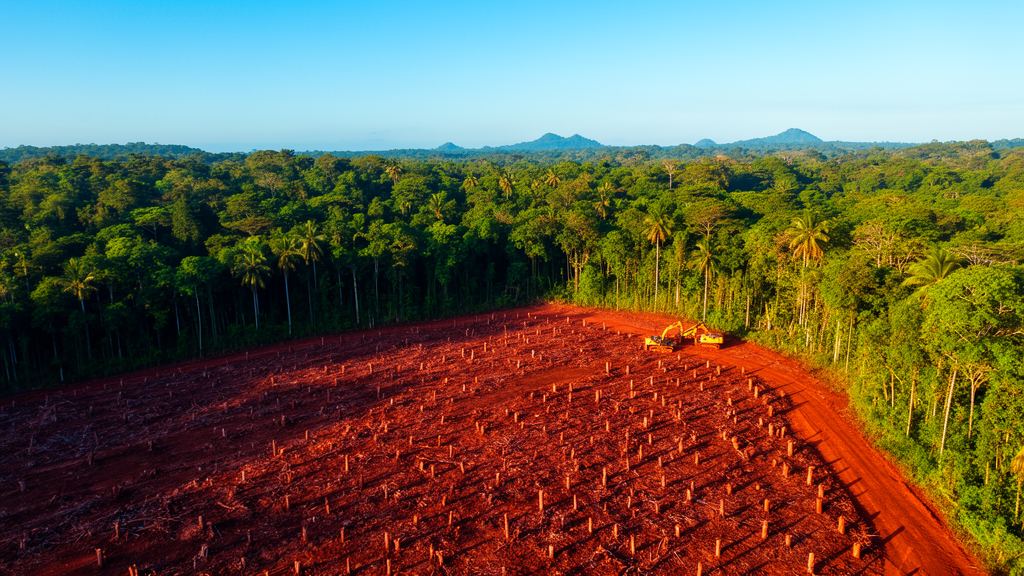
Forest clearing driven by Indonesia’s pulpwood sector has more than quadrupled between 2017 and 2022, reversing a period of dramatic conservation progress during which industry-linked deforestation had plummeted by ninety-five percent, according to a peer-reviewed study published in the journal Science. The comprehensive investigation, directed by assistant professor Robert Heilmayr of the Environmental Markets Lab at the University of California, Santa Barbara, alongside an international team of researchers from Indonesia, the United States, France, and Spain, demonstrates that the dramatic drop in forest loss achieved during the 2010s is unraveling as mill capacity surges and corporate commitments weaken.
Historically, during the 1990s and early 2000s, an influx of newly constructed pulp mills turned the forestry sector into one of the most severe ecological threats facing Indonesia’s primary natural ecosystems. Rapid clear-cutting destroyed critical habitat for endangered wildlife, ignited persistent land tenure conflicts with local and customary communities, and exposed extensive tropical peatlands to devastating drainage and fire hazards. The resulting regional environmental crisis culminated in the catastrophic 2015 fire season, which incinerated more than 6.4 million acres across the archipelago, blanketing Southeast Asia in dense, toxic smoke and sparking widespread public outcry that compelled both government officials and commercial operators to implement structural reforms.
Between 2011 and 2017, the intersection of multiple conservation mechanisms generated an unprecedented ninety-five percent decline in pulp-associated deforestation across the nation. The research team evaluated how four interconnected drivers catalyzed this downturn: targeted international market incentives, domestic regulatory protections, notable productivity gains on established plantations, and voluntary zero-deforestation commitments adopted by major industrial producers. Co-author Jason Jon Benedict emphasized that no individual policy accounted for the reduction independently; rather, an all-of-the-above framework permitted existing plantations to generate increased timber volumes per hectare without encroaching into adjacent natural stands.
A critical pillar of this temporary conservation success was the adoption of voluntary corporate moratoriums by the nation’s dominant industrial pulp conglomerates. Asia Pulp and Paper enacted a pledge to end deforestation across its supply base in 2013, followed by Asia Pacific Resources International Limited in 2015. Because these two commercial entities oversee the overwhelming majority of domestic output, their joint pledges established Indonesia’s pulp industry as the world’s first tropical commodity sector where national production was entirely enveloped by formal zero-deforestation commitments, aligning private corporate governance with public peatland and forest protection policies.
To evaluate the real-world execution and integrity of these pledges over time, the researchers constructed a multi-decadal empirical dataset spanning 2001 through 2022 by combining remote sensing imagery with commercial supply-chain logs. Led by remote sensing specialist David Gaveau of The TreeMap, the authors mapped the spatial expansion, clearing, and cyclical harvesting of industrial acacia and eucalyptus plantations, which exhibit distinct optical signatures from orbit. This spatial tracking was systematically coupled with corporate records to determine the exact concession areas that channel wood fiber to operational processing mills and to trace the complex parent corporate networks governing those tracts.
The empirical findings document a stark operational reversal, with annual forest clearing for pulp plantations escalating from approximately 13,838 acres in 2017 to 60,047 acres in 2022. This surge represents more than a fourfold expansion in land clearance over a five-year window, ultimately surpassing the annual deforestation rate attributed to industrial oil palm cultivation by 2022. Crucially, the spatial and supply-chain analysis determined that more than half of the pulp-driven forest loss recorded between 2015 and 2022 transpired on concession lands suspected of being controlled by the corporate parent groups of Asia Pulp and Paper and Asia Pacific Resources International Limited.
Future ecological pressures are projected to escalate substantially as industrial operators commit billions of dollars in capital investments to expand nationwide processing infrastructure. The pulp and paper sector is currently enlarging mill processing capacity by roughly eighty percent to satisfy mounting international consumer demand for paper, tissue, packaging, and wood-derived rayon textiles. Even when factoring in continuous improvements in agricultural timber yields on existing concessions, the authors project that feeding these expanded mills could trigger roughly 345,947 additional acres of natural forest destruction—exceeding the geographic footprint of Los Angeles—alongside the conversion of nearly 494,210 acres of delicate peatland.
The researchers highlight that recent statutory deregulation in Indonesia has exacerbated vulnerabilities across previously protected landscapes. A sweeping deregulatory statute enacted in 2020 dismantled key environmental oversight measures, while administrative authorities subsequently granted new concessions that permit selectively logged natural forests to undergo complete clear-cutting and industrial plantation conversion. As Christopher Barr of Woods and Wayside International noted, the massive capital outlay dedicated to new production capacity will inevitably exert intense, long-term procurement pressures on surrounding timberlands, placing commercial survival in direct conflict with corporate sustainability declarations.
In addition to structural economic expansions and legal rollbacks, the team identified critical operational loopholes that allow producers to evade conservation targets while technically claiming compliance. Both Asia Pulp and Paper and Asia Pacific Resources International Limited initially established strict cut-off dates of 2013 and 2015, respectively, stipulating that wood harvested from tracts cleared after those thresholds would be permanently barred from processing facilities. However, both entities retroactively shifted their formal cut-off baselines to the end of 2020, effectively legitimizing suppliers that engaged in extensive deforestation throughout the intervening years and eroding the credibility of corporate conservation frameworks.
These findings illustrate that conservation progress anchored upon voluntary corporate declarations and impermanent public policies remains exceptionally fragile when confronted with rising commodity demand and shifting political landscapes. Timer Manurung of Auriga Nusantara and lead author Robert Heilmayr conclude that safeguarding carbon-rich peatlands and preventing transboundary air pollution requires verifiable, independent supply-chain monitoring, unambiguous ownership disclosure, and binding legal protections that cannot be unilaterally rewritten or weakened when market pressures intensify.
The global commodity trade underpins the expanding pressure on Indonesian ecosystems, as wood pulp supplies everyday household goods sold across international markets. Wood pulp is produced by breaking down timber into its fibers, which manufacturers subsequently press into paper, tissue, and packaging, or spin into thread to produce rayon, a soft, breathable fabric widely utilized in clothing. Developing industrial plantations to satisfy this demand has frequently entailed clearing centuries-old tropical forests and carbon-rich peatlands. These peatlands are distinct wetlands composed of thick layers of partially decayed plant material that store immense volumes of carbon. When peatlands are cleared, drained, or burned, they release large quantities of stored carbon into the atmosphere, producing pervasive smoke that has triggered devastating regional health impacts and worsened air pollution across Southeast Asia.
Because voluntary corporate pledges cannot be enforced by government authorities, rigorous independent monitoring remains indispensable for verifying whether conservation commitments are maintained in practice. To reconstruct the sector’s operational growth and evaluate its environmental impact from 2001 to 2022, the international research team assembled satellite imagery alongside commercial supply-chain documentation. David Gaveau, founder of The TreeMap and leader of the remote sensing analysis, pointed out that industrial acacia and eucalyptus plantations can be detected relatively easily from orbit. By systematically tracking where these commercial plantations expanded, replaced natural forests, and were subsequently harvested year after year, the researchers established an empirical record of land conversion. The scientists complemented these satellite observations by analyzing supply records to identify which specific concessions provisioned individual mills, while tracking the corporate groups linked to them. Additionally, the team quantified the pace of plantation yield improvements to project how much land future processing expansions will consume.
Moving forward, the researchers plan to investigate the precise mechanisms through which industrial producers may be sidestepping their commitments to end deforestation. Two primary mechanisms stand out in their ongoing investigation. The first involves opaque ownership and sourcing structures that obscure which corporate entities are directly responsible for forest clearing. As Timer Manurung of Auriga Nusantara highlighted, untangling corporate ownership and tracing which concession boundaries feed specific processing facilities is critical to determining compliance. The second mechanism centers on regulatory loopholes built directly into corporate sustainability pledges. Under standard commitments, companies set explicit cut-off dates designed to exclude timber harvested from land cleared after that specific threshold. However, both Asia Pulp and Paper and Asia Pacific Resources International Limited originally established cut-off dates of 2013 and 2015, only to move those benchmarks to the end of 2020. This retrospective modification effectively reclassified suppliers that cleared natural forest during the intervening years as compliant, undermining the credibility of private pledges and creating perverse incentives across the supply chain.
These dynamics offer critical lessons that extend well beyond Indonesia, illustrating how protections reliant on corporate declarations and short-term government measures can rapidly unravel when economic demands or domestic politics shift. As lead author Robert Heilmayr observed, Indonesia has demonstrated that dramatic declines in deforestation are attainable, yet this progress remains exceptionally fragile as global demand continues to rise. Maintaining intact forests and carbon-rich peatlands over the long term will require continuous, sustained dedication not only from regulatory governments and logging producers, but also from international commercial buyers purchasing paper, tissue, and viscose products. To ensure zero deforestation across supply chains, Christopher Barr emphasized that industrial producers must submit to independent monitoring and accept firm sustainability obligations that cannot be rewritten after the fact.
Subject of Research: Remote sensing and supply-chain analysis of deforestation trends in Indonesia's pulp sector
Article Title: Indonesia’s pulp sector risks reversing progress toward zero deforestation
Article References: Indonesia’s pulp sector risks reversing progress toward zero deforestation. Original publication (Bibliographic details unavailable.)
Image Credits: AI Generated
DOI: Not provided
Keywords: Indonesia, pulp and paper industry, deforestation, remote sensing, peatlands, Science journal, Robert Heilmayr, emLab, The TreeMap, Auriga Nusantara, Asia Pulp & Paper, APRIL, acacia plantations, eucalyptus plantations, zero-deforestation pledges, supply chain tracking, wood pulp, peatland conversion
News Source: Denise Maddox. (November 20, 2026). Indonesian Pulp Deforestation Quadrupled After Prior Declines, Remote Sensing Reveals. Scienmag.