In an experimental cadaveric evaluation of total knee arthroplasty, biomechanical researchers found that modern patella-friendly femoral components replicated native patellofemoral tracking more faithfully than traditional prosthetic designs across varied quadriceps force directions, though the wider geometry presented unexpected stability limits during simulated extreme medial loading. Patellofemoral complications including anterior knee pain, patellar maltracking, subluxation, patellar clunk, crepitus, and component revision continue to affect between 1.4 percent and 12.8 percent of knee replacement procedures. While kinematic alignment surgical techniques strive to restore natural prepathological joint lines and preserve each patient’s individual quadriceps vector, surgeons historically relied on standard femoral components engineered with a fixed six-degree trochlear groove angle relative to the femoral mechanical axis. The biomechanical study directly tested how pairing kinematic alignment with traditional versus modified implant geometries alters patellar mechanics when the extensor mechanism experiences shifting muscular pull.
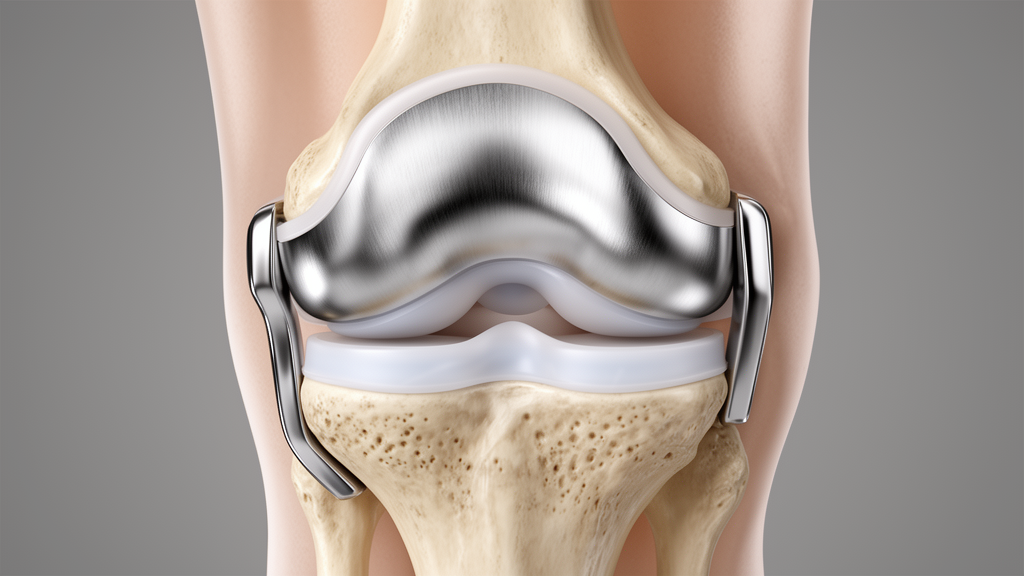
To rigorously investigate these kinematic interactions without inter-patient confounders, the investigative team obtained twelve paired fresh-frozen human cadaveric lower limbs from six donors through an international tissue donation program, operating under ethical approval granted by the Bioethical Committee of the University of Bologna. Each donor contributed both limbs, allowing investigators to execute a paired comparison where one knee received a traditional medial-pivot femoral component while the contralateral knee received a patella-friendly medial-pivot design from the same manufacturer. The traditional component featured a trochlear opening set at approximately six degrees relative to the femoral mechanical axis, whereas the patella-friendly design provided a wider lateral opening oriented at 20.5 degrees alongside a funnel-shaped groove and an elevated lateral flange intended to guide patellar engagement during flexion. Kinematic alignment was executed across all specimens using patient-specific cutting guides generated from computed tomography scans, and the patella was left unresurfaced.
Biomechanical testing occurred inside a custom-engineered experimental rig designed to evaluate patellofemoral kinematics during passive knee flexion and controlled quadriceps muscle tension. Each specimen was mounted with the femur rigidly anchored while the tibia hung freely suspended under gravity, allowing joint mechanics alone to dictate unconstrained degrees of freedom as tibial flexion was induced with a pushing rod. The extensor mechanism, joint capsule, and ligaments were meticulously preserved, with the quadriceps tendon sutured to transfer controlled loads from static weights guided across adjustable pulleys. The investigators tracked three-dimensional bone movements using an optoelectronic capture apparatus comprising six Bonita 10 high-speed cameras and two Vero cameras, registering reflective marker arrays to skeletal anatomical reference frames derived from computed tomography segmentations via point-to-surface distance minimization.
The experimental protocol systematically challenged each native and operated knee through thirty distinct biomechanical test combinations, spanning ten quadriceps vector directions across three separate loading magnitudes. The applied extensor force was evaluated at 20 Newtons to serve as a minimal preload maintaining contact, alongside active muscular simulation levels of 160 Newtons and 280 Newtons. Frontal plane alignments modulated the quadriceps vector across five angles encompassing neutral, positive and negative six degrees, and positive and negative twelve degrees, capturing a realistic twenty-one-degree anatomical spectrum of clinical Q angles. Sagittal orientations incorporated both a neutral vector and a five-degree anterior tilt. Each condition underwent three repetitive flexion-extension cycles from full extension to 120 degrees of deep flexion, allowing non-parametric statistical comparisons and linear mixed-effects modeling to isolate design interactions across every individual degree of joint motion.
Under the baseline reference condition, defined by a 20-Newton load directed along neutral frontal and sagittal axes, statistical analysis demonstrated no significant differences in patellofemoral kinematics between native joints and either prosthetic design. Despite the absence of formal statistical significance due to interspecimen variability, observable kinematic trajectories showed distinct geometric deviations. In varus-valgus rotation, native patellae exhibited a rotational excursion of 14.6 degrees, while knees fitted with the traditional femoral design displayed an expanded rotational excursion reaching 35.1 degrees. In contrast, the patella-friendly design restricted varus-valgus rotational excursion to 20.5 degrees, mirroring native behavior far more closely. Additionally, native knees demonstrated an early medial translation during initial flexion that was attenuated in the patella-friendly group and completely vanished in traditional implants, which instead initiated immediate lateral patellar translation.
Altering the medial-lateral direction of the applied quadriceps pull emerged as the dominant experimental factor driving patellofemoral tracking anomalies in both implant designs over the entire flexion arc. When the extensor pull was redirected laterally, the patella was pulled into a valgus orientation, assumed an externally tilted posture, and shifted laterally while the knee remained extended, subsequently transitioning into varus rotation and neutral tilt during deep flexion. Medially oriented force vectors inverted this behavior, displacing the patella into a varus and internally tilted alignment in extension before rotating into valgus. Crucially, this rotational trajectory inverted consistently around sixty degrees of knee flexion across specimens, highlighting a biomechanical stabilization threshold where increased trochlear conformity and bony constraint begin overriding frontal force vectors.
Linear mixed-effects modeling revealed that the traditional femoral component induced persistent, statistically significant kinematic departures from native knee behavior across almost the entire flexion cycle. The traditional implant showed significant deviations from native varus-valgus rotation across all flexion angles, accompanied by significant interaction terms with quadriceps vector directions up to deep flexion. Patellar internal-external tilt in traditional components deviated significantly from native motion at all angles below full flexion, demonstrating strong interactions with both six-degree and twelve-degree medial force vectors. For medial-lateral translation, traditional implants generated systematic kinematic divergence beyond thirty degrees of flexion. The rigid six-degree trochlear orientation optimized for standardized mechanical alignment proved poorly suited to accommodate patient-specific Q angle orientations restored by kinematic alignment surgery.
Conversely, the patella-friendly design demonstrated markedly superior kinematic fidelity, preserving native-like tracking patterns under neutral, moderate lateral, and moderate medial quadriceps loading conditions. Patellar internal-external tilt showed no statistically significant differences compared to native knee mechanics throughout the range of motion. Medial-lateral translation in patella-friendly knees matched native baseline values across early extension, displaying measurable divergence only after thirty degrees of mid-flexion. The funnel-shaped trochlear groove and broader 20.5-degree lateral entrance provided unconstrained movement in early extension while progressively guiding patellar tracking into deeper flexion, successfully neutralizing tracking errors provoked by lateralized quadriceps force vectors commonly observed in patients presenting with valgus limb morphotypes.
However, the biomechanical evaluation identified a critical mechanical vulnerability inherent to the open geometry of the patella-friendly component during simulated extreme medial force orientation. When subjected to a twelve-degree medial quadriceps vector, three out of six knees fitted with the patella-friendly component suffered extensor mechanism instability that rendered them untestable, exhibiting abnormal lateral displacement along the outer trochlear rim and failing to engage the central groove. Two native knees from a single donor similarly could not undergo twelve-degree medial loading due to tissue tearing risks. In contrast, every traditional femoral implant completed the extreme twelve-degree medial trials without dislocation or mechanical failure, relying on its steeper, narrower groove to provide mechanical containment even though doing so imposed substantial kinematic deviations from native motion.
The study authors highlighted several methodological limitations, noting that cadaveric rigs utilize static, simplified single-vector quadriceps representations that omit dynamic neuromuscular feedback and multi-muscle co-contractions of the vastus medialis and lateralis. Applied muscle forces remained considerably lower than physiological in vivo loading, and testing focused entirely on native, unresurfaced patellae without quantifying retropatellar contact stress distributions. Nevertheless, the experimental findings establish that femoral component geometry strongly interacts with patient-specific extensor line-of-action after kinematically aligned arthroplasty. While patella-friendly components offer superior restoration of physiological patellar mechanics for typical anatomies and valgus alignments, their reduced medial constraint underscores the necessity of tailoring implant geometry to preoperative limb alignment rather than adopting a uniform component across all surgical candidates.
Subject of Research: Biomechanical comparison of femoral component design and quadriceps loading on patellofemoral kinematics after total knee arthroplasty
Article Title: Effect of femoral component design and quadriceps load on patellofemoral kinematics after total knee arthroplasty: an in vitro cadaveric study
Article References: Maioli, V., Diquattro, E., Conconi, M., Castagnini, F., Traina, F., Sancisi, N., & Cristofolini, L. (2026). Effect of femoral component design and quadriceps load on patellofemoral kinematics after total knee arthroplasty: an in vitro cadaveric study. Knee Surgery & Related Research, 38(1), Article 9. https://doi.org/10.1186/s43019-026-00308-6
Image Credits: AI Generated
DOI: 10.1186/s43019-026-00308-6
Keywords: total knee arthroplasty, patellofemoral kinematics, kinematic alignment, femoral component design, patella-friendly implant, quadriceps vector, Q angle, orthopedic biomechanics, cadaveric study, trochlear groove, patellar tracking, knee joint mechanics, varus-valgus rotation, medial pivot knee, extensor mechanism, motion capture, surgical alignment, knee kinematics
News Source: Ophelia Keating. (November 20, 2026). Patella Friendly Knee Implants Better Replicate Native Motion but Face Medial Limits. Scienmag.