• HOME
  • NEWS
  • EXPLORE
    • CAREER
      • Companies
      • Jobs
    • EVENTS
    • iGEM
      • News
      • Team
    • PHOTOS
    • VIDEO
    • WIKI
  • BLOG
  • COMMUNITY
    • FACEBOOK
    • INSTAGRAM
    • TWITTER
Thursday, November 19, 2026
BIOENGINEER.ORG
No Result
View All Result
  • Login
  • HOME
  • NEWS
  • EXPLORE
    • CAREER
      • Companies
      • Jobs
        • Lecturer
        • PhD Studentship
        • Postdoc
        • Research Assistant
    • EVENTS
    • iGEM
      • News
      • Team
    • PHOTOS
    • VIDEO
    • WIKI
  • BLOG
  • COMMUNITY
    • FACEBOOK
    • INSTAGRAM
    • TWITTER
No Result
View All Result
Bioengineer.org
No Result
View All Result
Home NEWS Science News Health

Systematic Review Finds Computer Vision In Mosquito Control Lacks Operational Testing

by
November 19, 2026
in Health
Reading Time: 2 mins read
0
Systematic Review Finds Computer Vision In Mosquito Control Lacks Operational Testing

Systematic Review Finds Computer Vision In Mosquito Control Lacks Operational Testing

Share on FacebookShare on TwitterShare on LinkedinShare on RedditShare on Telegram

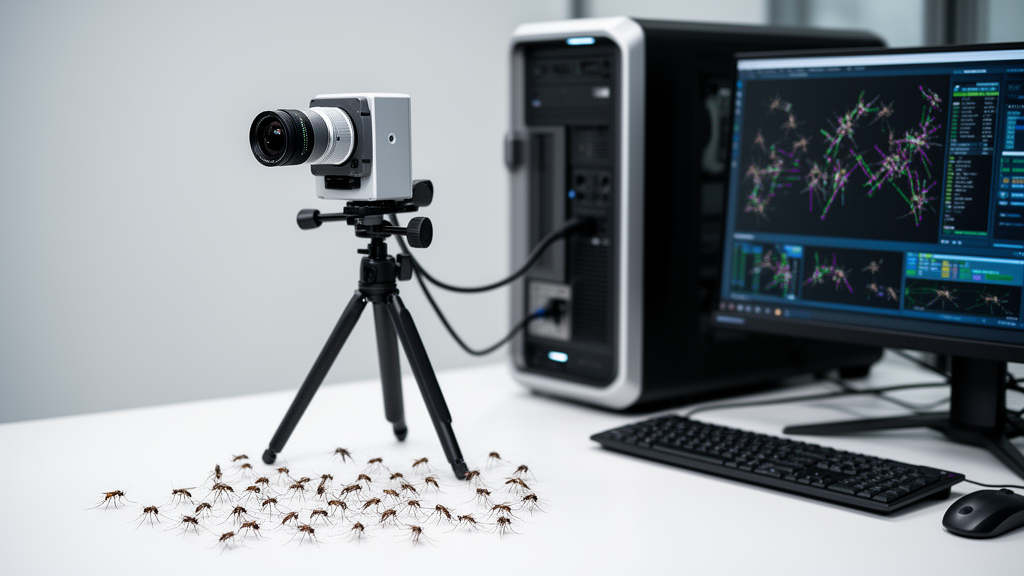
A systematic review assessing the role of computer vision in mosquito-borne disease management has revealed that while research has expanded substantially, the majority of developed models lack prospective validation and evaluation in operational settings. Vector surveillance, pathogen detection, and clinical diagnosis represent vital components of disease control, but conventional approaches are constrained by labor-intensive workflows and a lack of trained specialists. Automated visual inspection techniques have therefore emerged across the management pipeline to address these capacity constraints.

Following the PRISMA 2020 guidelines, researchers Song-Quan Ong, Branko Brkljač, Tamara Djerdj, Maria Cholvi, Angeliki F. Martinou, Jessica J. Williams, Domagoj K. Hackenberger, and Branimir K. Hackenberger conducted a comprehensive literature search across PubMed, Scopus, and IEEE Xplore. The team screened 1,521 candidate records published between January 1, 2010, and December 31, 2025. A total of 650 studies met the inclusion criteria and underwent descriptive quantitative analysis and qualitative thematic synthesis.

The review established that diagnostic applications formed the focus of most published studies, particularly the detection of Plasmodium parasites in malaria microscopy. Over the sixteen-year survey window, research activity increased significantly as analytical methods evolved from traditional image processing pipelines toward advanced deep learning systems. Algorithmic strategies transitioned through convolutional neural networks, You Only Look Once (YOLO)-based object detectors, and modern transformer architectures.

More recent investigations expanded beyond microscopic diagnosis into vector ecology and surveillance. Researchers deployed deep learning algorithms for mosquito species classification, utilized unmanned aerial vehicles and satellite imaging for environmental habitat mapping, and developed smartphone-based platforms for non-invasive diagnostic imaging. Furthermore, emerging investigations explored three-dimensional mosquito behavioral analysis alongside surveillance networks enabled by the Internet of Things.

Despite these technological advancements, the authors identified major methodological hurdles that impede translational readiness into public health practice. Most evaluated models were trained and tested on small datasets from limited geographic areas without external validation. Because few algorithms were evaluated within operational field environments, public health translation remains restricted until models demonstrate reliable performance under real-world conditions.

Subject of Research: Applications of computer vision in mosquito-borne disease research and control

Article Title: Applications of computer vision in mosquito-borne diseases: A systematic review

Article References: Ong, S.-Q., Brkljač, B., Djerdj, T., Cholvi, M., Martinou, A. F., Williams, J. J., Hackenberger, D. K., & Hackenberger, B. K. (2026). Applications of computer vision in mosquito-borne diseases: A systematic review. PLOS Neglected Tropical Diseases, 20(11), e0014870. https://doi.org/10.1371/journal.pntd.0014870

Image Credits: AI Generated

DOI: 10.1371/journal.pntd.0014870

Keywords: computer vision, mosquito-borne diseases, systematic review, PRISMA guidelines, malaria microscopy, Plasmodium detection, vector surveillance, pathogen detection, deep learning, convolutional neural networks, YOLO object detectors, transformer architectures, mosquito species classification, habitat mapping, unmanned aerial vehicles, smartphone diagnostic imaging, behavioral analysis, Internet of Things

News Source: Blake Davidson. (November 19, 2026). Systematic Review Finds Computer Vision In Mosquito Control Lacks Operational Testing. Scienmag.


Tags: Behavioral analysisComputer Visionconvolutional neural networksdeep learninghabitat mappingInternet of Thingsmalaria microscopymosquito species classificationmosquito-borne diseasespathogen detectionPlasmodium detectionPRISMA guidelinessmartphone diagnostic imagingsystematic reviewTransformer architecturesunmanned aerial vehiclesvector surveillanceYOLO object detectors
Share12Tweet7Share2ShareShareShare1

Related Posts

ChatGPT Blended Learning Boosts Surgical Intern Scores in Exploratory Trial

ChatGPT Blended Learning Boosts Surgical Intern Scores in Exploratory Trial

November 19, 2026
Bovine Milk Vesicles Show Broad Potential for Oral Drug Delivery and Gene Therapy

Bovine Milk Vesicles Show Broad Potential for Oral Drug Delivery and Gene Therapy

November 19, 2026

Fasting Glycemia Profiles in Gestational Diabetes Link to Elevated Birthweight Distributions

November 19, 2026

Early Macular Leakage Resolution Linked to Extended Faricimab Dosing in Retinal Vein Occlusion

November 19, 2026

POPULAR NEWS

  • Study Reveals Outflow of Early-Career Japanese Pharmacists From Hospitals to Pharmacies

    Study Reveals Outflow of Early-Career Japanese Pharmacists From Hospitals to Pharmacies

    29 shares
    Share 12 Tweet 7
  • Mouse and Human Studies Show GATA2 Actively Maintains Müllerian Ducts

    29 shares
    Share 12 Tweet 7
  • Study Identifies Factors Linked to Women’s Health Decision Autonomy in Zambia

    29 shares
    Share 12 Tweet 7
  • Dual-Network Decomposition Model Improves Carbon Price Prediction Intervals Across Chinese Markets

    29 shares
    Share 12 Tweet 7

About

We bring you the latest biotechnology news from best research centers and universities around the world. Check our website.

Follow us

Recent News

ChatGPT Blended Learning Boosts Surgical Intern Scores in Exploratory Trial

Bovine Milk Vesicles Show Broad Potential for Oral Drug Delivery and Gene Therapy

Fasting Glycemia Profiles in Gestational Diabetes Link to Elevated Birthweight Distributions

Subscribe to Blog via Email

Enter your email address to subscribe to this blog and receive notifications of new posts by email.

Join 89 other subscribers
  • Contact Us

Bioengineer.org © Copyright 2023 All Rights Reserved.

Welcome Back!

Login to your account below

Forgotten Password?

Retrieve your password

Please enter your username or email address to reset your password.

Log In
No Result
View All Result
  • Homepages
    • Home Page 1
    • Home Page 2
  • News
  • National
  • Business
  • Health
  • Lifestyle
  • Science

Bioengineer.org © Copyright 2023 All Rights Reserved.