A dual-modified perovskite catalyst achieved 90 percent methane conversion at 514 °C during catalytic combustion experiments, demonstrating performance comparable to certain noble metal-based catalysts. The synthesized material, designated as La0.9Sr0.1FeO3-0.01PVP, was developed to address the low catalytic activity of conventional perovskites and the high activation energy barrier that typically hinders the catalytic combustion of low-concentration coal mine ventilation air methane.
The research team synthesized strontium-substituted lanthanum ferrite perovskites using a citric acid sol–gel preparation route. To enhance the material, the researchers implemented a dual composite modification strategy that combined strontium doping at the perovskite A-site with the introduction of polyvinylpyrrolidone, or PVP, as an in-situ pore-forming agent.
During the experimental investigation, the authors systematically evaluated how variations in the strontium doping molar ratio and the mass fraction of PVP influenced the resulting crystal structure, micro-morphology, and methane combustion catalytic performance. Among the tested compositions, the sample formulated with a strontium substitution ratio yielding La0.9Sr0.1FeO3 and a 0.01 mass fraction of PVP demonstrated the optimal overall catalytic performance and strong lean-methane combustion activity.
The experimental results revealed a pronounced synergistic effect between the strontium doping and the PVP-assisted structural modification. The substitution of trivalent lanthanum ions at the A-site by divalent strontium ions creates an internal charge imbalance within the perovskite lattice. This charge imbalance directly promotes the transformation of divalent iron species into highly active trivalent and tetravalent iron species, which accelerate catalytic combustion.
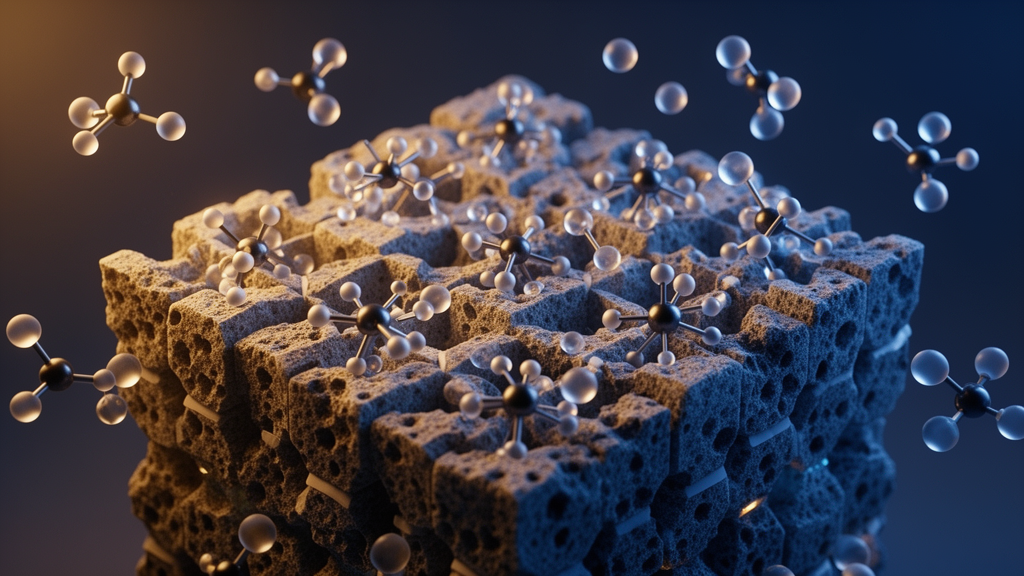
Simultaneously, the incorporation of PVP provided a physical structural benefit through high-temperature calcination. As the catalyst underwent thermal processing, the thermal decomposition of the polymer enabled in-situ pore formation throughout the material. This pore network enlarged the specific surface area of the catalyst and enhanced the mass transport rate of diffusing methane molecules during the reaction.
Alongside its high catalytic activity, the optimized La0.9Sr0.1FeO3-0.01PVP material demonstrated prominent long-term stability under combustion conditions. The authors reported that this dual composite modification strategy establishes a viable technical approach for utilizing low-cost perovskite catalysts in exhaust gas treatment systems and the resource utilization of ventilation air methane from coal mines.
Subject of Research: Catalytic combustion of low-concentration methane over modified perovskite catalysts
Article Title: Synergistic Effect of Sr Doping and PVP Modification on Enhancing the Catalytic Combustion Performance of Methane over LaFeO3
Article References: Song, X., Xu, K., Liu, X., Yang, Y., Zhou, W., Zhang, J., Wang, M., & Huo, P. (2026). Synergistic Effect of Sr Doping and PVP Modification on Enhancing the Catalytic Combustion Performance of Methane over LaFeO3. Catalysis Letters, 156(12), Article 336. https://doi.org/10.1007/s10562-026-05582-3
Image Credits: AI Generated
DOI: 10.1007/s10562-026-05582-3
Keywords: methane combustion, perovskite catalysts, LaFeO3, strontium doping, polyvinylpyrrolidone, ventilation air methane, citric acid sol-gel route, pore-forming agent, catalytic activity, mass transport, charge imbalance, specific surface area, exhaust gas treatment, calcination, long-term stability, lean methane
News Source: Bethany Barker. (November 19, 2026). Perovskite Catalyst Achieves Ninety Percent Methane Conversion at 514 Degrees. Scienmag.