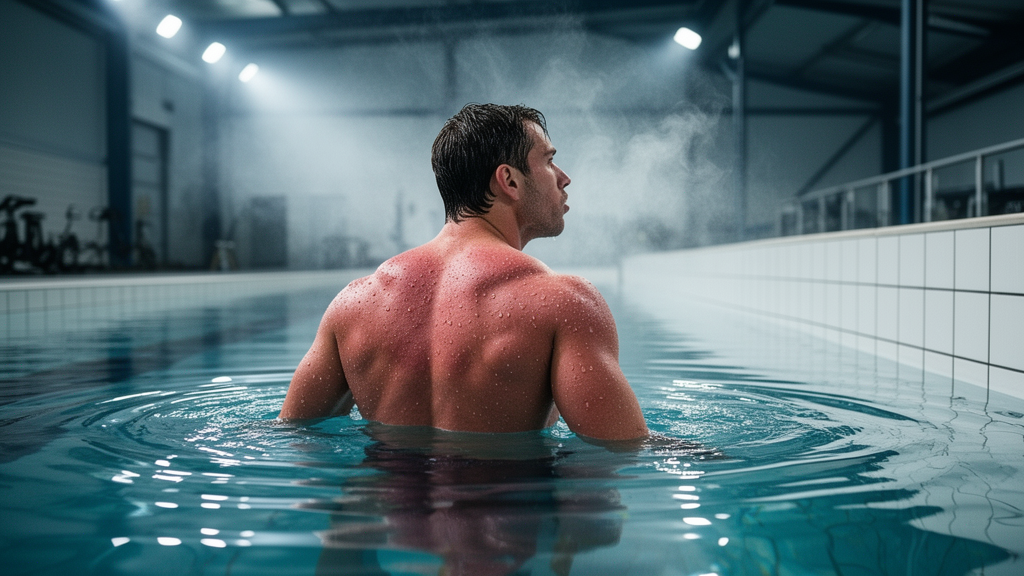
In an experimental study published in the Journal of Thermal Biology, researchers found that recreationally active adults required more than twice as long to cool down following intense interval bouts than after low-intensity exertion.
Conducted by a research team led by Associate Professor Chansol Hurr from the Department of Physical Education at Jeonbuk National University in South Korea, the investigation evaluated post-exercise thermoregulation in 15 recreationally active adults. The trial examined how differing modes of preceding exertion in hot conditions alter physiological responses during subsequent water immersion, an intervention widely utilized to relieve heat stress and reduce cardiovascular strain.
During the experimental trials, participants completed two distinct exercise protocols in a hot environment until their core body temperature reached 39.5°C or until they halted due to fatigue. In the low-intensity condition, subjects walked on a treadmill while wearing a non-permeable poncho engineered to restrict sweat evaporation and hinder evaporative heat loss. In contrast, the high-intensity interval protocol required participants to alternate between three minutes of walking and two minutes of running on a treadmill.
Upon reaching the target core temperature threshold or stopping due to exhaustion, participants were immersed in temperate water maintained at 20°C until their core temperature declined to 37.5°C. Although peak core temperatures and heating rates were similar across both exercise conditions, the subsequent cooling phase demonstrated substantial differences. Cooling took an average of approximately 10 minutes following the low-intensity trial, whereas participants required around 23 minutes after completing the high-intensity interval regimen.
Associate Professor Hurr emphasized that entering the water at identical core temperatures does not guarantee equivalent cooling timelines, noting that what the body was doing beforehand significantly alters recovery dynamics. The researchers observed that high-intensity interval exercise generated markedly greater metabolic and cardiovascular strain among participants compared to low-intensity walking.
During the subsequent water immersion phase, individuals who completed the interval protocol displayed lower skin temperatures and reduced cutaneous vascular conductance, a physiological marker of blood flow to the skin. The authors noted that these vascular and thermal differences may help explain the slower cooling response observed after interval exercise, although the precise underlying mechanisms remain uncertain.
While cooling rates fell within the commonly cited acceptable range under both conditions, the total duration required to lower core temperature differed by more than twofold. Dr. Hurr highlighted that post-exercise cooling protocols should not rely solely on predetermined time limits, advising athletic trainers, coaches, and sports medicine practitioners to continuously monitor core temperature until hyperthermia has measurably resolved.
The study’s authors noted that further investigation across different populations, varied exercise protocols, alternative water temperatures, and real-world sporting environments will be valuable. Such future research may help determine how these physiological observations can inform practical strategies for safely managing exercise-induced hyperthermia.
Subject of Research: Influence of exercise intensity on post-exercise cooling rates during temperate water immersion
Article Title: Exercise intensity may influence post-exercise cooling: reports Jeonbuk National University
Article References: Exercise intensity may influence post-exercise cooling: reports Jeonbuk National University. Original publication (Bibliographic details unavailable.)
Image Credits: AI Generated
DOI: Not provided
Keywords: thermoregulation, exercise intensity, high-intensity interval exercise, water immersion, core body temperature, hyperthermia, post-exercise cooling, cutaneous vascular conductance, skin temperature, cardiovascular strain, heat stress, sports medicine, exercise physiology, temperate water immersion, Chansol Hurr, Jeonbuk National University, Journal of Thermal Biology
News Source: Drew Townsend. (November 19, 2026). High-Intensity Interval Exercise Delays Body Cooling During Temperate Water Immersion. Scienmag.